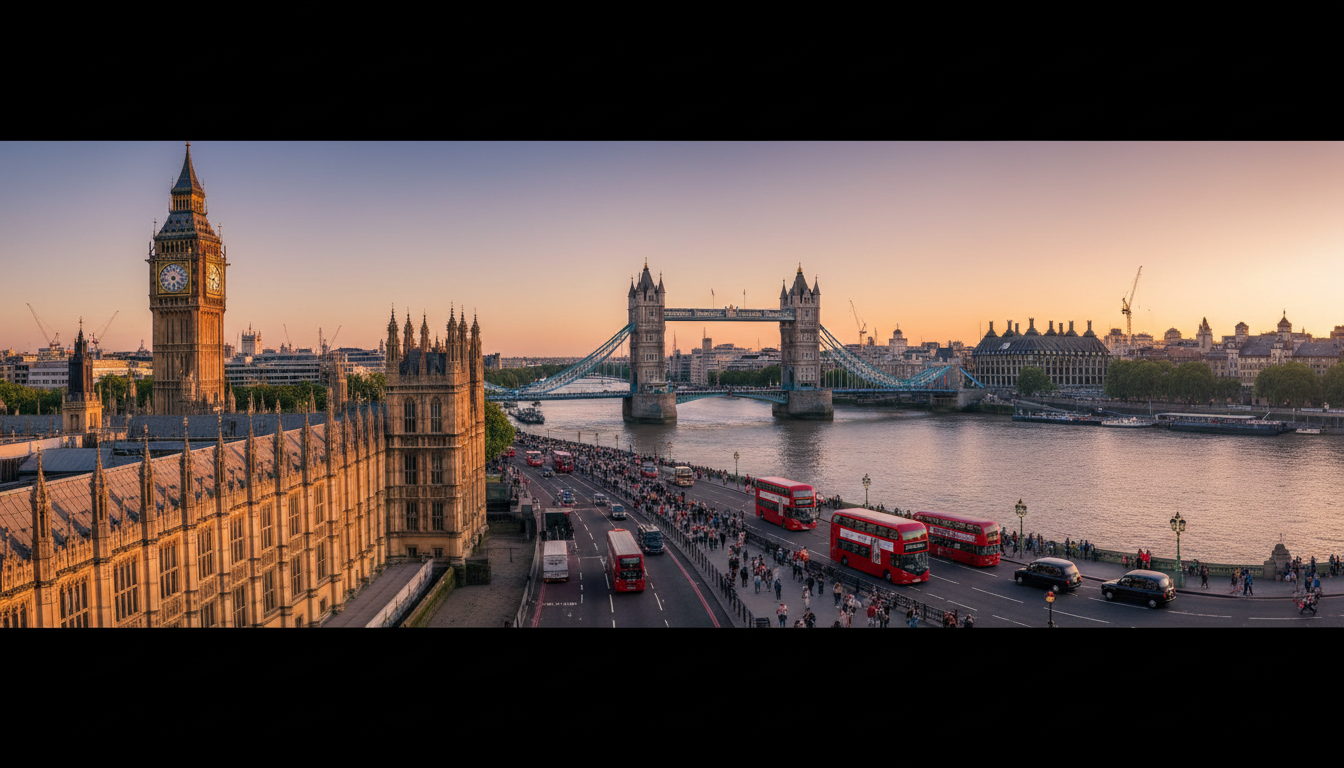
Curious which stops will actually make your trip feel iconic — not just check a box?
I’ve lived and wandered here long enough to know the famous spots are famous for good reason. This is my personal, experience-tested shortlist of the big attractions in london that I’d recommend to a first-timer — and the ones I’d happily repeat.
Think of this as a practical guide: I’ll tell you what’s worth paying for, what’s free, and where timed-entry planning saves hours. I judge each pick by time, crowds, views and vibe, so you can choose what fits your style.
This post suits solo travelers, couples, families or anyone who wants true flavor beyond the postcard. London blends ancient streets with shiny skylines — let’s spend your limited time well and make this trip memorable. 😊
Key Takeaways
- These are personal picks, tried and tested on my trips.
- Prioritize landmarks by time, crowds, and the experience you want.
- Some top spots are free; others merit the ticket price.
- Timed-entry saves you waiting and protects your schedule.
- Options work for solo travelers, couples, and families alike.
How to Tackle London’s Biggest Sights Without Burning a Whole Day in Lines
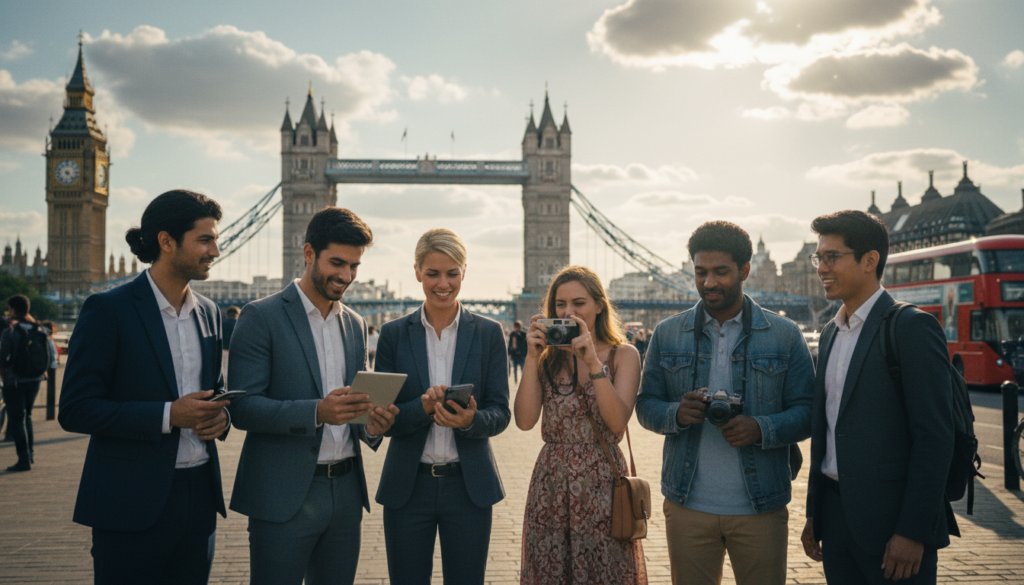
My go-to plan: pick one must-see early, then stack a handful of nearby walk-by sights and save a museum or market for the afternoon. This method keeps the pace fun and stops the trip from feeling like a marathon.
I swear by timed tickets—queues during peak season can eat hours, especially at popular wheels and viewpoints. Booking a slot saves serious time, and it gives you room to breathe or grab a coffee between stops. Buy tickets ahead, and you’ll see how the day smooths out.
I choose guided tours when skip-the-line access matters or I want extra context. For most spots I just buy a timed ticket and wander at my own pace. That’s the easiest way to balance structure with freedom.
- Weekdays for museums—fewer crowds, more space to linger.
- Early mornings for headline stops; evenings for neighborhoods and food markets.
- If you only have one day, focus on one major sight + a riverside walk. Two days let you add a museum. Three days? Mix guided tours and slow afternoons.
Quick note: I may share booking options via affiliate links. If you use them I might earn a small affiliate commission—no extra cost to you, and it helps me keep this guide updated.
Big attractions in london that are truly worth your time
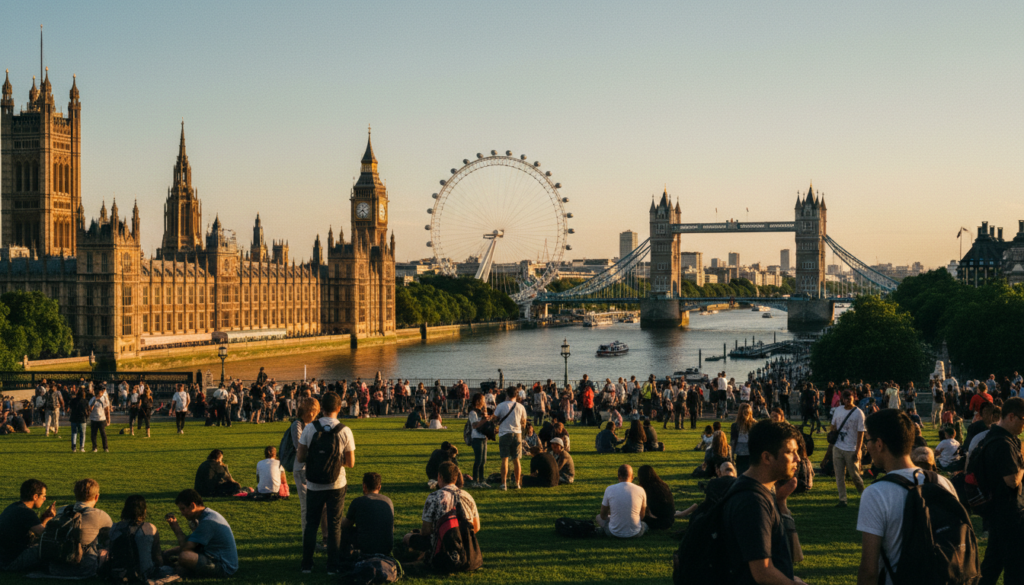
Certain stops give you a snapshot of the city that just clicks—rich history, unmatched views, or an experience you’ll tell friends about later.
I measure “worth it” three ways: is it once-in-a-lifetime, does it explain the place, or does it offer a view or moment you can’t replicate elsewhere.
Core list you’ll see in detail: Tower of London, Tower Bridge, Westminster Abbey, St. Paul’s Cathedral, the London Eye, Buckingham Palace, key museums, skyline viewpoints, parks, and markets.
“Some sites are pay-once, remember-forever; others are great if you’re already nearby or obsessed with a theme.”
Quick reality check: these spots are popular for a reason. Expect crowds. Smart timing—early slots, weekdays, or pairing nearby sites—is a great way to cut transit and stress.
- Pay once, remember forever: Tower of London, Westminster Abbey.
- Only if you love it: certain crowded viewpoints at peak times.
- Pairing ideas: St. Paul’s + Millennium Bridge; Tower Bridge + Tower of London.
Next, I’ll deep-dive into each place with practical tips, ticket expectations, and the can’t-miss moment that makes the visit sing.
Tower of London: History, Legends, and the Crown Jewels
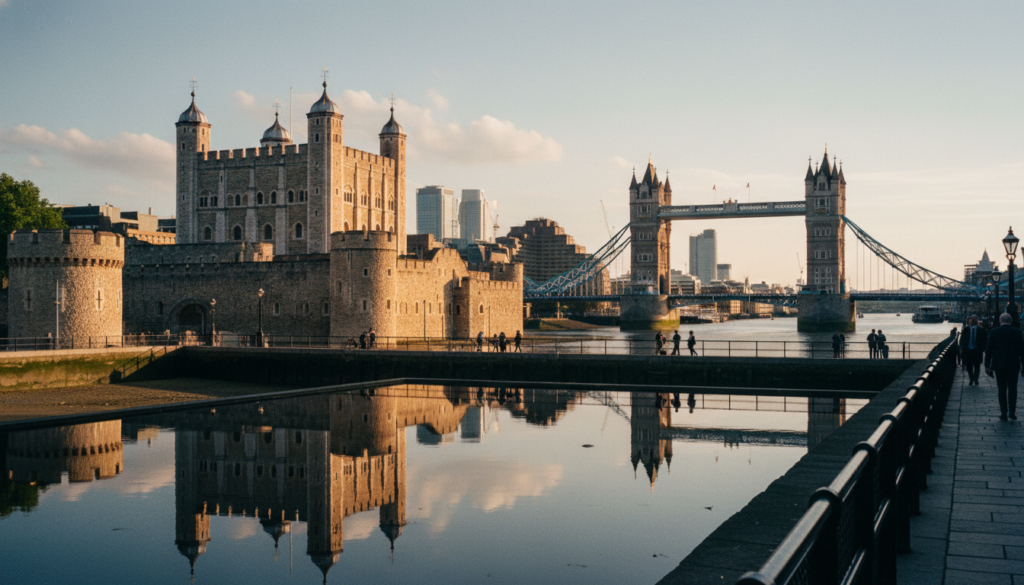
Step through the Tower gates and you’ll feel centuries press close—part palace, part prison, all atmosphere. The site dates back to 1066 and the White Tower rose in 1078 under William the Conqueror.
I visit the Tower London again because it keeps surprising me. The Yeomen Warder tours are my must-do: they mix sharp storytelling with a few gruesome laughs. The guided bits turn facts into moments you remember.
The real show is the crown jewels—they draw a crowd, so allow at least two hours. If you have less time, skip straight to the jewels, the White Tower exhibits, and the Bloody Tower.
Tickets sit around £35, and early-access tours let you see the Crown Jewels before lines swell. The interior is stone rooms, uneven floors, and narrow stairs—perfect for atmosphere, less great for strollers or mobility worries.
“It’s intense, creepy, and fascinating every single visit.”
- Must-see: Crown Jewels, White Tower, Chapel Royal of St Peter ad Vincula.
- Plan: 2+ hours; early tour if you want quieter viewing.
Tower Bridge Exhibition: Glass Floors and Thames Views
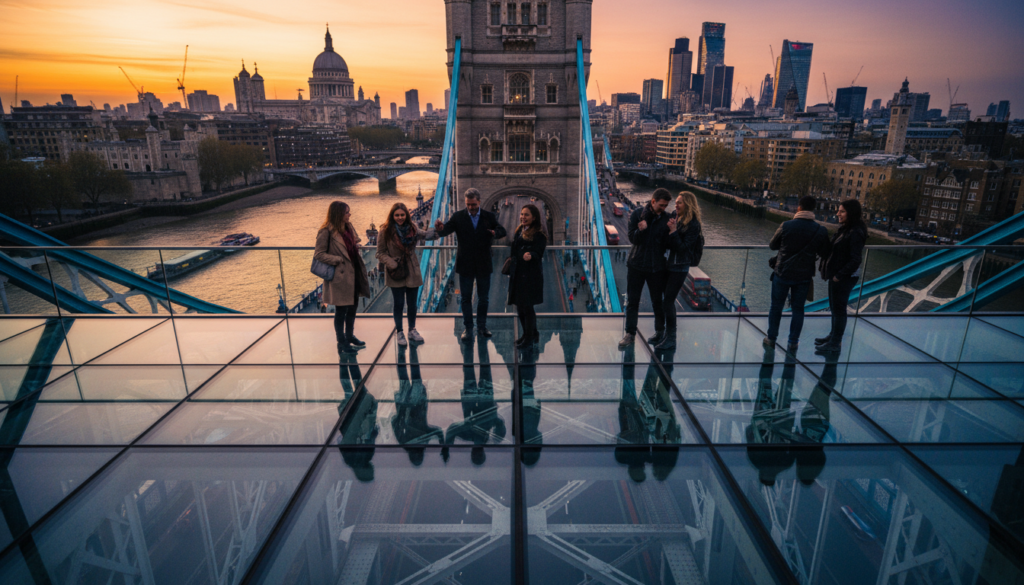
You know that instantly recognizable bridge with the walkways? That’s Tower Bridge — and it’s worth more than a quick photo stop.
Built between 1886 and 1894, the bridge still carries about 40,000 people a day. The Exhibition covers the towers, high-level skywalks, glass-floor sections and the original Victorian engine rooms.
What you get: dramatic views from the skywalks, a clear glass floor that makes your stomach flutter, and a peek at how the engines once raised the bascules.
This is a short but memorable stop — I usually allow 60–90 minutes. It’s an easy way to slot into a busy day and pairs perfectly with the Tower of London next door.
Tickets run about £16 with timed entry. Book ahead; showing up late can mean missing your slot and losing time.
“The glass floor moment made me laugh and wince at once — fun if you’re brave, totally skippable if you hate heights.”
- Tip: visit early for fewer crowds and the best river view.
Westminster Abbey: Coronations, Royal Weddings, and Britain’s Greatest “History Book”
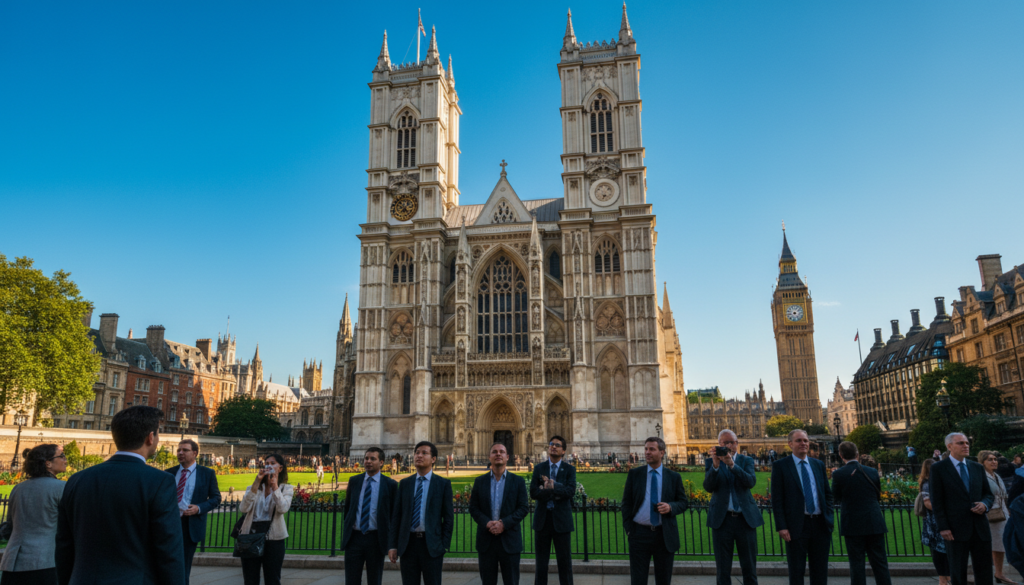
There’s a hush the moment you enter Westminster Abbey, the kind that makes history feel present.
Why pick this church? If you can only visit one great church, I usually point people here first. It’s a UNESCO site and the setting for coronations since 1066. That continuity gives the place real weight.
The interior is the payoff: soaring Gothic arches, side chapels, and memorials clustered like chapters. You’ll find tombs for Elizabeth I, Isaac Newton, Charles Darwin, and Charles Dickens—names that read like a who’s who of British story-making.
I let at least 1.5 hours for a proper visit. Grab an audio guide if you want context without joining a group. Timed tickets run around £30, and photos (no flash) are allowed—so you can take quiet shots without fuss.
“A place of ceremony and memory—coronations and royal weddings have left marks here that still feel alive.”
- Must-know: coronations have taken place here since 1066.
- Tip: plan ~1.5 hours and use an audio guide for faster context.
- Logistics: timed ticket ≈ £30; photos OK with no flash.
| Feature | What to Expect | Practical Tip |
|---|---|---|
| History | Coronations since 1066; UNESCO status | Allow 1.5 hours |
| Royal Events | Major royal weddings and funerals held here | Check service schedules (may close areas) |
| Highlights | Gothic interior, chapels, graves of famous figures | Audio guide for fast, clear context |
St. Paul’s Cathedral: Sir Christopher Wren’s Masterpiece After the Great Fire
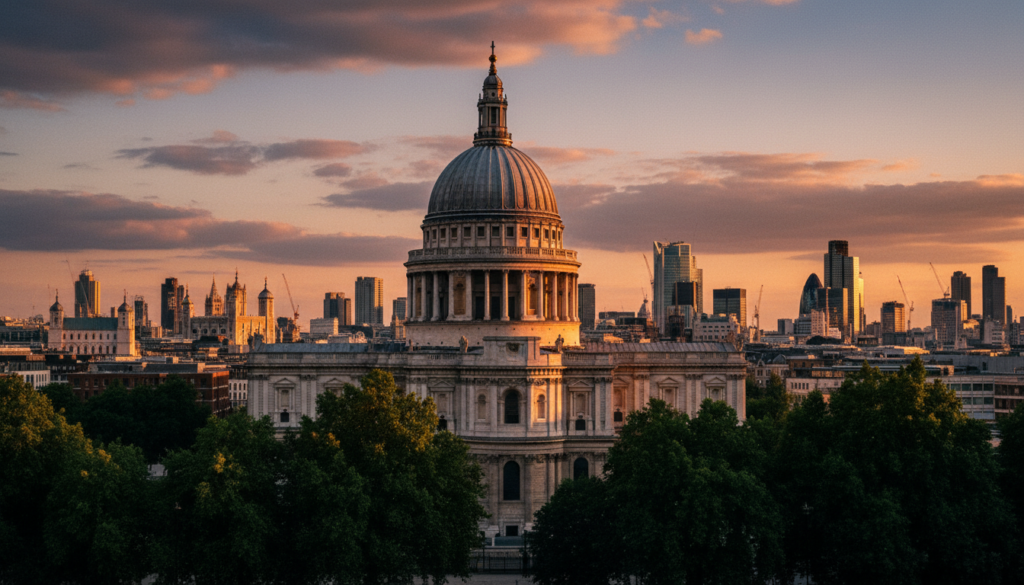
From the riverbank you suddenly see its dome lift above the skyline — and it changes how you feel about the whole city.
St. Paul’s was designed by Sir Christopher Wren after the Wren Great Fire rebuild that followed 1666. The dome reaches 365 feet and has stared down both time and bombs — it survived the Blitz.
Inside, the interior is vast and hushed. You can tour the nave, visit the crypt, and climb 530 steps if you want the full dome walk. That climb rewards you with views that put the city in scale.
There’s a royal moment here too—Charles and Diana married at St. Paul’s in 1981. Tickets run around £26, but services are free if you prefer atmosphere over sightseeing.
“Standing under that dome, you feel the mix of loss, rebuild, and pride that made this place legend.”
| Feature | Detail | Practical Tip |
|---|---|---|
| Dome Height | 365 feet | Climb the steps for the skyline view |
| Visitor Access | Interior, crypt, dome walk (530 steps) | Allow 1.5–2 hours; book ahead |
| Tickets & Services | ≈ £26; services free | Attend a service for a low-cost visit |
The London Eye: Panoramic City Views (and the Champagne Upgrade)
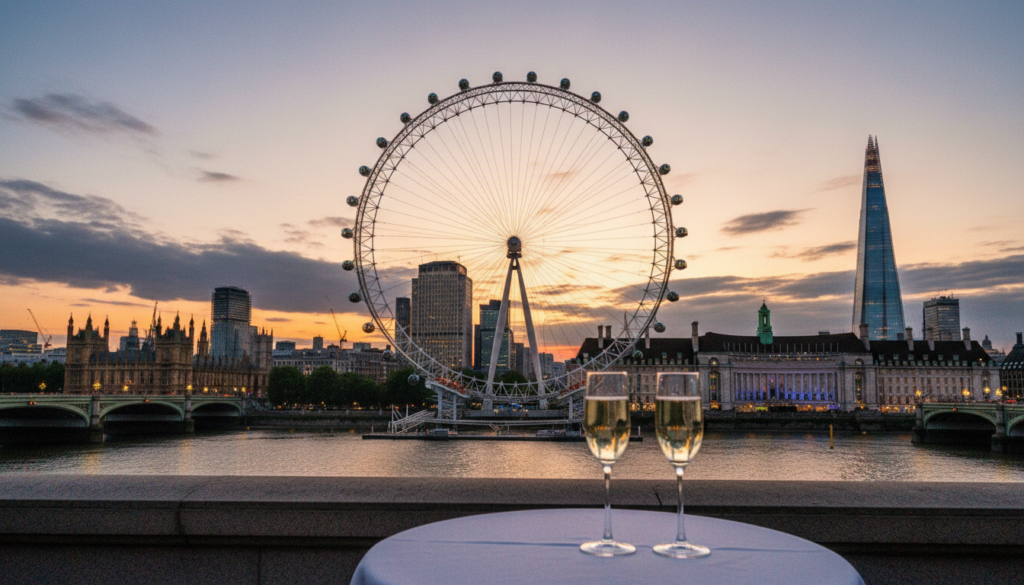
Riding the giant wheel on the South Bank gives you a clean, aerial snapshot of how the city fits together. I know it’s touristy, but the london eye really can be worth it—especially on a clear day when the views pop.
When I prioritize the london eye: clear weather, a first-time visit, or when I want skyline photos that show the Thames curve and Westminster area. I skip it on a tight budget or if visibility is lousy—fog makes the whole ride feel wasted.
Lines can be brutal at peak season. Timing matters more here than almost anywhere else; aim for early slots or late afternoon to cut queue time.
“The Champagne Experience turned a long wait into a pleasant start-of-day treat—skip-the-line, a glass, and a brief guide with local tips.”
Champagne upgrades are practical in busy months: you skip the queue, get a drink, and often a short guided intro. That small splurge can save frustration and turn the ride into a smooth highlight.
- What you’ll see: the Thames bend, Houses of Parliament, rooftops and how the city spreads from the river.
- Quick tip: pair the ride with a South Bank walk or a nearby museum visit to avoid losing half your day to lines.
Buckingham Palace and Classic Royal London Moments
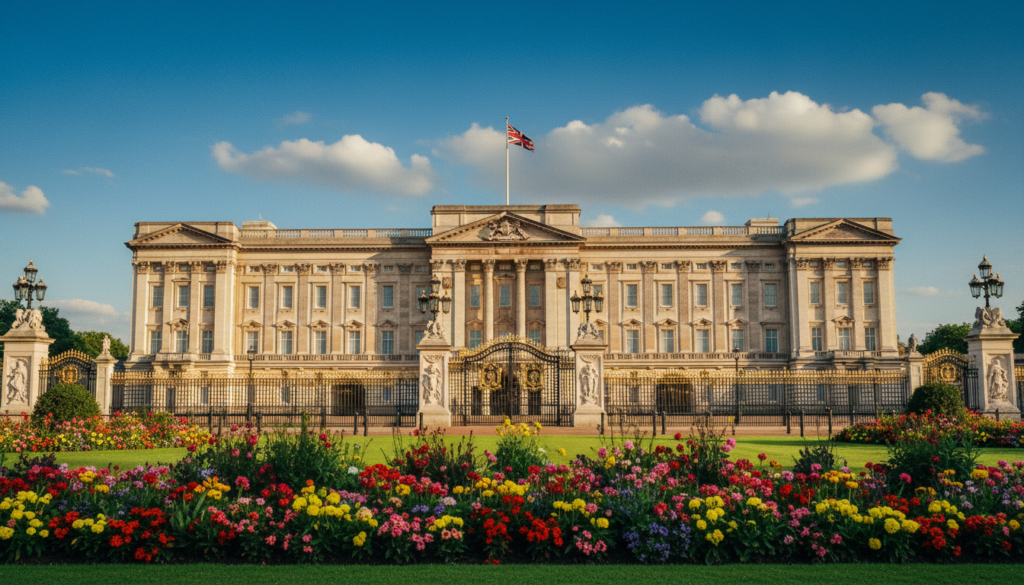
Buckingham Palace sits at the heart of classic royal pageantry, and it’s an easy way to feel the ceremonial side of the city.
The Changing of the Guard is the headline here: fun, crisp, and crowded. Plan to arrive early if you want a clear view. Expect a crowd of phones and flags — but the music and uniforms are worth the fuss.
Seeing Buckingham Palace from the forecourt is quick and free. Touring the State Rooms during the summer opening takes more planning and costs more, but it gives you real context and beautiful interiors.
There are also smaller guided options — sometimes champagne tours of the State Rooms — for a quieter, elevated experience. They run at specific times and suit travelers who want a little extra comfort.
Simple route: palace → stroll through the adjacent park → continue toward Westminster for a river-side walk. It fills part of a day without constant transit and links well with nearby sights.
“If you care about royal history, go inside; if you just want the photo and to move on, the outside view is a perfectly fine place to stop.”
London Museums I’d Actually Make Time For (Mostly Free)
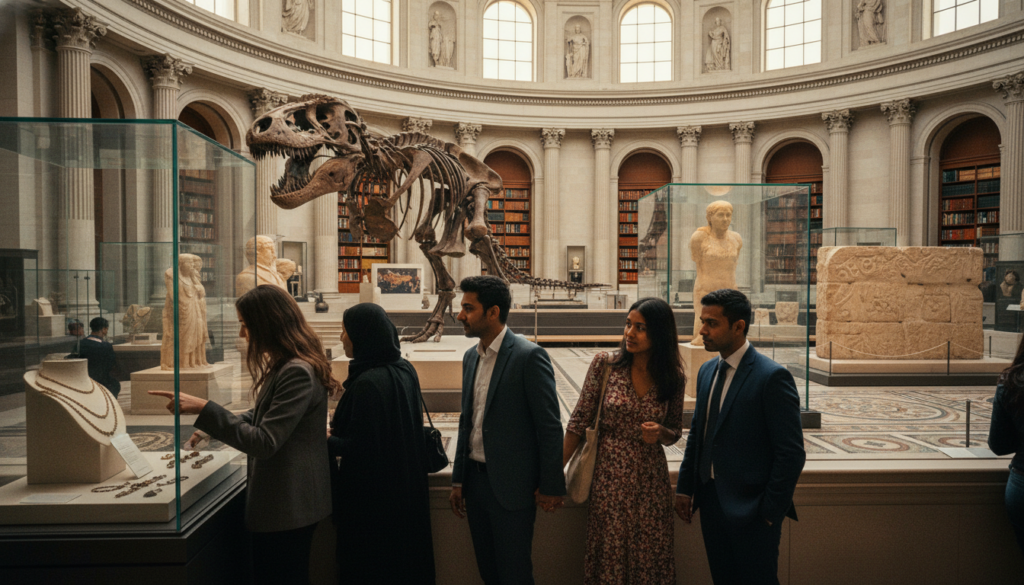
Some museums feel like playgrounds for curious adults—London has a handful that do just that. I recommend at least one museum stop on your trip; they’re mostly free and hugely rewarding.
My top picks: the Natural History Museum (the building and the dinosaur halls are magic for kids and adults), the British Museum for sheer scale, and the National Gallery for classic paintings at Trafalgar Square.
The Tate Modern is my go-to for modern contemporary art and its collection modern contemporary pieces — plus the Blavatnik Building terrace gives a great skyline view. The V&A is perfect if you like design and decorative arts.
“Go on a weekday if you can—weekends get slammed.”
- Book times for the British Museum, National Gallery, and Natural History Museum when advised.
- V&A and Tate Modern let you be more spontaneous.
- One museum per day keeps you fresh and lets you enjoy neighborhoods, parks, and food without rushing.
Quick tip: plan your museum day to match your mood—dinosaurs, design, or modern contemporary art—and you’ll turn a slow afternoon into a highlight of the trip.
Sky-High Viewpoints Like Sky Garden (Free, but Not Effortless)
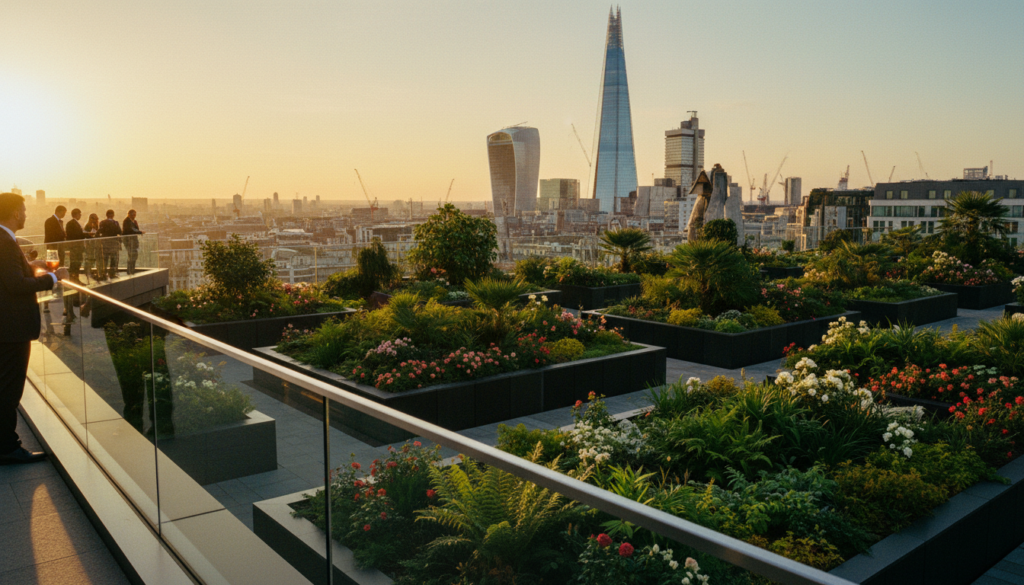
I always carve out time for at least one high-up moment — it resets the trip and shows the city’s scale fast.
Sky Garden is my best-value pick: free entry, a planted rooftop garden, and broad skyline views. You do need to reserve a slot ahead, though — bookings fill up on busy days.
Reservations make it not effortless: lock a morning or late slot before you plan the rest of your day. Treat the booking as a flexible anchor — arrive early or leave wiggle-room for transit delays.
- Why do one viewpoint? It’s the fastest way to grasp how the city layers and stretches.
- If Sky Garden is full, alternatives are The Shard (paid) or The Garden at 120 (paid but shorter lines).
- Pair the stop with a nearby Thames walk or a quick museum visit to keep your day smooth.
“The planted space and skyline make the rooftop feel less like a tourist trap and more like a mini oasis.”
| Spot | Cost | Best Tip |
|---|---|---|
| Sky Garden | Free (advance booking) | Book a time slot and arrive 15 min early |
| The Shard | Paid | Buy skip-the-line tickets for sunset |
| The Garden at 120 | Paid | Shorter visit; great for quick skyline photos |
Quick etiquette: be mindful at tight photo spots and don’t let the perfect shot steal your way of enjoying the moment. A few relaxed minutes up top will repay any planning hassle.
Parks and Gardens That Feel Like a Great Way to Reset Mid-Trip
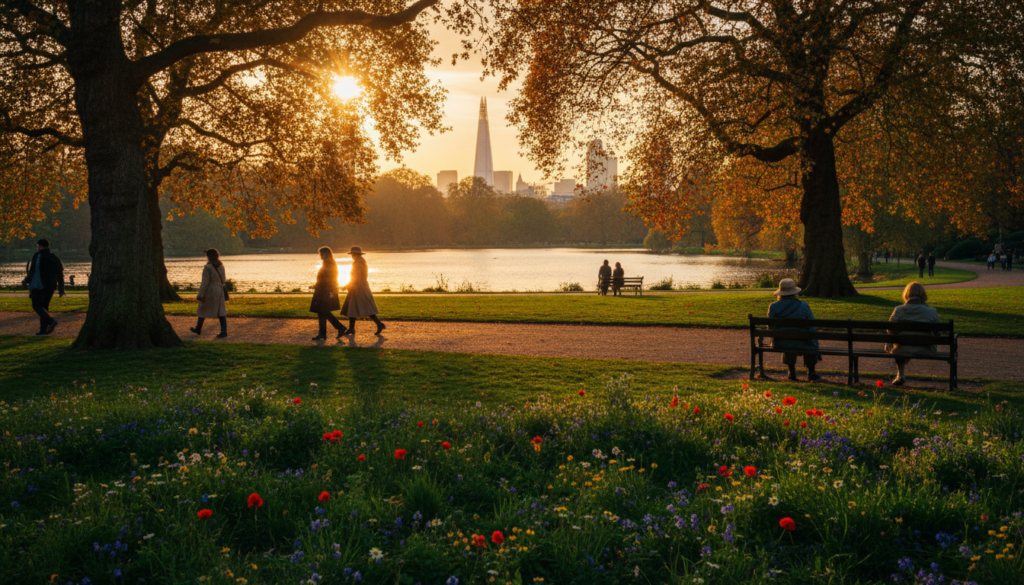
A short park stop can flip a frantic day into a gentle one—trust me, it works every time.
Hyde Park is my default. Walk the Serpentine, spot swans, and sit for five minutes of real calm. It’s a great way to catch your breath without leaving the city.
The Royal Parks link up nicely: Kensington Gardens, Green Park, and St. James’ Park form an easy walking route between sights. That route is a smart way to move without a tube ride.
If you have extra time, head to Regent’s Park for tidy gardens or Richmond Park for roaming deer—both feel wonderfully outside the city hustle.
For skyline views plus green space, Greenwich Park is a winner. For a full garden day, Kew Gardens (paid, UNESCO) is a lovely splurge when your pace is slow and the season is right.
“Parks are my secret weapon: short, free resets that keep me enjoying the trip instead of rushing it.”
- Quick tip: plan one park break per day to recharge.
- Must-do: stroll the Serpentine at Hyde Park.
Markets and Neighborhoods That Add Flavor Beyond the Landmarks
Landmarks tell the headlines; markets and neighborhoods tell the story.
I start most days at Borough Market — a place with a lot to taste and a lot of noise at lunch. Go early or on a weekday for space.
Must-tries: The Ginger Pig sausage roll, The Black Pig sandwich, and Bread Ahead treats. I skip the one viral item I find overrated to save room and cash.
Other spots I love: Covent Garden/Seven Dials, Portobello Road, Old Spitalfields, and Columbia Road for Sunday flowers. Leadenhall Market is ornate and feels like a story set.
Neighborhood vibes: Camden for alternative energy and canal walks; Shoreditch for street art and vintage; Notting Hill and Belgravia for pretty streets—respect that people call these places home.
- Tours and food tours at Borough are a great way see more, faster.
- Canal boat rides and walking tours are another great way see leafy corners and hidden rooms.
“If I share booking links they may be affiliate links — a simple way to support the post at no extra cost.”
| Spot | Vibe | Practical Tip |
|---|---|---|
| Borough Market | Food-focused, busy at lunch | Arrive early; try a sausage roll or a doughnut |
| Camden | Alternative, canal strolls | Combine with Regent’s Canal walk to Little Venice |
| Shoreditch | Street art, vintage, design-forward cafés | Wear comfy shoes; explore side streets for markets |
Conclusion
Your best travel days come from a small, smart mix—one headline attraction, a nearby neighborhood, and a park break.
I recommend balancing paid icons (Tower of London, Westminster Abbey, St. Paul’s, the Eye) with free wins like museums, parks, markets, and Sky Garden (reserve ahead). Don’t miss the crown jewels, the Tower Bridge glass floor, and at least one skyline views stop.
The easiest way to save time is booking timed tickets and leaving breathing room between slots. Aim for one major sight per day, one casual stroll, and one slow pause—your trip will feel fuller with less rush.
Pick the style that fits you—history-heavy, view-chasing, museum-hopping, or food-first—and build your days around that. Enjoy the city.
FAQ
How can I see major sights like the Tower of London, Westminster Abbey, and the London Eye without spending all day queuing?
I recommend booking timed-entry tickets in advance and arriving early (or late afternoon) to avoid peak crowds. Combine nearby sites—Tower Bridge and the Tower of London, or Westminster Abbey and St. Paul’s via a short Tube ride—to cut travel time. Consider a guided small-group tour or a timed-entry combo ticket to skip lines and get context quickly.
Are the Crown Jewels worth seeing at the Tower of London?
Absolutely. The Crown Jewels are unique and dazzling—the history alone makes the visit memorable. Buy tickets ahead, go when the Tower opens, and allow extra time for the Jewel House queue. The Yeoman Warder (Beefeater) talks add color and legend to the experience.
Is the Sky Garden really free, and how hard is it to get in?
Sky Garden offers free entry but requires a free ticket reservation—slots fill fast, especially weekends and sunset times. Book on the Sky Garden website a few weeks ahead. Dress comfortably for the walk-up from the Tube and arrive on time; late arrivals can lose their slot.
Should I buy a champagne upgrade for the London Eye?
The champagne upgrade is a nice splurge for a special occasion—great views and a celebratory feel. For most travelers, the standard pod gives the same panoramic outlook at a lower price. Consider sunset times for the best light, upgrade only if it fits your budget and vibe.
What’s the best way to catch the Changing of the Guard at Buckingham Palace?
The ceremony usually starts around 11:00 a.m. (check the official schedule, as it can change). Arrive 30–45 minutes early for a good viewing spot near the palace gates or the Victoria Memorial. If you want less crowding, watch segments along The Mall or from Horse Guards Parade.
Are Westminster Abbey tours worth it if I’m short on time?
Yes—if you value royal history. Westminster Abbey is where coronations and many royal weddings happened, and it’s packed with monuments and tombs (Geoffrey Chaucer, Isaac Newton). Book a guided or audio tour to maximize a short visit and skip the long ticket line when possible.
How much time should I set aside for St. Paul’s Cathedral?
Plan around 1.5–2 hours. That covers the nave, crypt, and the Whispering Gallery (if you climb the steps). For the dome and Golden Gallery views, add extra time for the stair climbs and photo stops—totally worth it for Sir Christopher Wren’s masterpiece after the Great Fire.
Which museums are must-sees and mostly free?
The British Museum, National Gallery, Tate Modern, and Natural History Museum are top picks and free to enter (special exhibitions may charge). I prioritize the collections I love—Roman Britain at the British Museum, Impressionists at the National Gallery, modern pieces at Tate Modern, and the dinosaur halls at Natural History.
Can I walk between many central sights, or should I use public transport?
Central London is very walkable—Westminster, Covent Garden, and the South Bank connect nicely. But distances grow if you add the Tower or Kensington. Use the Tube or buses for longer hops; an Oyster card or contactless card makes short travel easy and cheap.
When is the best time of year to visit parks like Hyde Park or Kew Gardens?
Late spring through early autumn (May–September) offers the best weather and blooming gardens. For fewer crowds, visit early morning or weekdays. Kew Gardens is spectacular in summer and during their late-season illuminations—book tickets in advance for special events.
Which neighborhood markets should I visit for food and atmosphere?
Borough Market for gourmet eats and British staples; Camden for eclectic stalls and street food; Portobello Road Market in Notting Hill for antiques; and Maltby Street for a quieter food market feel. I usually combine a market stop with a nearby museum or park for a relaxed day.
How can I see royal sites tied to coronations and weddings without buying guided tours?
Visit Westminster Abbey for coronation history and Buckingham Palace for exterior royal moments (flag and palace forecourt). The Royal Mews at Buckingham Palace offers insight into state vehicles and ceremonies; Windsor Castle, a short train ride away, has direct coronation and royal wedding connections and is great for a self-guided visit.
Are guided tours worth it for history-focused sites like the Tower and St. Paul’s?
Yes—especially for first-time visitors. Guides add stories about the Great Fire, Sir Christopher Wren’s rebuild of St. Paul’s, and the Tower’s legends. If you prefer solo exploring, grab a high-quality audio guide or a focused guidebook to get the same depth at your own pace.
How can I support local tours and earn small commissions if I recommend them on my blog?
Join reputable affiliate programs from trusted operators (official attraction partners or major tour platforms). Recommend experiences you’ve tested—mention accessibility, family-friendliness, and duration. Always disclose affiliate links clearly and share honest pros and cons so readers trust your suggestions.
Any tips for visiting during peak summer months to avoid crowds and heat?
Start early, book timed tickets, and schedule indoor museum visits during the hottest midday hours. Pack a refillable water bottle, wear sun protection, and break up long walking days with a park or cafe rest. Late afternoons often calm down—perfect for a relaxed Sky Garden or Thames-side stroll.