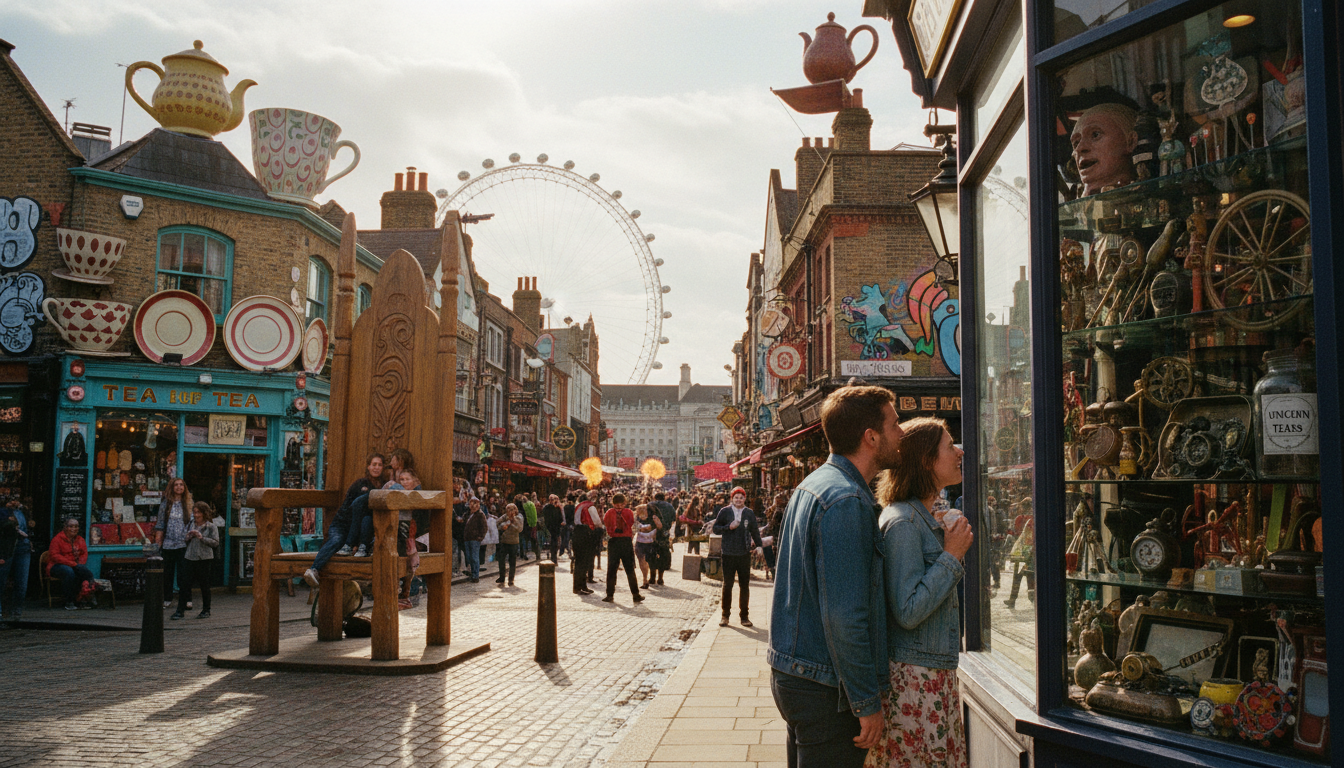
Ever wondered what hidden level of a city you step into when you chase odd spots instead of the usual sights? I’m chasing weird attractions in london that feel like secret rooms of history and whimsy—places that make you stop, laugh, and grab a photo.
I’ve written this for US travelers who have done the big hits and now want story-rich, photo-friendly things and places that surprise. I’ll group ideas by theme—underground, spooky, bookish—so it’s easy to fit into a one-day or multi-day plan.
This guide mixes free spots with ticketed experiences, and I’ll flag what needs booking (timed tickets, tours, late openings). Expect a few “you can’t make this up” moments—coffee in a former toilet, walking under the Thames, and a man stuck inside a clock.
Weather here is fickle, so I include flexible indoor and outdoor options. Read on to see london through odd history, playful art, and hidden corners most visitors miss.
Key Takeaways
- I’m guiding travelers from the U.S. to offbeat, photo-ready places.
- Suggestions are grouped by theme for easy planning.
- Mix of free and ticketed spots — I’ll note when to book.
- Expect playful, story-rich moments and surprising sights.
- Flexible indoor/outdoor options account for unpredictable weather.
How to Use This Offbeat London Guide for a One-Day or Multi-Day Trip
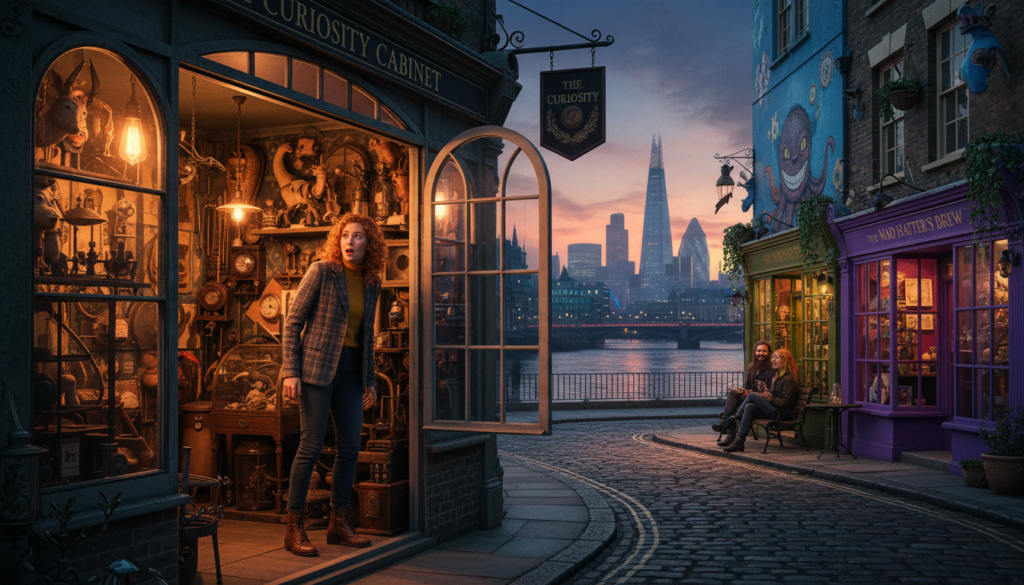
I suggest a simple rule: three anchors per day — one indoor oddity, one outdoor stroll, and one after-dark treat. This keeps your time focused and fun, not frantic.
One-day blueprint: Start near a major station, stack two to three stops within a tight radius, then finish at a late-opening spot. Use CityMapper to plan short hops and save walking for when it speeds things up.
Multi-day blueprint: Cluster neighborhoods (Soho/Fitzrovia, King’s Cross, City, Greenwich, East London) so transit eats less of your day. Buy an eSIM before you land — maps and messages stay live as you bounce between areas. 😊
- Book ahead for cemetery tours, timed conservatory slots, illusion museum entry, and special open days.
- Use one themed tour to unlock context; then self-guided wandering makes the rest richer.
- Tap in/tap out on cards — and remember: walking is often faster in Central than a long Tube change.
- If the weather shifts, swap to museums, galleries, or underground spots and keep the odd vibe.
| Plan Type | Morning | Afternoon | Evening |
|---|---|---|---|
| One-day (Central) | Start near a major station; quick museum or quirky shop | Short walk to a nearby odd spot; lunch close by | Late opening or themed tour at ticketed time |
| Multi-day Cluster | Neighborhood anchor (Soho) | Explore nearby streets, pop into micro-museums | Book a special event or relaxed late bar |
| Practical Notes | Use CityMapper and an eSIM | Book cemetery or conservatory time slots | Reserve timed tours or illusion museum entry |
Follow this loose plan, and you’ll hit the best things London has off the usual map while staying relaxed and connected.
Weird Attractions in London That Start Underground
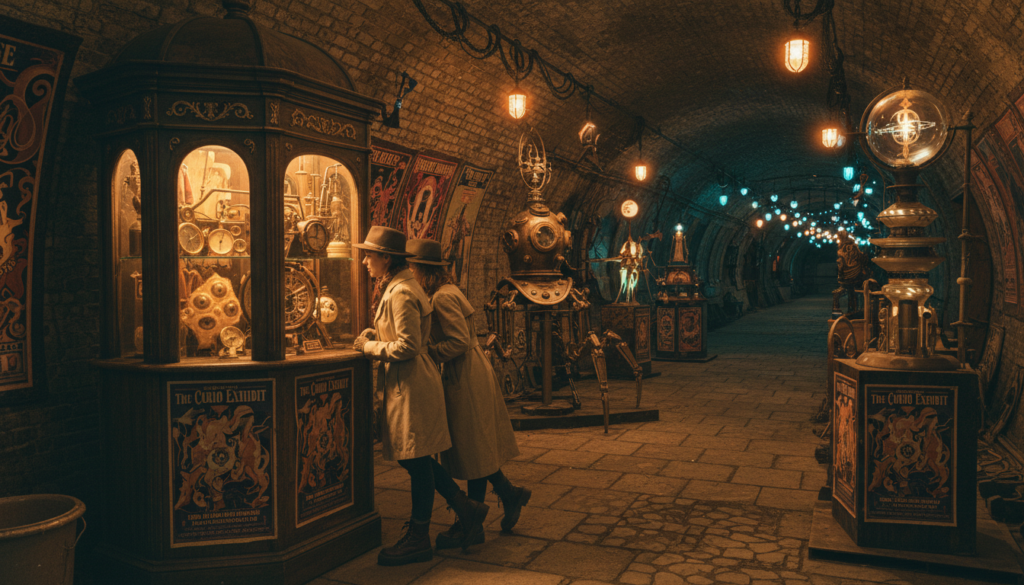
Below street level, London flips: quiet tunnels, echoing staircases, and small museums that feel like secret rooms. I love that way of exploring — it turns a walk into a mini-adventure.
Twist Museum sits under Oxford Street and is a playful, rainy-day win. Plan 1–2 hours for the interactive, photo-heavy exhibits. There are free lockers and room for strollers, though some inclines may be challenging for certain wheelchair users. It’s an accessible building with a few parts that deserve a slow look.
The Greenwich Foot Tunnel is 15 meters below the Thames and was built so dock workers could get across when ferries failed. It’s 370 meters long, and you can choose the 100-step spiral or the lift. It’s cooler underground on hot days and popping up at Island Gardens gives a gorgeous view of the Old Royal Naval College — perfect for pairing with a Greenwich day.
For deeper industrial history, visit the Thames Tunnel Shaft at the Brunel Museum in Rotherhithe. Early engineers called it an “Eighth Wonder of the World” — it’s a compact, fascinating stop for fans of engineering and odd little chapters of city history.
Weird Food and Drink Stops Worth the Detour
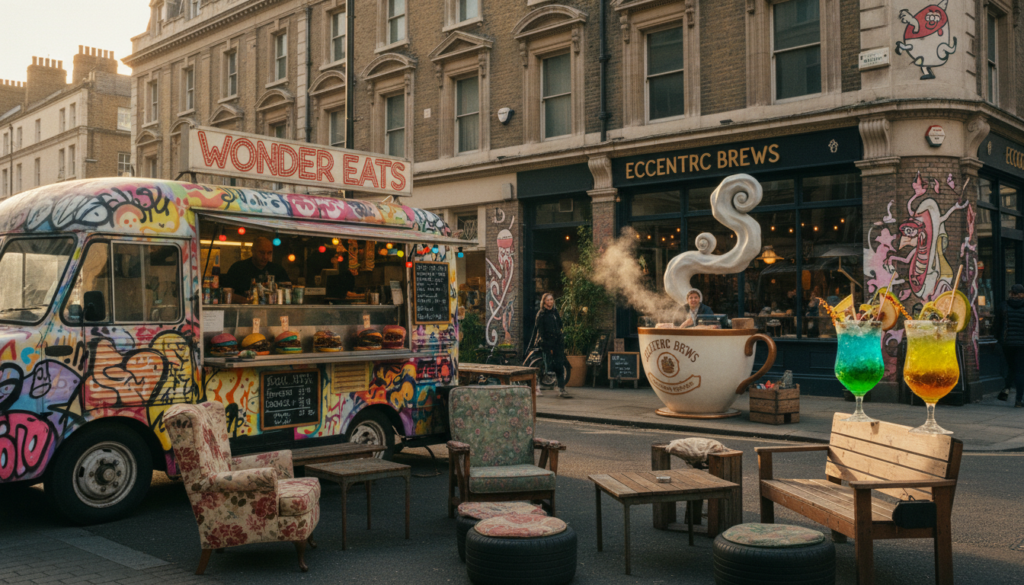
If you love good coffee and odd backstories, I’ve got a couple of spots that feel like city souvenirs you can eat.
Attendant Fitzrovia is the definition of “wait… is this a restaurant?” The cafe sits inside a restored Victorian men’s toilet. Yes — you can sit at a urinal (and yes, it’s far cleaner than that image in your head).
It’s a short walk from Oxford Circus, so it’s an easy detour between top central stops. I treat it as a quick reset: caffeine, a pastry, and a photo that makes people laugh back home. Great for solo breaks or small groups who want a quirky, camera-friendly place.
Brigit’s Bakery Afternoon Tea Bus is perfect when you want sightseeing and snacks at the same time. It departs from Victoria Coach Station on an original Routemaster and loops major landmarks.
The bus is a fun experience for people who are short on time. It’s cheerful, structured, and doubles as a moving photo op. Book ahead for popular times and weekend slots.
| Place | What to Expect | Best For |
|---|---|---|
| Attendant Fitzrovia | Coffee, pastries; seating at restored urinals; Victorian decor | Quick caffeine stop; photos; near Oxford Circus |
| Brigit’s Bakery Tea Bus | Afternoon tea on a Routemaster; river and landmark views | Groups, short sightseeing; timed tour experience |
| Practical Notes | Book peak times; short walks between central areas | Solo travelers or groups with camera-ready itineraries |
Bookish London: Floating Shops, Rare Manuscripts, and Literary Corners
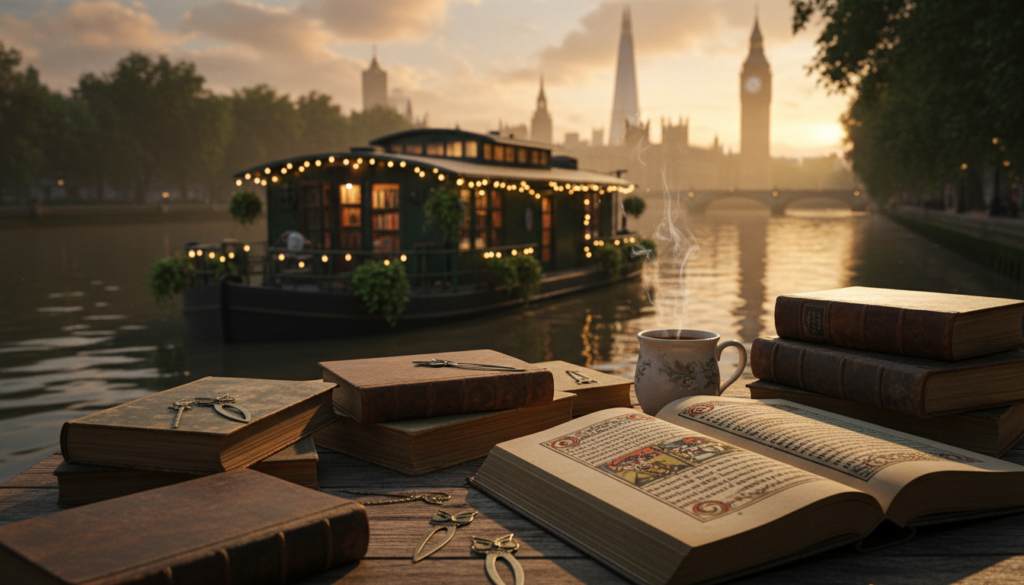
Start your bookish tour where the canal becomes a bookstore and the shelves rock gently with the tide.
I begin at Word on the Water, a tiny shop moored near King’s Cross. Packed shelves, seating nooks, and a wood-burning stove make it feel like a storybook come true.
Hours: open daily from midday to 7pm (closed Christmas Day). Pair a visit with a canal stroll so the stop feels like a mini outing, not just a quick photo.
The British Library Treasures Gallery follows when you want the serious payoff. It’s free and houses headline artifacts — Magna Carta, Gutenberg Bible, Shakespeare folios, Da Vinci sketches, and Beatles lyrics.
“There’s nothing like holding a page and feeling history under your fingers.”
Both places are calm, perfect to sit and decompress after sightseeing. Take your time — these stops make the city feel slow and local for a little while.
| Spot | Why Go | Practical |
|---|---|---|
| Word on the Water | Canal bookshop, cozy stove, packed shelves | Midday–7pm, closed Dec 25 |
| British Library Treasures Gallery | Rare manuscripts and iconic artifacts | Free entry; check gallery hours |
| Nearby | Canal walk + cafes | Combine both for a relaxed half-day |
Spooky, Gothic, and Beautiful: Cemeteries and Dark History
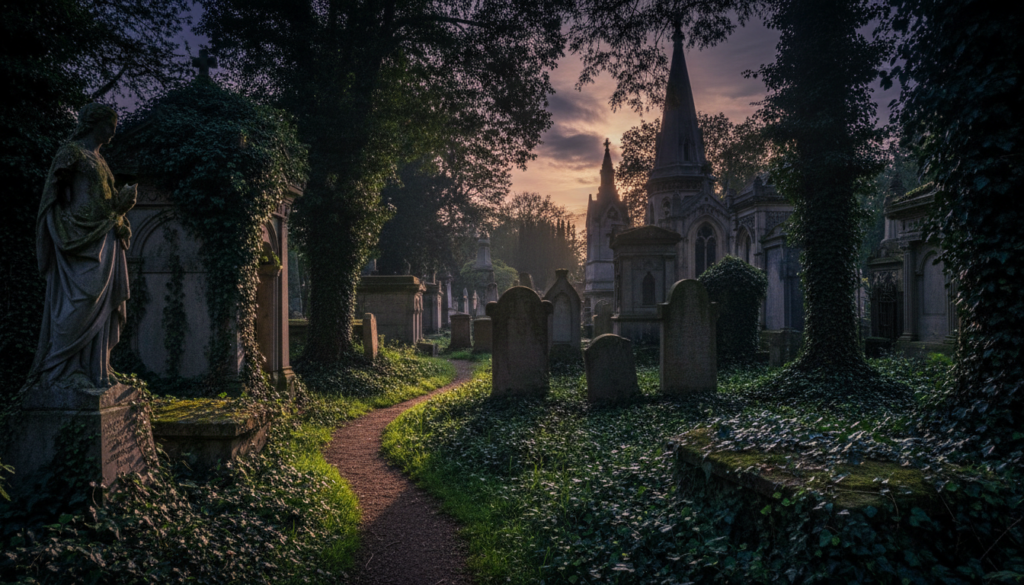
Cemeteries can be quietly cinematic—places where stone, story, and silence meet. I find them peaceful and strangely cinematic, packed with local history and small surprises.
Highgate Cemetery is the headline pick. Opened in 1839 (a 19th century design), it splits into a West and an East side. The West requires an organised tour—book ahead.
The Highlights Tour costs £18 and runs about 70 minutes. On the West you’ll see the Egyptian Avenue, Circle of Lebanon, and the Terrace Catacombs—genuinely jaw-dropping Gothic bits.
Odd detail: London Zoo once recorded the orb weaver Meta bournet hiding in the vaults. And yes, the “Highgate Vampire” fuss in the 1970s shows how legend can alter real places.
The East side is quieter and famous for graves of Karl Marx, George Eliot, Douglas Adams, and Malcolm McLaren—perfect if you like sightseeing with a side of biography.
| What | Note | Practical |
|---|---|---|
| Highlights Tour | 70 minutes; West side access | £18; book in advance |
| Famous Graves | Karl Marx; writers and cultural figures | East side open to visitors |
| Oddities | Meta bournet spider; 1970s vampire stories | Bring a jacket—shade and stone keep it cool |
Ruins, Walls, and Ancient London You Can Still Touch
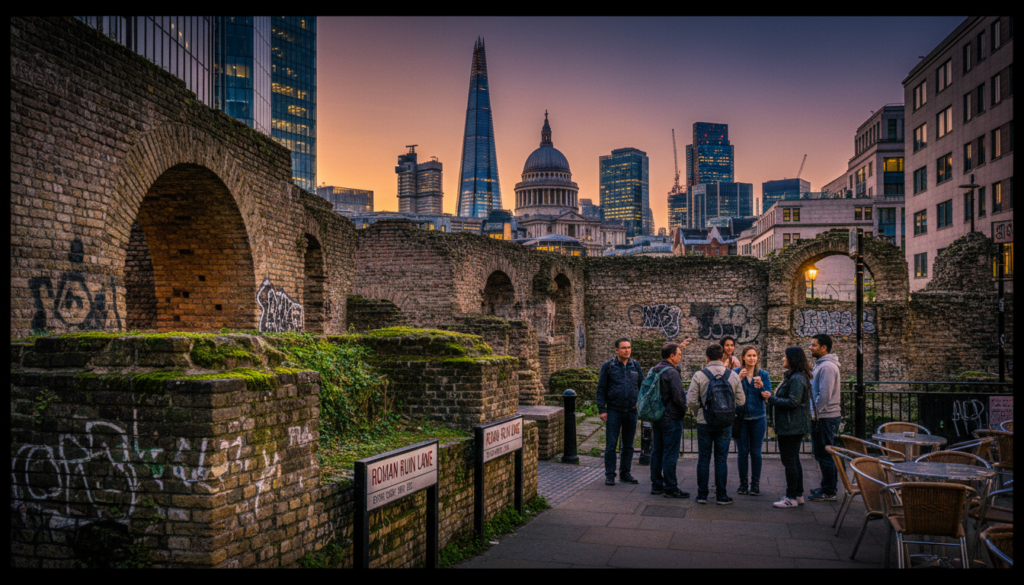
If you like history you can touch, the City yields surprising spots where ancient walls peek out between glass and brick.
Start a free Roman Wall mini crawl: stand by the Roman soldier statue at Tower Gateway. That statue marks the old line and makes a great photo marker.
Then walk to Cooper’s Row. Here the best surviving stretch shows archer holes and plaques. The holes are a quick visual cue — look for small square gaps in the stone.
Vine Street is the small reveal: fragments of wall tucked inside a building with a tiny museum of artifacts. It’s the most unexpected place to find ancient stone.
For atmosphere: visit the London Mithraeum. The reconstructed Temple of Mithras sits under the modern City and feels cinematic. Admission is free and the lighting adds to the mood.
Guildhall Gallery pairs eras: Victorian art upstairs, the Roman amphitheatre remains below. It’s a neat two-part stop that shows how the city layers over itself.
“Standing next to those stones, you can imagine traders and soldiers crossing the same streets.”
| Spot | What You See | Why Go |
|---|---|---|
| Tower Gateway | Roman soldier statue, wall marker | Easy starting point for a mini crawl |
| Cooper’s Row | Best surviving stretch; archer holes, plaques | Most visible wall parts for photos |
| Vine Street | Wall fragments inside a building; small museum | Surprising reveal; artifacts on display |
| London Mithraeum | Reconstructed Temple of Mithras | Atmospheric, free, great for mood |
| Guildhall Gallery | Victorian art above; Roman amphitheatre below | Two-layer visit—art and ancient ruins |
- Tip: pair this crawl with a City walking route so the ruins become part of a full day of contrasts.
- Wear comfy shoes — some spots are tucked down alleys or inside old buildings.
Street Art and Rule-Breaking Creativity
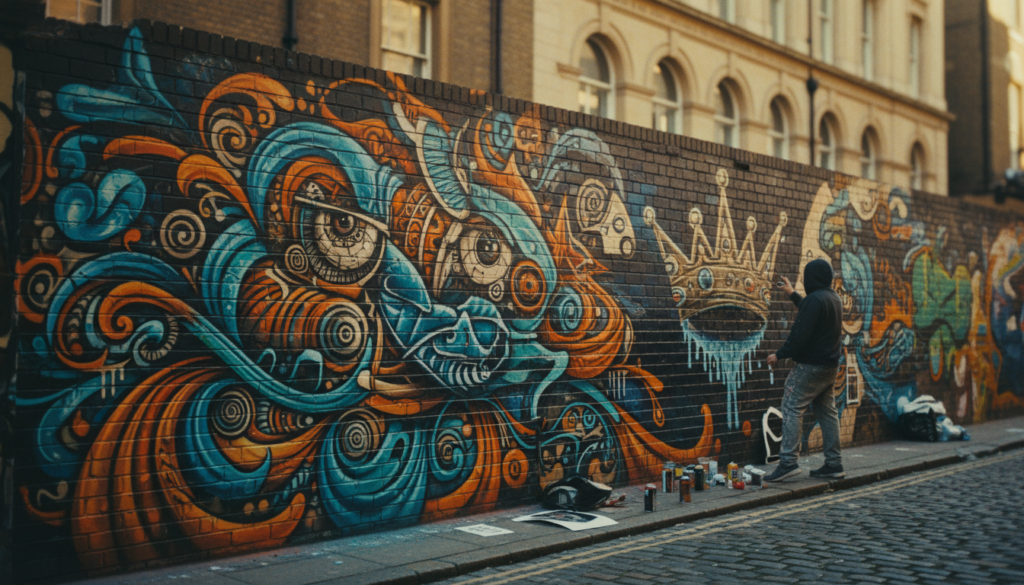
I love city corners where artists take over the pavement and turn a walk into a gallery.
Leake Street Arches is my go-to start. It’s a legal graffiti wall near Waterloo, always changing and full of color. You can join a £50 graffiti workshop if you want to try painting (yes, families enjoy it). Afterward, wander to Lower Marsh for indie food and coffee close by.
The Dulwich Outdoor Gallery is a treasure-hunt style route. Murals reinterpret Baroque paintings from the Dulwich Picture Gallery, so bring comfy shoes and time to peek down side streets.
Mosaic House in Chiswick is bold and political—look at the exterior only (it’s a real home). Then head to Shepherdess Walk in Hoxton for community-made mosaics. They were created around the 2012 Olympics and reward curious walkers.
| Spot | Why Go | Tip |
|---|---|---|
| Leake Street Arches | Longest legal graffiti wall; bars & restaurants | Try the £50 workshop; close to Waterloo |
| Dulwich Outdoor Gallery | Mural treasure-hunt; Baroque-inspired | Bring a map and wander |
| Shepherdess Walk | Community mosaics; Olympic-era project | Look closely—details reward patience |
Small Museums With Big “Wait, What?” Energy
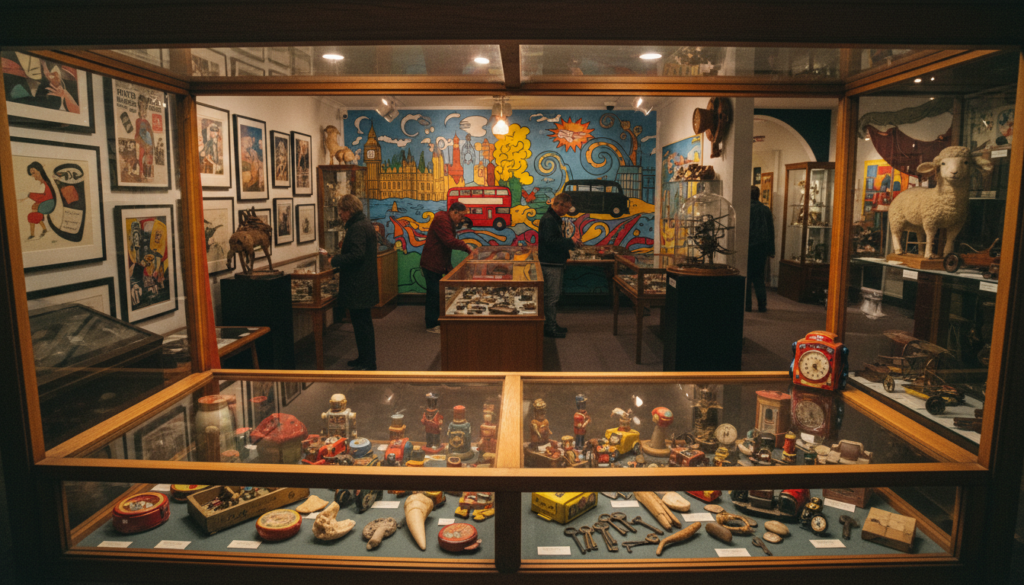
Some museums are small by square footage but colossal in curiosity—perfect for a quick cultural jolt between walks.
Expect odd displays, vivid stories, and collections that make you grin: the Viktor Wynd Museum of Curiosities leans toward the unbelievable and feels like a private cabinet of the world’s oddities.
For anatomy and medical history, the Old Operating Theatre and the Hunterian Museum serve focused, slightly macabre lessons that feel intimate rather than overwhelming.
If you want a tighter, story-driven stop that actually teaches you something fast, try the Florence Nightingale Museum. It sits by St Thomas’ Hospital near Waterloo and pairs brilliantly with a South Bank stroll.
The Horniman is the fan favorite—its famously overstuffed walrus delights visitors and the gardens offer space to breathe after a compact visit. That walrus has charmed guests for years.
If you prefer playful interactivity, the Twist illusion spot reads like a museum-ish playground for photos and puzzles.
“These tiny rooms often stick with me more than a long museum day.”
- Best timing: plan 60–120 minute stops to stay energized.
- Mix one small museum per day with outdoor walking to balance your pace.
Art Houses and Shops That Feel Like Mini Worlds

Some buildings hide whole micro-universes—stores that act like rooms you want to live inside. Walk into one and you’ll find layered displays, storytelling props, and design that feels handcrafted.
House of MinaLima (Soho) is a free shop-gallery of film art. It’s packed with prints and original prop pieces. Bring space in your bag—there are souvenirs worth taking home.
Dennis Severs’ House is the most immersive stop: rooms staged like living tableaux. Note the key rule—no photography. That silence makes people actually look and listen.
Leighton House Museum gives the “how is this here?” thrill. The Arab Hall and decorative interiors are a must for anyone who loves historic art and bold rooms.
God’s Own Junkyard is neon chaos: part gallery, part cafe, all spectacle. It’s perfect for an East London detour and camera-ready moments.
Neighborhood tip: pair Soho + MinaLima for a compact morning, then head east for neon and immersive houses later in the day.
| Spot | What to Expect | Best For |
|---|---|---|
| House of MinaLima | Free entry, film props, collectible prints | Design lovers; easy Soho stop |
| Dennis Severs’ House | Immersive Georgian rooms; no photography | Slow, sensory visits; book timed entry |
| Leighton House Museum | Arab Hall, lavish interiors | Interior design and art history fans |
| God’s Own Junkyard | Neon gallery + cafe; bold visuals | Photographers; East London outing |
Free Galleries and Exhibitions That Get Delightfully Weird
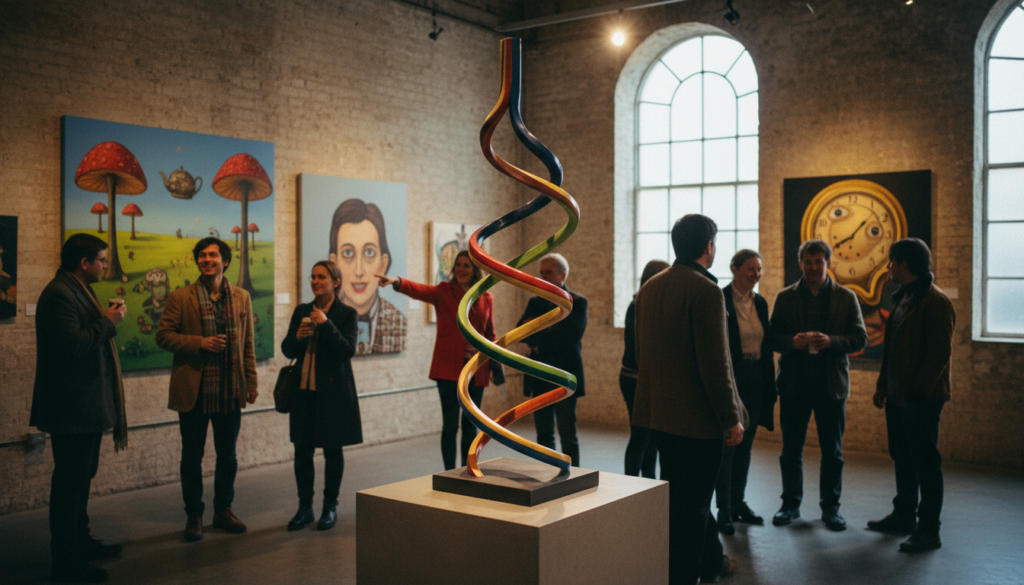
On rainy afternoons I hunt for small, free galleries that mix odd themes with big ideas.
I love these budget-friendly surprises—compact art gallery stops that feel fresher than another landscape room. They often spark more conversation than a long museum visit.
Wellcome Collection is my top pick for a science + humanity + art blend. The Being Human permanent display is thoughtful and sometimes startling. The Reading Room is a slow, quiet place to sit and reset between walking times.
The Crypt Gallery at St Pancras Church sits below a historic church. Drop by if you’re near Euston—exhibits change, and donations are optional. It’s a neat contrast: old stone above, contemporary work below.
The Guildhall Gallery feels like a two-part treat: Victorian art upstairs and Roman amphitheatre remains downstairs. Both parts are free and usually calm, perfect when you want a gentler pace.
- Practical tip: exhibitions change—check opening times before you go.
- Stack these on a rainy day or between busier stops for a restful, curious half-day.
Secret Gardens and Unexpected Green Spaces in the City
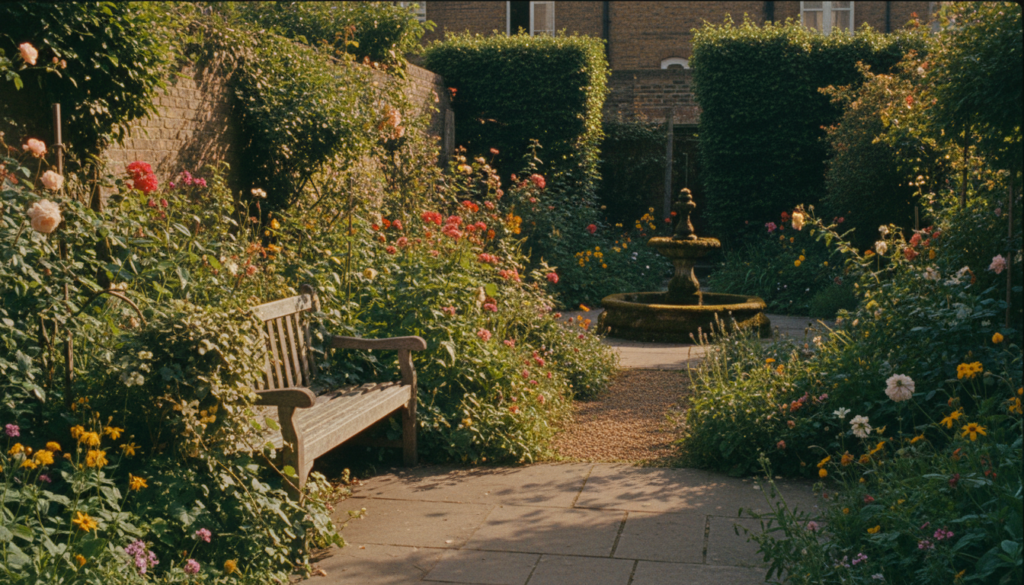
When the city noise gets loud, I hunt for small green pockets that feel like a soft reset. These are the spots I reach for when I need calm between stops.
Barbican Conservatory is the most surprising tropical-feeling garden in brutalist central. It’s free with a timed ticket and houses about 1,500 plant and tree species. Expect koi and rudd in the pools—and yes, terrapins—and occasional Friday evening openings.
St Dunstan in the East is a ruined church turned oasis. It’s brilliant for photos and quiet walks; avoid the busiest lunchtime window (12–2) if you want solitude.
Up on a Hampstead hill, Hill Garden & Pergola is a real hidden gem—best in warm months. For Japanese calm, the Kyoto Garden in Holland Park delivers tranquil design and the chance to spot peacocks.
The Garden at 120 gives skyline respite—free entry after a quick security check and a neat add-on when you’re exploring the City.
Want water with your green? Pair any stop with a stroll near Little Venice for canals and mellow riverside space.
Water Ways, Canals, and Hidden Islands
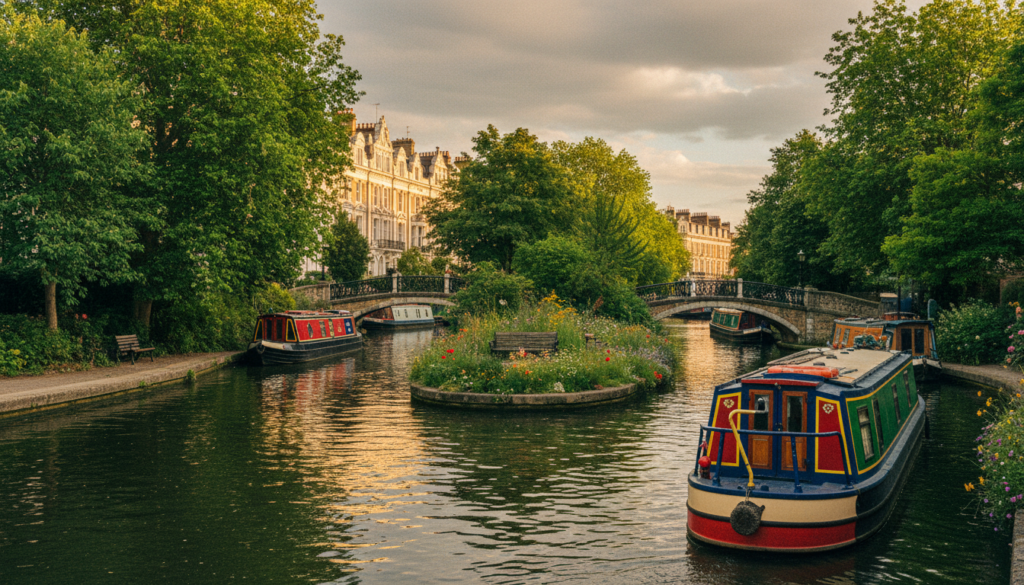
A canal stroll feels cinematic: city noise fades, reflections take over, and you start spotting odd little boats.
Regent’s Canal walk is the easiest DIY water adventure. Start near King’s Cross by the canal (Word on the Water is a good landmark). Then choose your direction—toward Camden for the buzz, or east toward Hackney for quieter stretches.
Along the route you can accidentally glimpse zoo animals near the path—a proper only-in-London moment that makes the walk feel playful and surprising.
Little Venice is the classic pretty pocket if you’re starting from Paddington. It’s perfect for a slower-paced day and simple boating ideas—hire a short trip, or just sit by the basin and watch narrowboats glide by.
Eel Pie Island is the hidden-island flex: open days (usually June and December) let you peek into artist studios and unusual homes. Check dates before you go.
For active travelers, stand-up paddle boarding (SUP) on calmer canals gives a very different view of the city—seasonal and best when the weather is mild.
Planning tip: begin near a major station—King’s Cross or Paddington—so you waste no time on logistics and get straight to the water for the day.
Quirky London Landmarks You’ll Want on Camera
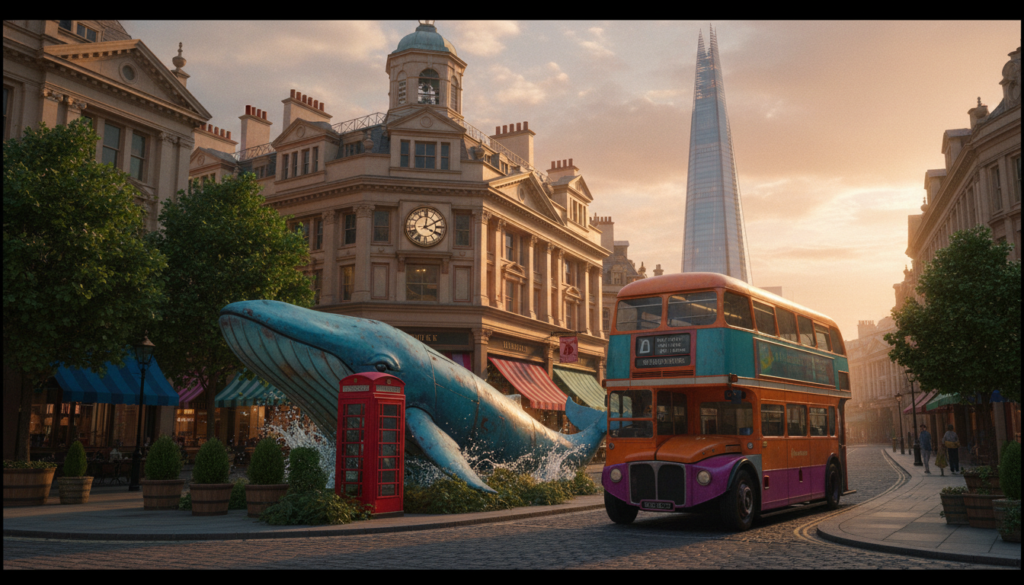
Grab a camera (or your phone) — these spots are short detours that make you see London differently.
Paddington Real Time clock (50 Eastbourne Terrace) is the kind of public art that makes people stop. A man appears to be inside the clock, painting the hands as time changes. It’s by Maarten Baas and nods to Brunel-era engineering nearby, so the piece feels rooted in local history rather than random flair.
King’s Cross light tunnel is a five-minute visual hit. LED panels shift color as you walk through, making simple portraits pop. I like to pass through early or late for cleaner frames and fewer people in the background.
Leadenhall Market offers Victorian drama: wrought iron, bright shopfronts, and a cobbled floor that reads cinematic on camera. Fans of pop culture will enjoy the subtle Harry Potter filming link — it’s a photo-ready building with great angles at golden hour.
Timing tip: aim for early morning or later evening. Light is softer and crowds thin, so these places look more intentional and less accidental in photos.
| Place | What to See | Best Times |
|---|---|---|
| Paddington Real Time clock | Maarten Baas performance-clock; Brunel reference; address: 50 Eastbourne Terrace | Morning or late evening for fewer people |
| King’s Cross light tunnel | LED color-changing tunnel; quick, lively photo stop | Anytime, but early/late for cleaner shots |
| Leadenhall Market | Victorian covered market; dramatic architecture; Harry Potter filming link | Golden hour or early morning for best light |
Wild Cards for Your Itinerary: Castles, Temples, and Hidden Corners
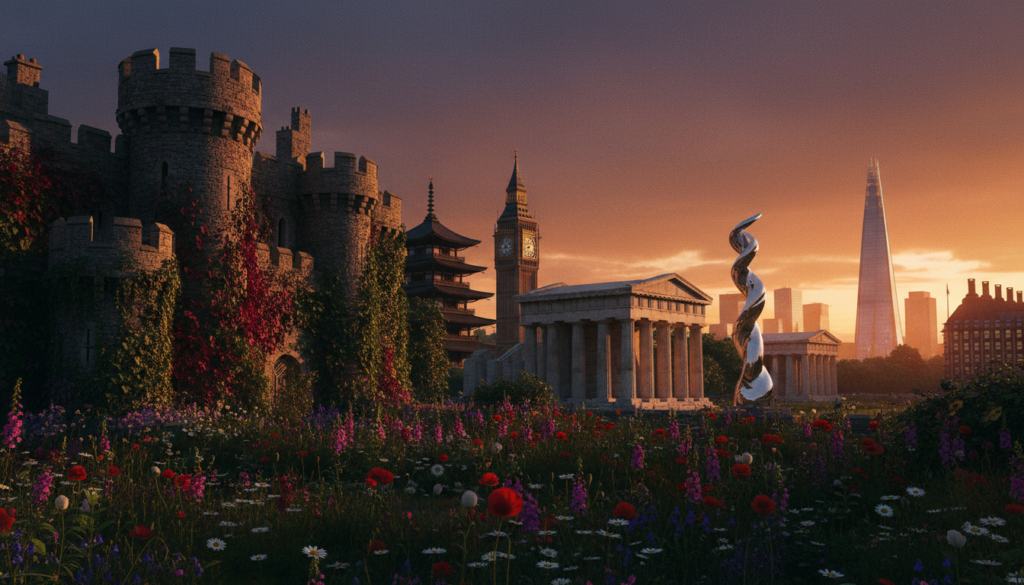
If you’re after the kind of places that make friends say, “Wait—there’s a spot like that here?” — start here.
I call these my brag picks—short stops that turn a normal day into something you’ll actually tell a story about.
Neasden Temple (BAPS Shri Swaminarayan Mandir) is the biggest visual shock: carved marble and stone, calm halls, and precise detail that feels sculpted. There’s an exhibition area too, so you can get context on Hinduism and the building story, not just snap photos.
Severndroog Castle is a pint‑sized tower with big views. Pair it with a wander through Oxleas Wood and you get wild greenery plus a lookout that feels miles from the city.
Eltham Palace gives contrast lovers a treat: Tudor foundations meet bold Art Deco interiors. It’s one building that reads like two eras at once.
For a quick secret, try Farrier’s Passage and Smith’s Court in Soho — tiny alleys and a quiet courtyard that feel like a different area tucked behind the busy streets.
- Choose your wild card by mood: spiritual/architectural (temple), nature + views (castle/wood), design history (palace), or a secret alley (Soho).
“These are the stops I save when I want a day that makes people ask where I found them.”
Make It a Night: Late Openings and After-Dark Weirdness
When the sun drops, London’s quirks often feel louder and more theatrical.
Start simple: pick a late-opening museum for an easy, safe cultural night. The National Gallery runs late Fridays, and the V&A holds late events most last Fridays of the month. Science Museum adults-only nights add a playful, grown-up twist.
For a calmer option: the Barbican Conservatory opens some Friday evenings—plants, soft lighting, and brutalist lines make for a surreal, relaxing stop.
Prefer walking? Self-guided night rambles through Soho, Covent Garden, or Mayfair soak up neon, street performers, and low crowds. If you want structure, book guided tours: ghost walks and Jack the Ripper-style tours offer storytelling and safe routing after dark.
“Nighttime is the way the city tells secrets—slow down and listen.”
| Option | What to Expect | Practical Tip |
|---|---|---|
| Late Museum Nights | Fewer crowds; special programming | National Gallery: late Fridays; V&A: last Friday most months |
| Barbican Conservatory | Plants + soft lighting; calming vibe | Check Friday evening dates; limited entry |
| Night Walks & Guided Tours | Street atmosphere or structured storytelling | Book tours ahead; confirm Tube times to get back |
Practical note: check time and ticket availability before you go—late events sell out and transit timetables affect how you get home.
Conclusion
End your trip the way I plan most of mine — by pairing a small museum with a green pause and a late-night walk.
London shows its best side when you mix types of things: one underground stop, a bookish nook, a spooky tour, a street-art stretch, and a quiet garden reset.
I promise you don’t need a complex plan. Most places cluster by station, and a short walk between parts often becomes the highlight.
Quick tips: check opening times, timed tickets, and cemetery tour rules. There are lots of free galleries, gardens, and ruins, so you can spend on the few experiences that matter to you.
If you find a new place or try one of these, bookmark it and share — curious people make the city better for everyone. 😊
FAQ
What kind of places does this offbeat London guide cover?
I focus on unusual city spots—underground sites, tiny museums, oddball galleries, secret gardens, canals, quirky landmarks, and offbeat food and drink stops. Think eerie cemeteries, floating bookshops, street art corners, and unexpected green spaces that feel like mini worlds.
Can I use this guide for a one-day visit or a longer trip?
Absolutely. I structure suggestions by neighborhood and vibe so you can build a tight one-day loop or spread discoveries across several days. I list practical pairings—nearby museums, places to eat, and transit tips—so you can mix and match easily.
Are the underground sites safe and easy to reach?
Most are safe and reachable by Tube, Overground, or short walks. I include access notes for stations, steps, and accessibility. For deeper subterranean tours (wartime shelters, disused tunnels), book with a licensed operator and check age or fitness requirements.
Where can I find unusual food and drink spots mentioned in the guide?
I highlight speakeasy bars, themed cafes, century-old pubs and experimental food stalls—often tucked behind unmarked doors or down alleyways. I recommend reservations for popular spots and mention vegan or allergy-friendly options where relevant.
Which bookish places are best for bibliophiles?
Look out for floating bookshops on canals, rare book rooms in major libraries, and indie shops with curated secondhand collections. I note opening hours, any photography rules, and tips for browsing fragile manuscripts.
Are the cemeteries and dark-history sites suitable for families?
Many are historically rich and family-friendly during daytime hours, but some tours lean spooky and use graphic storytelling—best for older kids and adults. I flag tours that are child-appropriate and recommend daylight visits if you’re nervous.
Can I see Roman walls or medieval ruins without joining a tour?
Yes—several ruins are visible from public streets or parks, like parts of the old London Wall and small archaeological sites. For deeper access to excavations or curated ruins, check museum entry or guided-walk options I list in the guide.
Where’s the best street art to photograph?
I point out reliably colorful streets and legal mural zones—places where artists refresh work often. Visit early morning or late afternoon for softer light and fewer crowds; I also include tips on respectful photography and supporting local artists.
Which small museums are worth a detour for their odd collections?
Expect cabinets of curiosities, eccentric local-history displays, and immersive micro-galleries with big personality. I name each museum, share typical visit length, and mention whether entry is free, donation-based, or ticketed.
How do I find the charming art houses and tiny shops you recommend?
I give street-level directions and nearby transport stops, plus notes on opening days (many indie spots close one weekday). These places often have limited capacity—arrive early or check if they take bookings to avoid disappointment.
Are there free galleries or exhibitions with offbeat shows?
Yes—several public galleries and community spaces host experimental exhibits at no cost. I flag current favorites, the best times to visit, and whether special exhibitions require advance booking.
Where are the secret gardens and lesser-known green spaces?
I include pocket gardens, hidden courtyards, and canal-side oases tucked behind churches or buildings. Most are open to the public; a few are community-run so I advise checking seasonal opening times and any etiquette for picnics or photography.
How do I explore canals, waterways, and hidden islands mentioned here?
Many spots are walkable along towpaths, while others work best by boat—hire a narrowboat, join a guided canal cruise, or use water buses. I give practical launch points, rough durations, and recommendations for nearby cafes and photo spots.
Which quirky landmarks make the best photos or social media posts?
I highlight photogenic oddities—from playful statues to peculiar architectural details—and suggest angles, times of day, and nearby viewpoints so you get the shot without queuing in crowds.
What are the “wild card” recommendations for unusual experiences?
Expect a mix of small castles, hidden temples, rooftop gardens, and eccentric private collections that open by appointment. I note which require advance booking, guided access, or membership to visit.
Can I experience after-dark weirdness safely?
Yes—late-night galleries, nocturnal tours, and nighttime markets make great evening plans. I share safety tips, transit availability after dark, and whether attractions run late-night events or ticketed late openings.
Do you include practical details like opening hours, tickets, and transit?
Definitely. Each entry includes typical opening times, ticket info (free, donation, or paid), nearest stations, and quick tips on busiest times—so you can plan a realistic day without guessing.