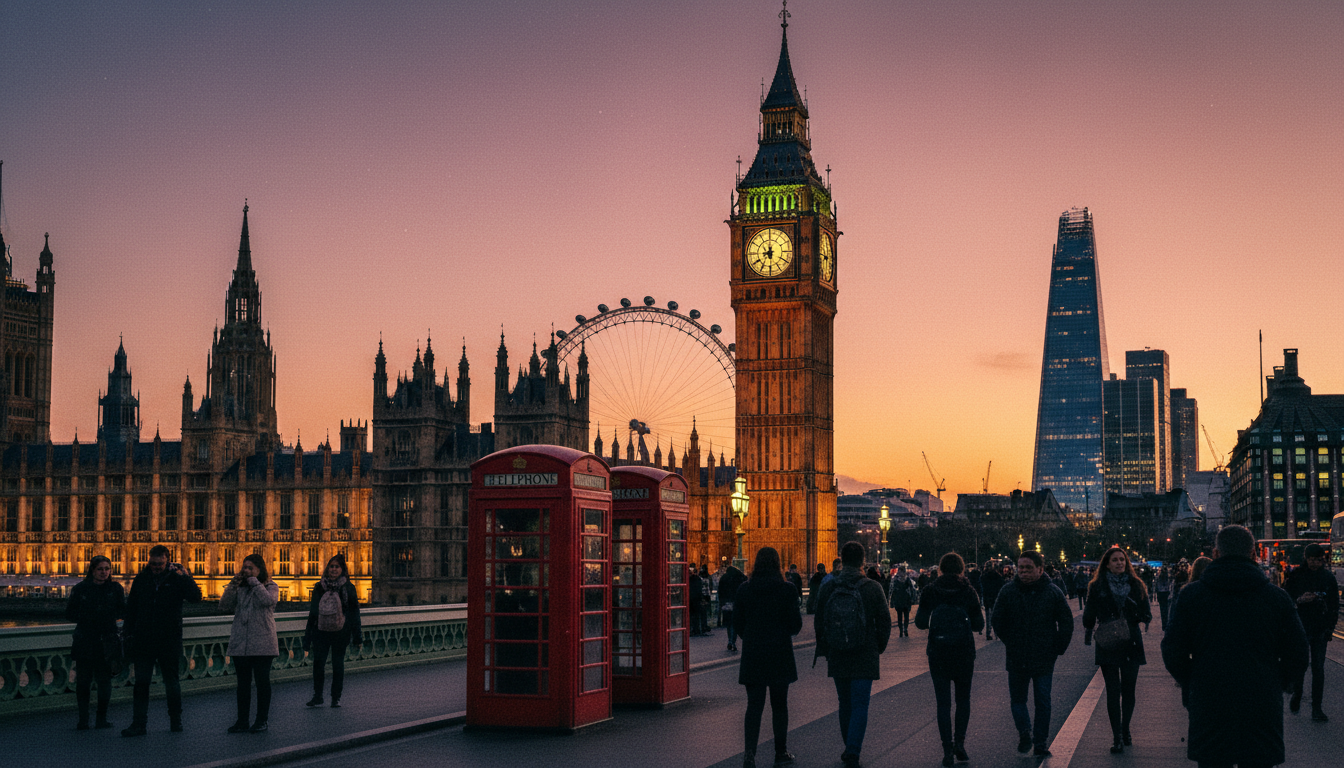
What makes one city draw millions of visitors year after year? It’s a mix of historical significance and modern innovation. This unique blend is rare in the world.
In England’s capital, you’ll find this perfect mix. The city is among the most-visited places, with iconic london landmarks from centuries past. You’ll see everything from medieval fortresses to modern observation wheels.
The famous observation wheel has been a hit since 2000. It’s 135 meters tall with 32 glass capsules. It offers 360-degree views of the city. Tickets start at £29, giving you a view of a lifetime.
Smart travelers use multi-attraction passes for great value. For £59, you can visit five top must-see attractions in london. Advance booking helps you save time and money.
Key Takeaways
- The city welcomes millions of international visitors annually as one of the world’s top travel destinations
- You’ll discover a remarkable blend of historic london landmarks and modern entertainment venues throughout the capital
- The observation wheel stands 135 meters tall and offers breathtaking 360-degree panoramic views from 32 capsules
- Multi-attraction passes starting at £59 cover five major sites, providing significant savings compared to individual tickets
- Advance booking is recommended for must-see attractions in london to secure better rates and avoid long queues
- Ticket prices for individual experiences typically start from £29, with various combination packages available
Must-See Landmarks and Monuments
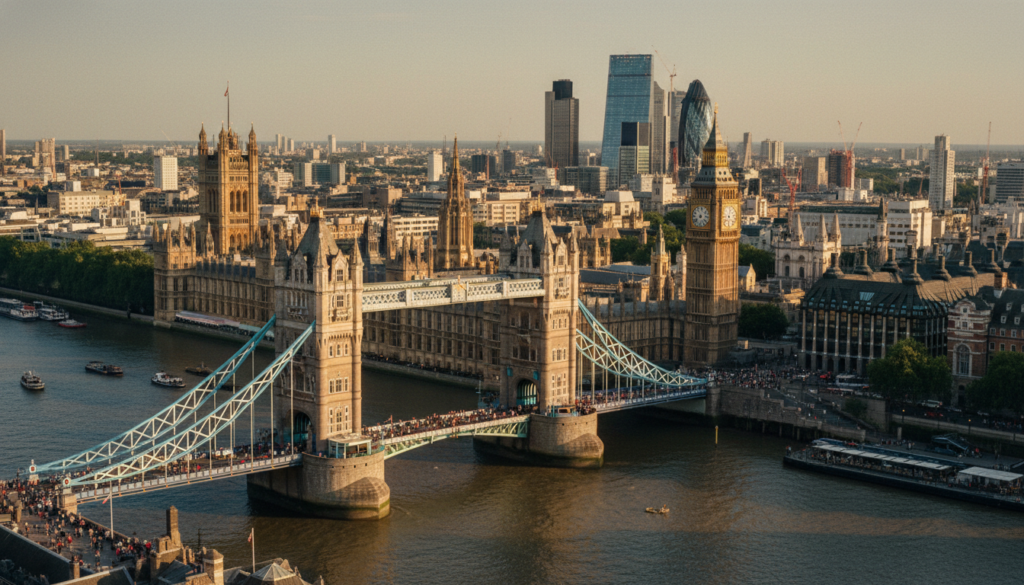
London’s landmarks are unforgettable, from Victorian marvels to modern wheels. They show the city’s heart and offer great photo spots. Each monument tells a story of history, innovation, and royal tradition.
The capital’s landmarks stand tall in the city, blending into the urban scene. They are easy to reach by public transport. Visitors plan their trips around these spots, as they capture London’s essence.
The Clock Tower and Its Famous Bell
Big Ben is the 13-ton bell in Elizabeth Tower, not the whole tower. The Gothic Revival masterpiece is next to the Houses of Parliament. Its stonework and clock faces are famous.
The tower got a Victorian makeover recently. You can’t tour inside now, but the outside is stunning. The clock faces are huge, making them visible from far away.
Best views are from Westminster Underground and the river’s south bank. It’s near government buildings, making it a great start in Westminster. Early morning light is perfect for photos.
Tower Bridge
Tower Bridge is often confused with London Bridge. Built from 1886 to 1894, it’s a Victorian engineering marvel. About 40,000 people cross it daily.
The Tower Bridge Exhibition costs £16 and includes the high-level walkways. You’ll see traffic 138 feet below. The glass floors offer thrilling views.
Inside, you’ll see the original steam engines that lifted the bridge. The exhibition explains how it worked. Today, it opens for river traffic about 800 times a year.
Best photos are from the south bank and the Tower of London. Sunset is dramatic, especially at night when lit up.
London Eye
The London Eye stands 135 meters tall on the South Bank. It offers panoramic views of London. Each rotation takes 30 minutes.
The wheel has 32 climate-controlled capsules representing London’s boroughs. Each pod holds up to 25 guests. The slow rotation ensures a smooth view.
Tickets start at £29 for standard access. Fast Track tickets are £44 and skip the queues. For special occasions, there are champagne and afternoon tea experiences.
Consider the multi-attraction pass for 5 attractions for £59. The Eye is near many attractions. On clear days, you can see Windsor Castle and Wembley Stadium.
Buckingham Palace
Buckingham Palace is the British monarch’s home. It’s famous from films and news. The Victoria Memorial in front offers great views.
The Changing of the Guard ceremony is popular. It happens at 11:00 AM on certain days. Arrive early for a good spot.
In summer, the State Rooms open for tours. They show royal life and traditions. The Royal Mews and Queen’s Gallery are also worth visiting.
Buckingham Palace has 775 rooms and 39 acres of gardens. It hosts state banquets and receives dignitaries. This palace shows British royal traditions.
Historic Royal Sites
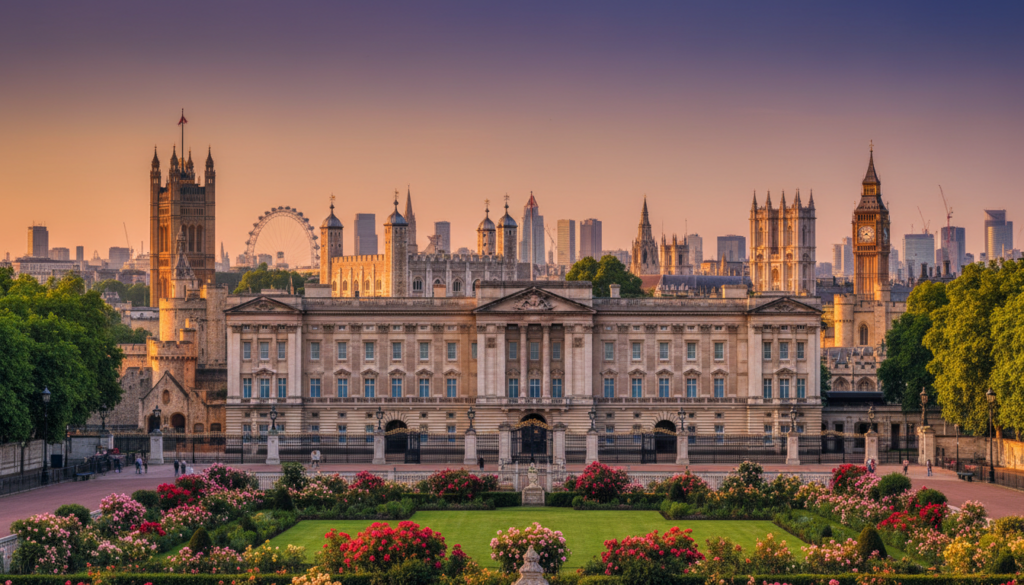
London’s historic sites tell the story of British royalty. From medieval fortresses to elegant palaces, these buildings have seen it all. They’ve hosted coronations, executions, and royal celebrations for nearly a thousand years. Visiting these sites is a must when exploring top things to do in London.
Each site has its own treasures and stories. You’ll see halls where kings plotted wars, gardens where queens strolled, and chambers where history was made.
Tower of London
The Tower of London is a symbol of Britain, built in 1066 after the Norman Conquest. William the Conqueror built the White Tower in 1078 to show his power. Today, it’s the heart of the complex.
The Tower was once a royal home but became infamous as a prison and execution site. Famous prisoners like Anne Boleyn and Catherine Howard were held here. The Chapel Royal of St Peter ad Vincula holds the remains of Anne Boleyn and others.
Guided tours start with the Yeomen Warders, or Beefeaters. They share stories of imprisonment, torture, and royal intrigue. Their tales make history come alive.
The Crown Jewels are the Tower’s main attraction. You’ll see coronation regalia, including crowns with thousands of diamonds. The collection shows the wealth of the British monarchy over centuries.
Don’t miss the White Tower’s exhibits on medieval armor and royal armories. The Bloody Tower is infamous for the alleged murder of the young princes Edward V and Richard. Ravens roam the grounds, protected by a legend that Britain will fall if they leave.
Plan at least two hours to explore the complex fully. Tickets cost about £35. Consider an Early Access tour for a quieter experience.
Kensington Palace
Kensington Palace is a royal home and a historic site. It was Princess Diana’s official residence and still houses working royals today. Queen Victoria was born here in 1819.
Exhibitions show Queen Victoria’s transformation from princess to monarch. The State Apartments feature 18th-century royal living with original furnishings. You’ll learn about royal life through these displays.
The palace gardens are peaceful and perfect for reflection. Modern exhibitions cover royal fashion, relationships, and the monarchy’s evolution. Interactive displays engage visitors of all ages.
Hampton Court Palace
Henry VIII’s Hampton Court Palace is a Tudor masterpiece along the Thames River. It showcases the extravagance and power of England’s most notorious king. The palace’s grand scale and preserved interiors take you back to the 16th century.
The Great Hall impresses with its towering ceiling and elaborate tapestries. Henry VIII hosted lavish banquets here, entertaining nobility and foreign dignitaries. The hall’s grandeur reflects the king’s desire to project power and sophistication.
Hampton Court’s famous hedge maze is a fun challenge. Created in the 1690s, it covers a third of an acre. The Tudor kitchens are another highlight, recreating the massive operation needed to feed the royal court.
The palace’s gardens are magnificent, featuring formal designs, fountains, and the Great Vine planted in 1768. Spend at least half a day exploring the palace and its grounds. It’s a great escape from the city, easily reached by train.
Banqueting House
The Banqueting House is the only surviving part of the Palace of Whitehall. Designed by Inigo Jones and completed in 1622, it introduced classical architecture to England. Its style and proportions were revolutionary.
The ceiling paintings by Peter Paul Rubens celebrate James I’s reign. These nine enormous canvases depict the Stuart monarchy’s divine right and peaceful governance. The artwork is breathtakingly beautiful, nearly 400 years later.
History took a dark turn at Banqueting House on January 30, 1649, when Charles I was executed. This event shocked Europe and ended the British monarchy temporarily. The building’s elegance contrasts sharply with its role in this violent event.
Despite its smaller size, Banqueting House is historically and artistically significant. Its architectural influence on British design is profound. Your London travel guide experience is enriched by understanding its role in royal celebration and revolutionary justice.
| Royal Site | Founded/Built | Main Highlights | Estimated Visit Time | Approximate Cost |
|---|---|---|---|---|
| Tower of London | 1066-1078 | Crown Jewels, Beefeater tours, White Tower, medieval fortress | 2-3 hours | £35 |
| Kensington Palace | 1605 | State Apartments, Victoria exhibitions, Diana memorial, royal gardens | 2 hours | £20-25 |
| Hampton Court Palace | 1515 | Tudor kitchens, famous maze, Great Hall, extensive gardens | 4-5 hours | £27-30 |
| Banqueting House | 1622 | Rubens ceiling, Inigo Jones architecture, Charles I execution site | 45-60 minutes | £10-12 |
Free Museums and Galleries
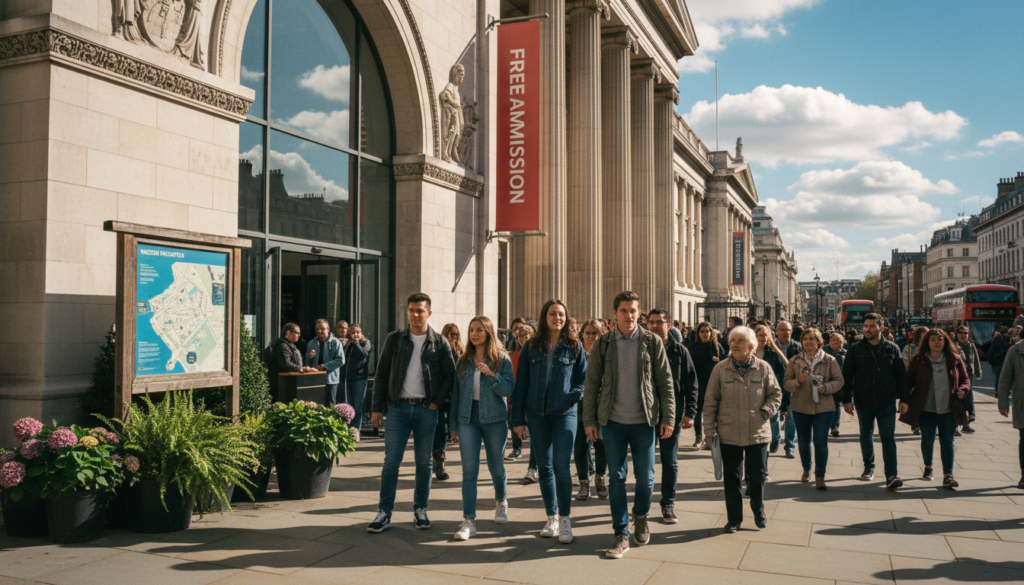
London is a treasure trove for those who love museums. You can explore some of the world’s most famous museums without spending a dime. These places are filled with ancient artifacts and modern masterpieces.
Admission is free, but booking your visit online is a good idea. Weekdays are less crowded than weekends.
These cultural spots let you dive into history, science, and art without worrying about costs. You can spend a whole day here and still have money for dinner or a souvenir.
British Museum
The British Museum is a treasure trove of human history. It has over 13 million artifacts from ancient civilizations like Assyria, China, and Egypt.
Highlights include the Rosetta Stone and the Egyptian mummy collection. The Parthenon Marbles from ancient Athens are also on display, sparking debates about repatriation.
The Great Court, with its glass roof, is a stunning entrance. Spend at least 2-3 hours here, or more if you love history.
Entry is free, but book your time slot online to secure your spot. The museum offers great audio guides and special exhibitions that might need tickets.
Natural History Museum
The Natural History Museum is a Victorian gem. It captivates visitors with its architecture and exhibits. The main hall features a blue whale skeleton.
Kids love the dinosaur galleries with animatronic models and fossils. The museum also has exhibits on volcanoes and earthquakes.
The gemstone collection dazzles with rare minerals and stones. Interactive displays make learning fun and engaging.
This is a top choice for rainy days. Admission is free, but book your time slot to avoid crowds.
Science Museum
The Science Museum is next to the Natural History Museum. It explores technological and scientific advancements. Interactive exhibits make learning fun.
It’s great for all ages, with exhibits on steam engines and robotics. You can learn about flight and medical breakthroughs.
Special exhibitions change, and some may cost money. It’s a fun and educational visit that fits well with other free art galleries museums in London.
Tate Modern
The Tate Modern is Britain’s top modern art museum. It’s in a converted power station on the South Bank. The building is a masterpiece of architecture.
Inside, you’ll see works by Picasso, Warhol, and Rothko. The collection includes painting, sculpture, and multimedia art.
The Blavatnik Building’s rooftop terrace and cafe offers amazing views. You can see St. Paul’s Cathedral and the Shard.
No booking is needed, making it easy to visit. It’s open late on Fridays and Saturdays for sunset views.
Popular Parks and Gardens
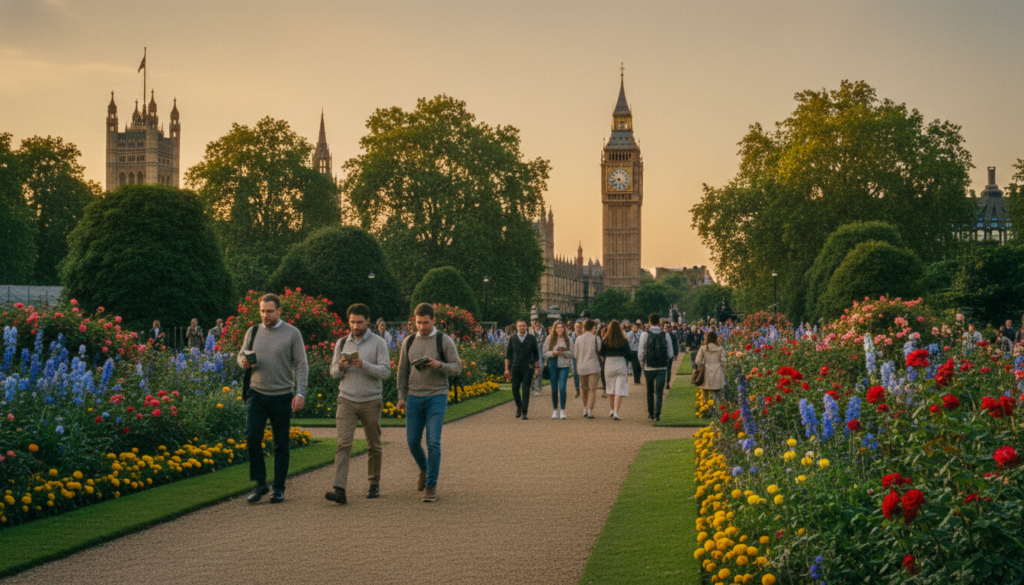
London’s parks and gardens are true gems among london points of interest. They turn the city into a peaceful oasis. These green spaces offer a break from museum visits and historical tours. You can enjoy walks, picnics, or stunning botanical displays all year round.
The city’s royal parks form a green corridor through central London. You can walk from Kensington Palace to Buckingham Palace through four parks. This unique feature makes London stand out among major capitals.
Hyde Park
Hyde Park is London’s most famous green space and the largest Royal Park. It connects Kensington Gardens, Green Park, and St James’s Park. Surrounded by ancient trees and meadows, it’s hard to believe you’re in a busy city.
The Serpentine lake is the park’s centerpiece, home to resident swans. You can rent paddleboats in warmer months or watch the swans from the shore. Hyde Park and Kensington Gardens blend seamlessly together.
The Italian Gardens feature Victorian-era design with fountains and formal plants. It’s a peaceful spot away from the busier areas. The Diana Memorial Fountain is another popular spot for paddling.
Hyde Park is free to visit every day of the year. You can jog, cycle, ride horses, or people-watch. It hosts major concerts and events in summer, turning into a massive venue.
Regent’s Park and London Zoo
Regent’s Park is known for its beautiful landscaping and wide lawns. Its famous rose garden blooms from late spring to summer. It’s a must-see for photographers during peak season.
Boating on the central lake is a relaxing activity. You can rent rowboats and pedalos in good weather. The park is a key spot in any london travel guide for outdoor lovers.
ZSL London Zoo is at the park’s northern edge. It’s one of the world’s oldest scientific zoos. You can visit the zoo after a morning in the park.
The Regent’s Canal runs through the park, leading to Camden. Nearby Primrose Hill offers panoramic views of the city. It’s perfect for sunset photography.
Kew Gardens
Kew Gardens is a UNESCO World Heritage Site in southwest London. UNESCO designated it in 2003 for its historic design and scientific importance. It requires paid tickets, but it’s worth it.
The Palm House and Temperate House glasshouses showcase exotic plants. These Victorian-era structures house thousands of species. Walking through the Palm House feels like entering a rainforest.
Allow three to four hours to explore Kew’s 300 acres. Seasonal displays change throughout the year. The Treetop Walkway offers unique views of the forest canopy.
The gardens feature historic buildings like Kew Palace and a 10-story Chinese Pagoda. Water lily displays attract photographers in summer. Buy tickets online in advance to avoid long queues.
St James’s Park
St James’s Park is the smallest and most formal Royal Park. Its central location makes it perfect for quick breaks. The park’s 57 acres are packed with beauty.
There are great views of Buckingham Palace from the park’s lake. The park’s pelicans have been there since 1664. Daily pelican feedings are a beloved tradition.
Spring turns the park into a carpet of daffodils and crocuses. The formal flowerbeds are well-maintained all year. Free access and central location make it ideal for a quick visit.
Walking paths offer peaceful alternatives to crowded streets. The Blue Bridge is the best spot for palace photos. St James’s Park is great for shade and rest in summer.
Famous Markets and Shopping Areas
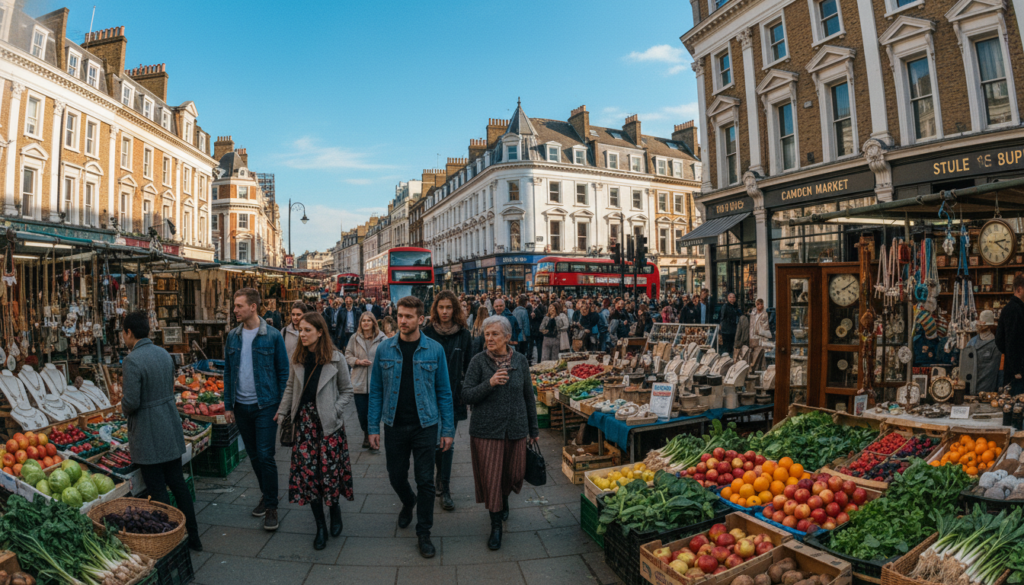
London’s famous markets offer a real taste of city life. They mix shopping, dining, and culture in unique ways. These lively spots are among the top popular attractions in London because they offer something different from big stores. You’ll find local crafts, international food, and the true spirit of various neighborhoods.
Markets are great for those on a budget since just looking around is free. They’re also perfect for rainy days, especially those with indoor sections. Whether you’re looking for antiques, trying street food, or just enjoying the vibe, London’s markets provide experiences you won’t find elsewhere.
Borough Market
Borough Market is London’s top food market, located under railway arches near London Bridge. It has a rich history, serving the city for over a thousand years. Today, it showcases a wide range of artisanal cheeses, fresh produce, international street food, and gourmet items from across Britain and beyond.
Arrive hungry because the food choices are endless. The Ginger Pig is famous for its legendary sausage rolls. The Black Pig offers a signature sandwich called “The Best One,” with perfectly balanced flavors and generous portions.
For dessert, visit Bread Ahead Bakery for their famous doughnuts and pastries. Borough Market gets very crowded around lunchtime, especially on weekends. Visit early in the morning for a calmer experience, or join a guided food tour to find the best stalls.
Camden Market
Camden Town’s market complex has a unique vibe, inspired by punk culture. It offers vintage clothing, handmade crafts, unique jewelry, and eclectic home decor. The colorful murals and street art make it a top spot for Instagram photos.
Camden is surprisingly affordable for dining compared to central London. You’ll find international street food at reasonable prices. The market’s creative energy reflects the neighborhood’s historic music and counterculture connections.
After exploring, walk along the nearby Regent’s Canal for a peaceful contrast. Primrose Hill offers stunning views of London. You can also easily reach Regent’s Park on foot, making Camden a great starting point for a day of exploration.
Covent Garden
Covent Garden is a beautifully restored market in the heart of London’s West End. The historic covered structure creates a sophisticated shopping environment. The Apple Market operates daily, featuring British crafts, handmade jewelry, and antiques depending on the day.
Seven Dials Market nearby is an excellent indoor food hall. It brings together diverse cuisines, perfect for rainy days. The surrounding piazza regularly hosts street performers who entertain crowds with magic, music, and acrobatics.
The covered arcades around the market house upscale boutiques and specialty shops. This mix of shopping, dining, and entertainment makes Covent Garden ideal for any weather. You’re also close to the Theatre District, making it perfect for pre-show meals or post-theatre drinks.
What Makes Covent Garden Special
- Daily craft markets with rotating vendors and specialties
- Free street performances throughout the day
- Protected from weather while maintaining open-air charm
- Central location near major theatres and restaurants
- Mix of budget-friendly and luxury shopping options
Portobello Road Market
Portobello Road winds through Notting Hill, famous for its pastel houses and vintage charm. This market changes depending on the day. Saturday is the main market day when the antiques section comes alive with dealers offering everything from Victorian jewelry to mid-century furniture.
The market stretches over a mile with different sections for various goods. The northern end focuses on antiques and collectibles, while the middle section has vintage clothing and fashion. The southern end features fresh produce and food stalls.
Notting Hill itself is worth exploring beyond the market. The colorful houses are perfect for photos, and the neighborhood’s independent cafes and bookshops invite leisurely browsing. Plan several hours to fully experience the market and the surrounding streets.
Additional London Markets Worth Visiting
While the four markets above are the most famous, London has dozens more. Old Spitalfields Market in the East End combines fashion with gourmet food in a historic hall. Columbia Road Flower Market in Bethnal Green operates only on Sunday mornings but offers an explosion of color and fragrance that makes early rising worthwhile.
Markets are some of the most democratic attractions in London. You don’t need tickets or admission fees to enjoy the atmosphere, people-watch, and explore. Many visitors find markets more memorable than traditional tourist sites because they show how Londoners live, shop, and socialize.
Theatre and Entertainment Venues
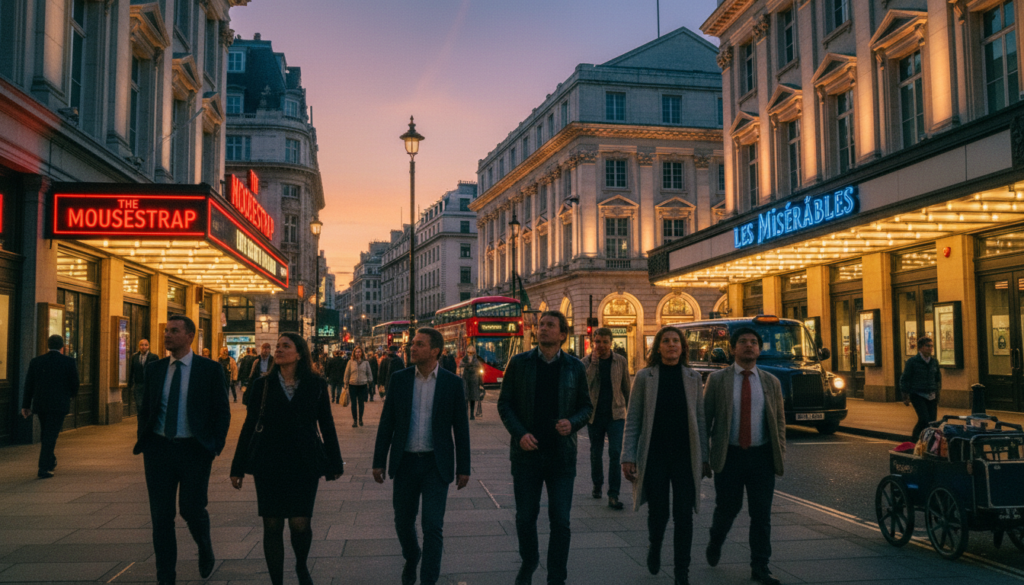
Your London sightseeing adventure wouldn’t be complete without experiencing the city’s legendary performance venues. From world-famous theaters to historic concert halls, the capital offers entertainment that rivals anywhere on earth. These venues showcase everything from timeless classics to cutting-edge contemporary performances.
The variety of shows and events means there’s something for every taste and budget. Whether you’re a theater enthusiast or simply curious about London’s cultural scene, these destinations provide unforgettable experiences.
West End Theatres
London’s West End rivals Broadway as the world’s premier destination for theatrical excellence. The concentration of theaters around Covent Garden, Leicester Square, and Shaftesbury Avenue creates an electric atmosphere that theater lovers adore. This district has been the heart of British theater for over two centuries.
You’ll find an incredible variety of shows ranging from long-running musicals to innovative new productions. Les Misérables and The Phantom of the Opera have captivated audiences for decades. Meanwhile, fresh plays and contemporary musicals constantly refresh the lineup.
Booking tickets requires some strategy to get the best deals. The TKTS booth in Leicester Square offers discounted same-day tickets for many shows. Official theater websites provide advance bookings without extra fees. Always avoid ticket touts on the street, as they often sell overpriced or invalid tickets.
Matinee performances typically cost less than evening shows and work well for families. Evening performances create a more glamorous atmosphere as part of a night out. Seeing a West End show remains one of the most quintessential must-see attractions in London.
The theater is the only institution in the world which has been dying for four thousand years and has never succumbed.
Shakespeare’s Globe
This faithful reconstruction of Shakespeare’s original 1599 theater stands proudly on the South Bank. The open-air design provides an authentic Elizabethan theater experience during summer performances from April through October. The circular wooden structure transports you back four centuries.
You can choose between groundling standing tickets in the yard or seated options in the covered galleries. Groundling tickets offer an affordable way to experience shows just as audiences did in Shakespeare’s time. Be prepared for potential weather exposure, as the theater remains open to the elements.
The Globe Exhibition and guided tours operate year-round, providing fascinating insights into Shakespeare’s life and times. Expert guides share stories about Renaissance theater and the reconstruction process. Interactive exhibits make the experience educational for all ages.
Next to the theater, the Swan restaurant offers a special treat for visitors. Their afternoon tea service provides stunning views toward St. Paul’s Cathedral across the Thames. Prices start at around £42 per person, making it a memorable addition to your Globe visit.
Royal Albert Hall
This iconic circular concert hall opened in 1871 and remains one of London’s most recognizable venues. The distinctive dome and Victorian architecture make it instantly recognizable from the outside. Inside, the ornate decorations and excellent acoustics create an impressive setting for performances.
The programming diversity astounds visitors with options ranging from classical concerts to rock performances. The BBC Proms series each summer represents Britain’s most famous classical music festival. You’ll also find film screenings with live orchestras, ballet, circus performances, and special events throughout the year.
Various seating options accommodate different budgets and preferences. Gallery seats in the upper levels offer affordable prices, while arena floor seats provide premium proximity. Many shows sell out weeks in advance, so checking the schedule early helps secure your preferred performance.
A visit to Royal Albert Hall adds cultural sophistication to your london sightseeing itinerary. The building itself deserves admiration even before the performance begins.
Southbank Centre
Europe’s largest arts center sprawls along the Thames with multiple venues under one umbrella. The Royal Festival Hall, Queen Elizabeth Hall, and Hayward Gallery each host different types of performances and exhibitions. This concentration of culture makes the Southbank Centre a hub for contemporary arts.
Free exhibitions and events frequently fill the public spaces throughout the complex. You can explore art installations, attend talks, or simply enjoy the riverside atmosphere without spending a penny. The book market and street food vendors add to the vibrant scene.
The location places you within walking distance of other South Bank attractions. The London Eye, Shakespeare’s Globe, and Tate Modern all sit nearby along the Thames Path. This proximity makes it easy to combine multiple must-see attractions in London during a single day.
The Southbank Centre represents modern London’s commitment to accessible arts and culture. Its brutalist architecture may divide opinions, but the quality and variety of programming win universal praise.
Iconic Religious Buildings
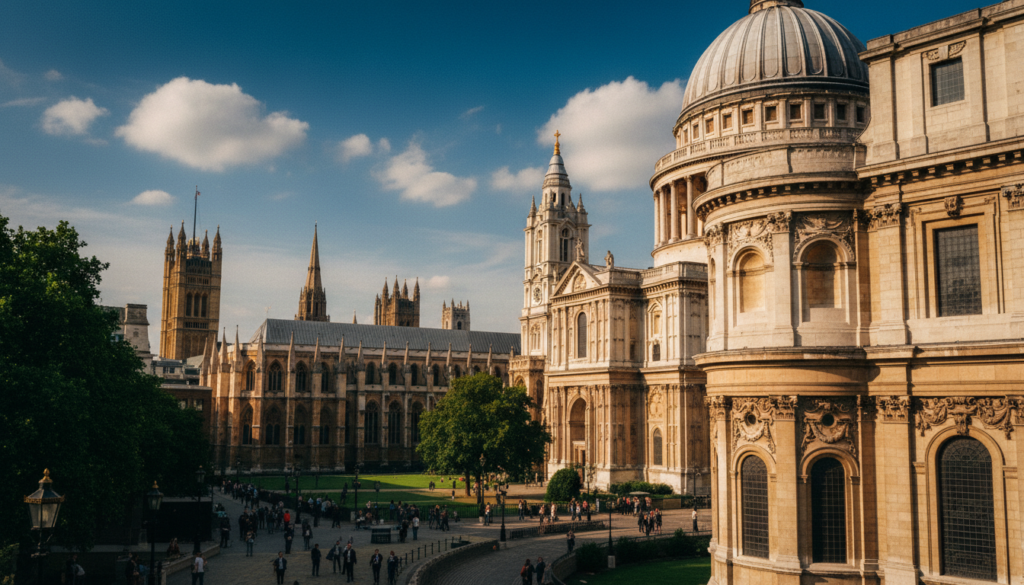
London’s cathedrals and abbeys are key to British history. They are not just places of worship. They are architectural wonders, royal venues, and keepers of centuries of heritage.
Visiting these buildings, you’ll learn stories through their architecture. Each one offers a glimpse into London’s past.
Westminster Abbey
Westminster Abbey is where every British monarch has been crowned since 1066. This Gothic masterpiece near Parliament has seen royal weddings and funerals that shaped the nation. It’s a UNESCO World Heritage site, showing its cultural importance.
The abbey’s exterior is stunning, with pointed arches and detailed stone carvings. Inside, the Henry VII Lady Chapel is breathtaking. It has intricate fan vaulting, a masterpiece of late Gothic architecture.
Walk among the tombs of history’s greats. Queen Elizabeth I and her half-sister Mary I are here. You’ll also find the remains of scientific giants like Charles Darwin and Isaac Newton.
The Poet’s Corner honors literary legends like Charles Dickens and Thomas Hardy. It’s a pilgrimage site for literature fans worldwide.
Westminster Abbey is where England’s history is etched in stone and remembered in silence.
Photography without flash is now allowed. Entry costs £31 per timed ticket. Spend at least 1.5 hours to fully appreciate it. Audio guides are recommended to understand the history.
Booking in advance is key, especially in peak season. The abbey gets crowded fast, and timed entry helps manage visitors.
St Paul’s Cathedral
St Paul’s Cathedral dominates the London skyline. Sir Christopher Wren designed it after the Great Fire of London destroyed the original in the late 1600s.
The cathedral’s massive dome is 365 feet high. It’s one of London’s most recognizable landmarks. The dome took decades to complete and was a marvel of engineering.
The cathedral survived The Blitz during World War II. Photos of it standing amid the smoke and flames became powerful symbols of British resilience. The famous 1981 wedding of Prince Charles and Lady Diana Spencer took place here, watched by millions.
Inside, you’ll find ornate decorations and stunning mosaics. The crypts below contain the tombs of national heroes like Admiral Lord Nelson. These chambers remind us of Britain’s military history.
Climbing the 530 steps to the dome is an adventure. The journey takes you through three galleries with different views. The Whispering Gallery shows unique acoustics where whispers carry across the dome.
Entry costs £27 per ticket, which includes an excellent audio guide. Church services are free if you prefer to experience the cathedral in its active role. The climb is challenging, but the spectacular panoramic views of London make it worth it.
Southwark Cathedral
Southwark Cathedral is a quieter alternative. Located on the South Bank, it dates back to medieval times. Its Gothic architecture and beautiful interior rival the larger cathedrals without the crowds.
The cathedral is connected to William Shakespeare. His brother Edmund is buried here, and there’s a memorial to the playwright. During Shakespeare’s time, Southwark was London’s entertainment district, home to theaters like the Globe.
The cathedral’s peaceful atmosphere is a welcome respite from the busy South Bank. Stained glass windows cast colorful patterns across the stone floors. The retrochoir, from the 13th century, showcases some of the oldest Gothic architecture in London.
Entry is free, though donations are appreciated. You can explore at your own pace without timed tickets or large tour groups. The cathedral also hosts concerts and community events throughout the year.
Westminster Cathedral
Westminster Cathedral is not to be confused with Westminster Abbey. It’s London’s primary Catholic cathedral, with a unique Byzantine-style design. This sets it apart from Gothic churches elsewhere in the city.
The exterior features red brick with horizontal bands of white stone. The campanile tower rises 273 feet, offering a unique view. Unlike most London landmarks, this cathedral draws inspiration from early Christian churches in Italy and Turkey.
Inside, stunning mosaics cover the walls and ceilings. Over 100 different types of marble create patterns and images. The decorative work continues today, as artisans slowly complete sections according to the original 1903 design.
You can take a lift up the campanile tower for impressive views across Westminster and beyond. The tower provides a less crowded alternative to other observation points in London. From the top, you’ll see the Houses of Parliament, Westminster Abbey, and the distant skyline.
The cathedral represents London’s diverse religious heritage. Its Byzantine style offers a refreshing contrast to the Gothic and Baroque architecture found in other historic churches. Entry to the cathedral is free, though there’s a small charge to access the campanile viewing platform.
Family-Friendly Attractions
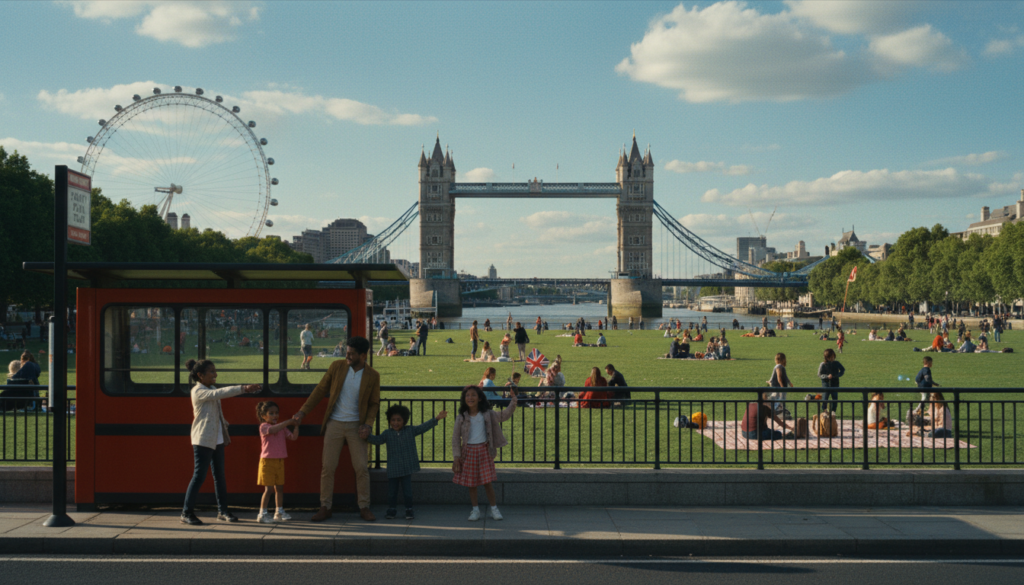
Exploring London with kids is fun and educational. You’ll find many interactive spots that make learning exciting. These places offer great experiences for both kids and parents.
London has attractions for all interests, from underwater adventures to theatrical shows. Each spot offers hands-on learning and unforgettable moments for kids.
Underwater Adventures at South Bank
The SEA LIFE London Aquarium is near the London Eye. It’s a great place to see marine life from around the world. You’ll see sharks and rays up close in an underwater tunnel.
The aquarium has different zones, each showing a unique underwater world. Kids can touch sea creatures in special pools. There are also feeding shows to watch.
This place is perfect for rainy days. Spend about 1-2 hours to see everything. You can buy a pass for five attractions for £59, saving money.
Celebrity Encounters in Wax
Madame Tussauds is famous for its realistic wax figures. It’s near Regent’s Park in Marylebone. You can take photos with your favorite stars.
The museum has different zones, like Marvel and the Royal Family. There are also 4D cinemas for Star Wars and Marvel. Booking tickets early helps avoid long lines.
Booking tickets in advance is essential to avoid the notoriously long queues that form at this popular attraction. The venue also participates in the £59 five-attraction pass, making it more economical for families visiting multiple London tourist spots. While some consider it touristy and expensive, many families report that children particularly enjoy the interactive photo opportunities and recognizable figures.
Thrills Through Dark History
The London Dungeon takes you through the city’s darkest moments. It’s a mix of live actors, special effects, and rides. You’ll see the Great Plague and meet Jack the Ripper.
This attraction is scary, so it’s best for kids over 10. It’s near London Bridge. It’s a fun way to learn about history.
Actors make history come alive with humor and drama. It’s a great way for teens and adults to learn about London’s past.
Magic Beyond the Movies
The Warner Bros Studio Tour is a top family spot. It’s in Leavesden, north of London. You’ll see the Harry Potter sets up close.
Walking through the Great Hall is amazing. The sets change with the seasons. You’ll see Diagon Alley and try butterbeer.
You’ll see costumes, props, and concept art. There are interactive experiences too. The attention to detail impresses even casual Harry Potter fans.
Advanced booking is absolutely necessary as tours sell out quickly, especially during school holidays and weekends. Tours with return transport from central London are widely available and highly recommended, eliminating navigation concerns. You should allocate a minimum of 3-4 hours to fully appreciate the extensive exhibits without feeling rushed.
This experience consistently ranks among top things to do in London for families. It creates magical memories for all ages. The mix of nostalgia, craftsmanship, and fun makes it special for everyone.
Scenic Viewpoints and Observation Decks
Seeing London from above changes how you see the city. You can find many spots for elevated views. The Sky Garden at the Walkie Talkie building offers free views (book in advance). The Tate Modern’s rooftop terrace also has great views without a fee. Tower Bridge’s walkways let you look down at the Thames.
The Shard Viewing Gallery
The Shard, at 310 meters, is Western Europe’s tallest building. Designed by Renzo Piano, it changes London’s skyline. The viewing galleries on floors 68, 69, and 72 give you 360-degree views.
Level 72 has an open-air platform where you can feel the breeze. On clear days, you can see up to 40 miles in every direction. Digital telescopes help you spot famous landmarks like Big Ben and St. Paul’s Cathedral.
Booking tickets online saves money. Sunset visits are magical as the city lights start to shine. Spend about an hour exploring the three levels. A champagne bar adds a celebratory touch. The Shard offers stunning views, making it a top attraction in London.
FAQ
Do I need to book London attractions in advance?
Yes, booking in advance is a good idea for most London attractions. Places like the Tower of London and Westminster Abbey often sell out, especially in peak season. Even free museums like the British Museum now need timed entry slots.
Booking early ensures entry and saves you from long queues. It also might get you a better price than buying tickets on the day.
Are multi-attraction passes worth buying in London?
Multi-attraction passes can save you money if you plan to see several attractions. For example, a five-attraction pass costs £59, which is less than £12 per attraction. It includes popular sites like the London Eye and SEA LIFE London Aquarium.
Compare the pass price to individual ticket costs for attractions you want to see. These passes are best for visitors with busy itineraries who want to see many attractions in a few days.
Which London museums offer free admission?
The British Museum, Natural History Museum, Science Museum, and Tate Modern have free permanent collections. But, booking a timeslot in advance is recommended. This makes London great for budget-conscious travelers.
While entry is free, some special exhibitions might need paid tickets. Donations are also welcome to support these institutions.
What’s the difference between Big Ben and the Elizabeth Tower?
Big Ben is the name of the great bell inside the tower, not the tower itself. The tower is officially called the Elizabeth Tower, named in 2012 for Queen Elizabeth II’s Diamond Jubilee. It’s a Gothic Revival masterpiece and a key London landmark.
The tower recently went through extensive renovations. It remains a symbol of London, especially from Westminster Bridge and Parliament Square.
How long does a ride on the London Eye take?
A full rotation on the London Eye takes about 30 minutes. You get to enjoy 360-degree views of London from its 32 air-conditioned capsules. At 135 meters high, it offers views up to 40 kilometers on clear days.
The experience is smooth and suitable for all ages, including young children.
Can I see the Changing of the Guard at Buckingham Palace every day?
The Changing of the Guard ceremony at Buckingham Palace does not happen every day. It usually takes place at 11:00 AM on Mondays, Wednesdays, Fridays, and Sundays. The schedule can change seasonally and may be canceled in bad weather.
Check the official schedule before you go. Arrive early to get a good spot near the palace or the Victoria Memorial.
How much time should I allow for visiting the Tower of London?
Spend at least 2-3 hours at the Tower of London to fully experience it. Highlights include the Crown Jewels, the White Tower, and Yeomen Warders (Beefeaters) tours. The site has over 1,000 years of history.
Purchasing tickets in advance (£35) is recommended to avoid long queues.
Is photography allowed inside Westminster Abbey?
Yes, photography without flash is allowed inside Westminster Abbey. You can capture memories of this magnificent Gothic church. It has been the site of monarch coronations since 1066.
Tickets cost £31, and booking in advance is recommended. Spend at least 1.5 hours exploring its stunning architecture and notable burials.
What’s the best time to visit Borough Market?
Borough Market operates from Wednesday to Saturday. It gets very crowded around lunchtime (12:00-2:00 PM). Visit mid-morning (around 10:00-11:00 AM) for a quieter experience.
Don’t miss out on The Ginger Pig sausage rolls and The Black Pig’s “The Best One” sandwich. Treats from Bread Ahead Bakery are also a must-try.
Are West End theatre tickets expensive?
West End theatre tickets vary in price. Premium seats for hit shows can be pricey, but there are budget-friendly options. Visit the TKTS booth in Leicester Square for discounted same-day tickets.
Book matinee performances for cheaper tickets. Purchase directly from official theatre websites to avoid fees. Avoid unauthorized ticket sellers on the street.
Can you climb to the top of St. Paul’s Cathedral?
Yes, you can climb the 530 steps to the dome galleries of St. Paul’s Cathedral. The climb takes you through the Whispering Gallery and Stone Gallery. Tickets cost £27, including an audio guide.
It covers the cathedral interior, crypts, and all dome levels. The climb requires reasonable fitness.
How much time should I allow for visiting Kew Gardens?
Spend at least 2-3 hours at Kew Gardens to explore its world-class botanical collections. The site has over 1,000 years of history. It features Victorian glasshouses and seasonal displays.
Purchasing tickets in advance (£25) is recommended to avoid queues. The gardens are a UNESCO World Heritage Site.
What’s the difference between Tower Bridge and London Bridge?
Tower Bridge is the iconic Victorian bridge with two towers and a lifting mechanism. London Bridge is a modern, plain bridge nearby. Tower Bridge offers the Tower Bridge Exhibition (£16) with glass floor skywalks and Victorian engine rooms.
London Bridge is a functional crossing without architectural distinction. Tower Bridge is the photogenic bridge tourists want to see.
Do I need to book the Warner Bros Studio Tour far in advance?
Absolutely yes. The Warner Bros Studio Tour in Leavesden sells out weeks or months ahead, especially during school holidays and weekends. Timed entry tickets must be purchased in advance—you cannot buy at the door.
Book as early as possible when planning your London trip. Tours with return transport from central London are recommended since the studio is not easily accessible by public transport. Allow 3-4 hours minimum for the full experience.
Which is better for views: The Shard or the London Eye?
Both offer spectacular views but differently. The Shard stands at 310 meters high, offering panoramic views up to 40 miles on clear days. The London Eye provides a 30-minute rotation with 360-degree views.
The Shard offers the ultimate elevation, while the London Eye is more family-friendly. Your choice depends on whether you prefer height and open air or a comfortable capsule ride.
What’s included with Shakespeare’s Globe tickets?
Performance tickets at Shakespeare’s Globe include admission to watch plays in the original 1599 open-air theater. You can choose standing tickets or seated ones. The site has over 1,000 years of history.
Purchasing tickets in advance (£20-£30) is recommended to avoid queues. The Swan restaurant offers afternoon tea with views toward St. Paul’s Cathedral starting at £42.
Are there free viewpoints in London?
Yes, several free viewpoints are available in London. The Tate Modern’s Blavatnik Building rooftop terrace offers free panoramic views. Sky Garden at the Walkie Talkie building also provides free 360-degree views.
Primrose Hill near Regent’s Park offers panoramic views across London’s northern skyline. The Thames riverside paths provide ground-level views of landmarks. While these options are great, paid viewpoints like The Shard offer unmatched elevated perspectives.
When is the best time to visit the Natural History Museum?
The Natural History Museum is busiest on weekends and during school holidays. Visit weekday mornings (Tuesday-Friday) immediately after opening for a quieter experience. Free admission requires advance booking.
Plan at least 2-3 hours for a selective visit. Pick up a museum map, consider an audio guide, or join a free guided tour to maximize your time.
Can you go inside Hampton Court Palace in one visit with central London attractions?
Hampton Court Palace is located outside central London in Richmond upon Thames. It requires a half-day visit to fully appreciate. The site includes the Great Hall, State Apartments, and Tudor kitchens.
Plan this as a separate excursion from central London sightseeing. The palace is accessible by train from London Waterloo (about 35 minutes) or by riverboat during summer months.
What’s special about the Banqueting House?
The Banqueting House is the only surviving part of the once-vast Palace of Whitehall. It was designed by Inigo Jones in the early 1600s. The building features a magnificent ceiling painted by Peter Paul Rubens commissioned by King Charles I.
This same building witnessed Charles I’s execution in 1649. The Banqueting House represents Renaissance architecture’s introduction to England and offers a glimpse into royal ceremonial life.
Is the London Dungeon suitable for young children?
The London Dungeon is designed to be scary and may not suit young or sensitive children. It features live actors, special effects, and scenes covering the Great Plague and Jack the Ripper murders.
The recommended minimum age is 10 years old. Parents should consider their children’s ability to handle jump scares and dark spaces before booking. Teenagers and adults who enjoy thrilling experiences will find it engaging.
How crowded does Hyde Park get?
Hyde Park is rarely overcrowded except during major events like concerts or festivals. The Serpentine lake, Italian Gardens, and Diana Memorial Fountain offer space for walking and relaxing.
Summer weekends and warm weather attract more visitors. But you can always find quieter areas. The park’s size and free admission make it a must-visit for escaping urban intensity.
What’s the best day to visit Portobello Road Market?
Saturday is the best day for Portobello Road Market in Notting Hill. The full antiques market operates alongside vintage clothing stalls and food vendors. The market runs all week but Saturday offers the full experience.
Arrive in the morning (9:00-10:00 AM) before crowds peak. Explore Notting Hill’s colorful streets, which have become Instagram favorites. Different sections along Portobello Road specialize in antiques, fashion, food, and general goods.
Do you need tickets for Covent Garden?
No tickets are required to visit Covent Garden—it’s a free public area in the heart of the West End. The historic market building houses the Apple Market with crafts and antiques. The piazza features street performers and entertainment.
You’re free to browse the covered arcades with upscale shops and watch performers. Covent Garden’s central location and all-weather appeal make it a popular gathering place.
Can you visit St. Paul’s Cathedral for free?
Yes, attending worship services at St. Paul’s Cathedral is free. You can experience this architectural masterpiece without purchasing a sightseeing ticket. Check the cathedral website for service times.
Free service attendance doesn’t include access to the crypts or climbing the dome. The full sightseeing ticket costs £27 with an audio guide and provides complete access to Christopher Wren’s iconic building.
What should I see first in the British Museum?
With over 13 million artifacts, the British Museum requires strategy to avoid feeling overwhelmed. Head to must-see highlights like the Rosetta Stone, Egyptian mummies, Parthenon sculptures, and Lewis Chessmen. The Great Court provides orientation.
Free admission with advance booking allows flexibility. Plan at least 2-3 hours for a selective visit. Pick up a museum map, consider an audio guide, or join a free guided tour to maximize your time.
Where’s the best place to photograph Tower Bridge?
The best photographs of Tower Bridge come from the south bank of the Thames near Shad Thames and Butler’s Wharf. You can capture the full bridge structure with the Tower of London nearby. The north bank near the Tower of London provides different angles.
For photos from the bridge itself, walk across the pedestrian walkways (free) rather than purchasing Exhibition tickets. Sunrise and sunset provide dramatic lighting, while evening photographs capture the bridge illuminated. Don’t confuse Tower Bridge with the plainer London Bridge located nearby.
Is SEA LIFE London Aquarium included in attraction passes?
Yes, SEA LIFE London Aquarium is included in multi-attraction passes like the five-attraction pass for £59. It’s less than £12 per attraction when combined with other sites. The aquarium features an underwater tunnel and various zones showcasing marine life.
It’s an excellent rainy-day activity suitable for families, requiring 1-2 hours for a complete visit. Booking individual tickets in advance or using a multi-attraction pass helps avoid queues.
What’s the difference between Westminster Abbey and Westminster Cathedral?
Westminster Abbey is the historic Church of England Gothic church where monarchs have been crowned since 1066. It features stunning Gothic architecture and royal burials. Westminster Cathedral, on the other hand, is the Catholic cathedral with Byzantine-style architecture and a striking campanile tower.
While Westminster Abbey attracts more tourists and requires a £31 ticket, Westminster Cathedral receives fewer visitors and charges no admission. It offers a different architectural experience representing Byzantine rather than Gothic style.
Are the Royal Parks connected to each other?
Yes, four Royal Parks form a nearly continuous green corridor through central London. Hyde Park connects to Kensington Gardens, which extends to Kensington Palace. Green Park links to St. James’s Park, adjacent to Buckingham Palace.
Regent’s Park to the north is separate but equally beautiful, featuring a rose garden and boating lake. All Royal Parks offer free admission year-round.
How do you get to the Warner Bros Studio Tour from central London?
The Warner Bros Studio Tour is located in Leavesden, about 20 miles northwest of London. The easiest option is booking a tour package that includes return transport from central London meeting points. Alternatively, take a train from London Euston to Watford Junction (about 20 minutes), then catch the dedicated shuttle bus to the studio.
Since the studio is not conveniently accessible by public transport, organized tours with transportation included are recommended. Allow 3-4 hours minimum for the full experience.
Can you see the Crown Jewels without visiting the Tower of London?
No, the Crown Jewels are housed exclusively within the Tower of London in the Jewel House. They can only be viewed by purchasing admission to the Tower (£35). The collection includes coronation crowns, scepters, and ceremonial objects still used for state occasions.
The Crown Jewels represent one of the Tower’s major highlights alongside the White Tower, Yeomen Warder tours, and the ravens. The collection’s security and historical significance mean it remains at this secure royal fortress rather than being displayed in a separate museum.
What’s the view like from the Tate Modern’s rooftop?
The Tate Modern’s Blavatnik Building viewing level offers spectacular free panoramic views across the Thames toward the City of London. St. Paul’s Cathedral is prominently featured in the skyline. The tenth-floor terrace and cafe provide 360-degree perspectives taking in Tower Bridge, the Shard, and the South Bank’s cultural venues.
Unlike paid observation decks, this viewpoint requires no ticket or advance booking—simply take the elevator to level 10 when visiting the museum. The combination of world-class modern art and free cityscape views makes the Tate Modern essential for both cultural and scenic experiences.