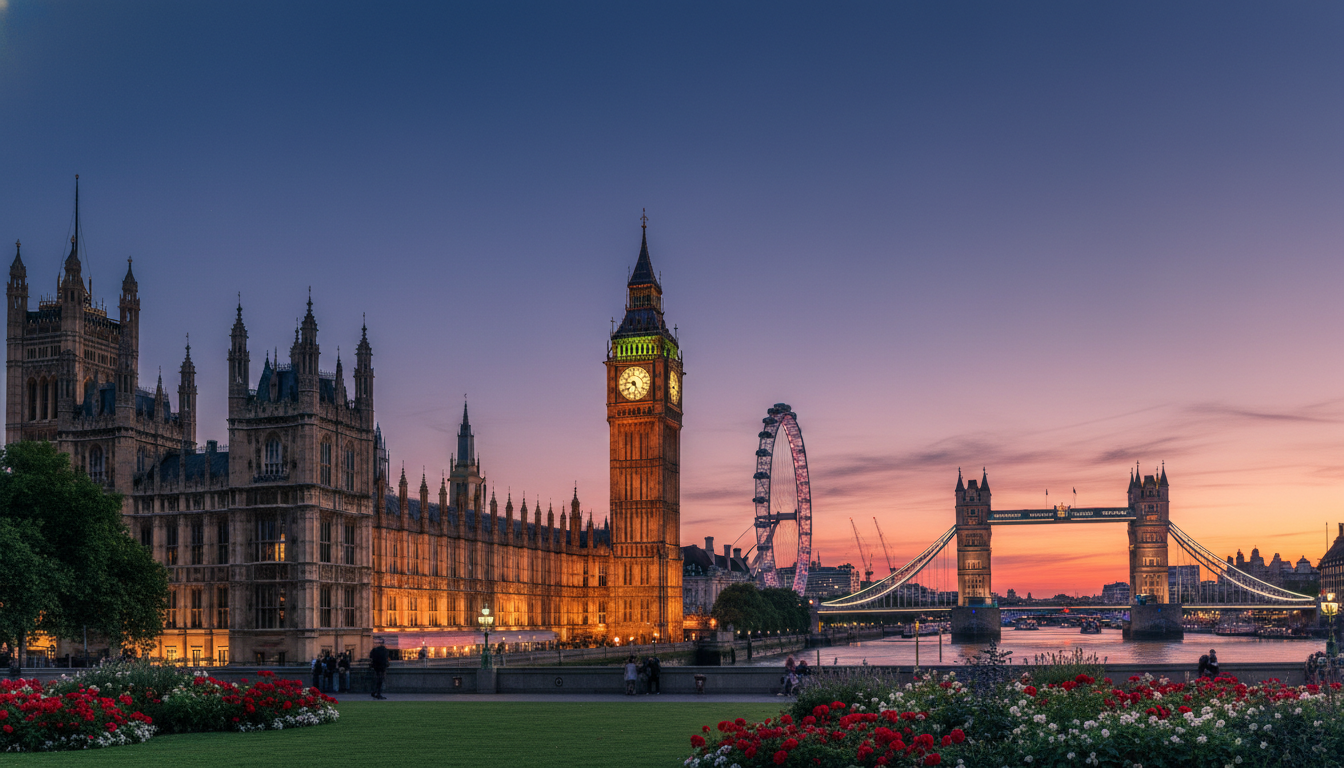
What makes a city great for millions of travelers every year? It’s the mix of old history and new ideas.
London is special because it has so many things to do. You can see world-class museums and modern art galleries. There are historic palaces and lively markets too.
London is also the world’s first National Park City. It has lots of green spaces. These places offer a calm break from all the sights and sounds.
This guide will show you the best spots in London. You’ll learn about iconic attractions and secret spots. London’s rich history, music, theaters, and easy transport make it unforgettable.
Whether it’s your first visit or you’re coming back, this guide has everything you need. It will help you make the most of your trip.
Key Takeaways
- London blends history with modern culture perfectly.
- The city has great public transport, making it easy to get around.
- As the world’s first National Park City, London has lots of green spaces.
- There are top museums, galleries, and shows for everyone.
- Famous landmarks and hidden spots are both here.
- London has something for everyone, from history to food and shopping.
Iconic Landmarks and Monuments
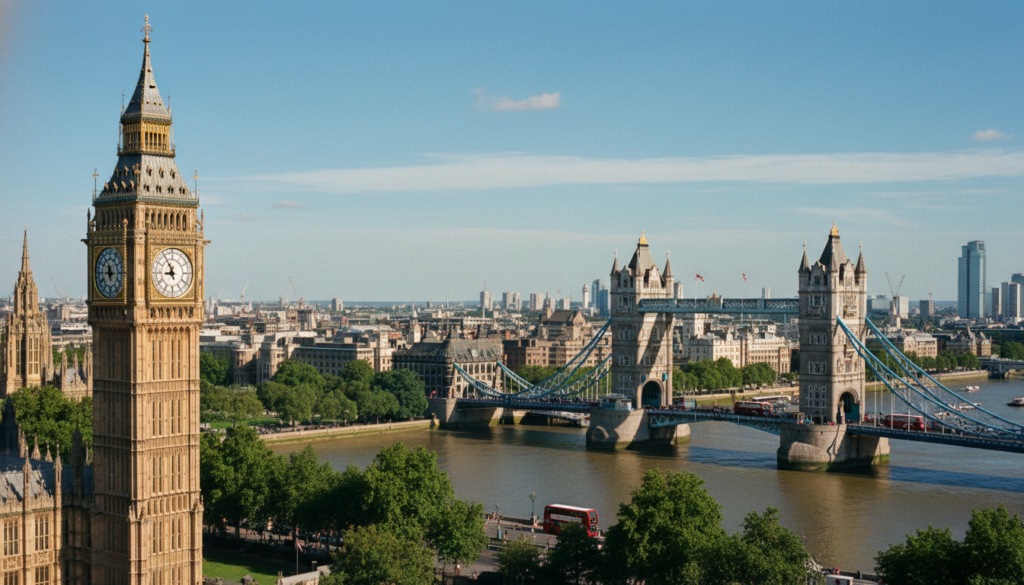
London’s famous monuments create an unforgettable panorama. You’ll discover structures that have shaped the city’s identity for centuries. Each landmark offers a unique glimpse into British history, royal heritage, and architectural innovation.
These landmarks represent more than just photo opportunities. They serve as living testimonies to the nation’s past, present, and future. Whether you’re drawn to medieval fortresses or contemporary engineering marvels, you’ll find that these sights showcase the evolution of one of the world’s greatest cities.
Westminster’s Crown Jewel
The big ben and houses of parliament dominate the Westminster skyline. The Palace of Westminster traces its origins back to the 11th century. Today, it contains nearly 1,200 rooms, 100 staircases, and over 3 kilometers of passages.
Big Ben itself refers to the great hour bell weighing over 13 tons. The clock was the world’s largest when installed in the mid-19th century. Its chimes have marked significant moments in British history for generations.
You can arrange guided tours that take you through the parliamentary chambers and historic Westminster Hall. The best photographs come from the opposite bank of the Thames, near the London Eye. Early morning or late evening light creates stunning reflections on the river.
“The Houses of Parliament embody the very essence of British democracy, standing as monuments to centuries of political evolution and architectural ambition.”
Victorian Engineering Marvel
Tower bridge has commanded attention on the River Thames. This Victorian masterpiece combines functionality with stunning architectural design. The bascule bridge mechanism was revolutionary for its time, allowing the roadway to lift and accommodate tall ships passing beneath.
You can explore the high-level walkways that connect the two towers, providing breathtaking views across central London. The glass floor sections let you watch river traffic passing below your feet. The engine rooms showcase the original Victorian steam machinery that powered the bridge for decades.
The bridge lifts approximately 800 times each year for vessels with special clearance. You can check the lifting schedule online to witness this impressive spectacle. Sunset provides the most dramatic lighting for photographs, when the bridge’s illumination begins to glow against the darkening sky.
Modern Icon Above the Thames
The London Eye transformed the city’s skyline when it opened at the millennium. Standing 135 meters high, this observation wheel ranks among the world’s tallest. The 32 glass capsules carry around 10,000 visitors daily, making it the most popular paid-for UK visitor attraction.
Each rotation takes approximately 30 minutes. You’ll experience 360-degree panoramas with visibility extending up to 40 kilometers on clear days. The capsules are fully enclosed and climate-controlled, ensuring comfort regardless of weather conditions.
Booking London Eye tickets in advance saves both time and money. Fast-track options eliminate lengthy queues during peak seasons. Evening rides offer spectacular views of the illuminated cityscape. Consider combining your visit with the nearby SEA LIFE London Aquarium for a full day of entertainment.
| Visiting Time | Crowd Level | View Quality | Best For |
|---|---|---|---|
| Early Morning (10-11 AM) | Low to Moderate | Clear daylight views | Photography enthusiasts |
| Midday (12-3 PM) | Very High | Bright but potentially hazy | Flexible schedules |
| Late Afternoon (4-6 PM) | Moderate to High | Golden hour lighting | Romantic experiences |
| Evening (7-9 PM) | Moderate | City lights spectacular | Couples and special occasions |
Royal Residence and Ceremony
Buckingham Palace has served as the official London residence of Britain’s sovereign. The building began as a townhouse owned by the Dukes of Buckingham in the 18th century. King George III purchased the property in 1761, transforming it into a private royal residence that would eventually become the administrative headquarters of the monarchy.
The palace contains 775 rooms, including 19 State Rooms, 52 royal and guest bedrooms, and 78 bathrooms. During summer months, you can explore the State Rooms through Buckingham Palace tours. The Grand Staircase, Throne Room, and Picture Gallery offer unforgettable glimpses into royal life.
The Changing of the Guard ceremony remains one of London’s most popular free attractions. This colorful spectacle occurs at 11:00 AM on selected days throughout the year. Arrive early to secure a good viewing position along the palace railings. The ceremony lasts approximately 45 minutes and features precision marching accompanied by military bands.
You’ll also want to visit Trafalgar Square, designed by John Nash in the 1820s. Nelson’s Column dominates the square, commemorating Admiral Nelson who died at the Battle of Trafalgar in 1805. The monument stands 52 meters tall, with the admiral’s statue overlooking the space where countless historic gatherings and celebrations have occurred.
Trafalgar Square serves as a central meeting point and cultural hub. The National Gallery borders the northern edge, while fountains and lion statues create perfect spots for rest and reflection. Street performers, seasonal events, and the famous Christmas tree make this location vibrant throughout the year.
Planning your route between these famous London monuments maximizes your sightseeing efficiency. The Westminster area concentrates several landmarks within walking distance. Start at Westminster Abbey, proceed to the Houses of Parliament, cross Westminster Bridge for London Eye views, then walk along the Thames to Tower Bridge. This route covers approximately 5 kilometers and can be completed in a full day with time for exploration at each site.
Historic Palaces and Castles
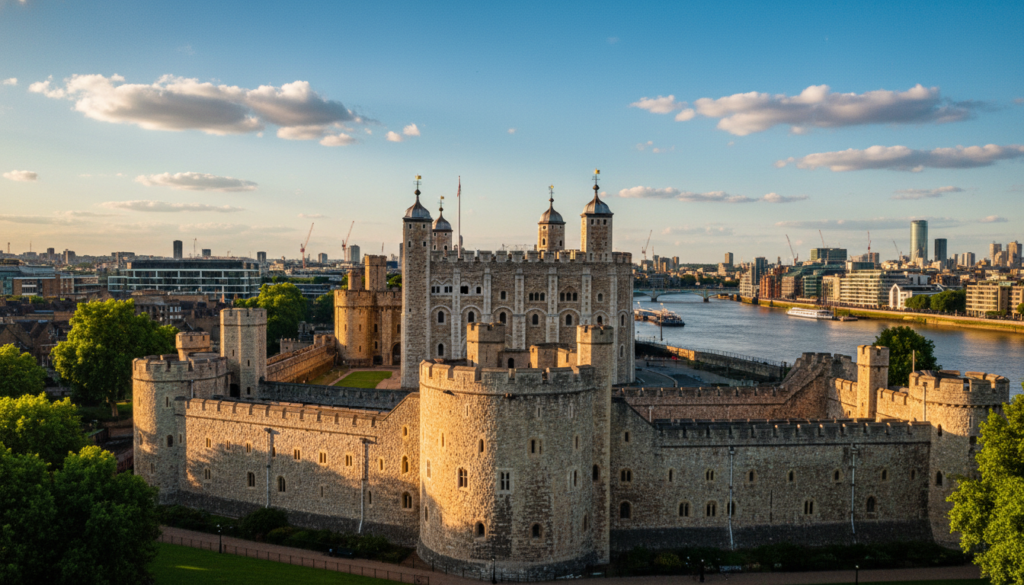
Visiting London’s royal palaces lets you step into rooms where history’s big names made decisions that shaped the world. These historic palaces and castles are among London’s finest historic sites. They offer a glimpse into centuries of royal life. From medieval strongholds to elegant Georgian homes, these buildings amaze millions every year.
A Fortress of Royal Drama and Dark History
The Tower of London is a top attraction along the Thames. It’s a UNESCO World Heritage Site with a 900-year history. It was a royal home, a treasury, and a prison.
The Crown Jewels are a highlight. You’ll see the Imperial State Crown and the Sovereign’s Sceptre. These jewels are used in state ceremonies and coronations.
The tower of london history is filled with drama. Three English queens were executed here. Sir Walter Raleigh wrote his History of the World from his cell.
The Yeoman Warders, or Beefeaters, have guarded the Tower for centuries. They give tours filled with stories and humor. You’ll also see the Tower’s ravens, believed to protect the kingdom.
Plan to spend two to three hours on a tower of london tour. Arrive early to avoid the summer crowds.
A Royal Residence with Modern Connections
Kensington Palace shows three centuries of royal life. It’s where Queen Victoria was born and is home to working royals today. It’s a mix of old grandeur and modern royal life.
Explore the State Apartments where kings and queens held court. The King’s Staircase has dramatic ceiling paintings. The Cupola Room is decorated with gold.
The palace gardens are peaceful. The Sunken Garden is the main attraction. It has seasonal plants all year. Kensington Palace feels less crowded than other palaces, making it more personal.
Henry VIII’s Magnificent Tudor Masterpiece
Hampton Court Palace is a Tudor masterpiece. Cardinal Thomas Wolsey built it, but Henry VIII took it over. It’s known for its red-brick facade and chimneys.
Hampton Court has two styles. The Tudor parts have Henry VIII’s Great Hall. The Baroque parts were added by Sir Christopher Wren.
The gardens are 60 acres. They include a hedge maze and the Privy Garden. The maze is over 300 years old. The Privy Garden looks like it did in 1702.
Don’t miss the Tudor Kitchens. They show how Henry VIII’s court was fed. Costumed interpreters cook like it’s the 16th century.
The World’s Oldest Occupied Castle
Windsor Castle is the oldest and largest castle in the world. It’s been a royal home for over 900 years. It’s also where the British monarch hosts state events.
St. George’s Chapel is a Gothic masterpiece. It’s where royal weddings and monarchs are buried. The chapel’s vaulting and stained glass are stunning.
The State Apartments are filled with treasures. You’ll see works by Rembrandt and Rubens. The Waterloo Chamber commemorates Napoleon’s defeat.
| Palace | Founded | Key Features | Notable Residents | Average Visit Duration |
|---|---|---|---|---|
| Tower of London | 1066 | Crown Jewels, Medieval Fortress, Execution Site | Henry VIII, Elizabeth I, Anne Boleyn | 2-3 hours |
| Kensington Palace | 1605 | State Apartments, Royal Fashion, Sunken Garden | Queen Victoria, Princess Diana, Current Royals | 1.5-2 hours |
| Hampton Court Palace | 1514 | Tudor Kitchens, Hedge Maze, Baroque Gardens | Henry VIII, Cardinal Wolsey, William III | 3-4 hours |
| Windsor Castle | 1070 | St. George’s Chapel, State Apartments, Royal Collection | Elizabeth II, Henry VIII, Queen Victoria | 2.5-3 hours |
These historical places in london and its surroundings offer a deep dive into British royal history. Each palace has its own story, showing how the monarchy has evolved over nearly a thousand years. Visiting these historic palaces and castles brings history to life through architecture, artifacts, and stories.
World-Famous Museums
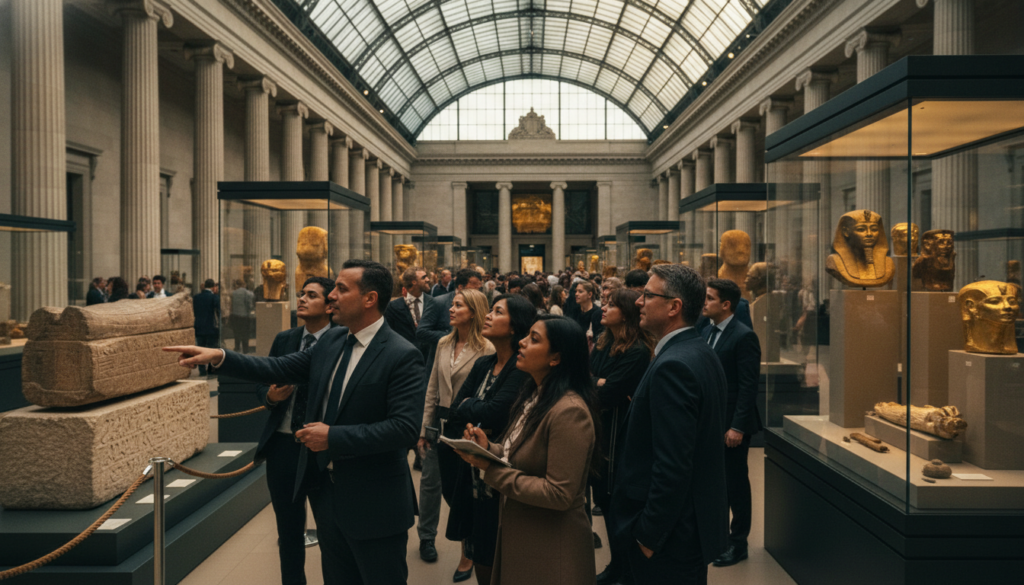
Step into London’s spectacular museums and discover artifacts, specimens, and masterpieces. These museums tell the story of humanity, nature, and artistic brilliance. You can see treasures that span millions of years and thousands of cultures for free.
London’s museums offer free admission, making knowledge and culture accessible to all. You can explore at your own pace without worrying about entrance fees. Each museum has its own unique collections and perspectives, making it worth visiting several during your stay.
Exploring Ancient Civilizations and Global Heritage
The British Museum is one of humanity’s greatest cultural institutions. It holds more than eight million objects that chronicle two million years of human history. You’ll see the legendary Rosetta Stone and the magnificent Parthenon sculptures.
The museum’s Egyptian galleries take you into the world of pharaohs. You’ll see mummies, sarcophagi, and ceremonial artifacts that reveal beliefs about the afterlife. Your journey through the British Museum exhibits continues across continents and centuries.
The Assyrian galleries showcase massive winged bulls that once guarded royal palaces. You’ll also discover the Lewis Chessmen and the Sutton Hoo treasure. These pieces illuminate Anglo-Saxon England.
The museum’s vast galleries can feel overwhelming. So, prioritize the collections that interest you most. Free guided tours and audio guides help you navigate efficiently. The Great Court provides a stunning central space to orient yourself before exploring specific galleries.
Each gallery in this remarkable institution offers educational programs and special exhibitions. You can witness conservation work in progress and attend lectures by leading historians and archaeologists. The museum’s digital collections also allow you to research objects before or after your visit.
Discovering Natural Wonders and Scientific Exploration
The Natural History Museum London captivates you from the moment you enter Hintze Hall. Look up at the spectacular blue whale skeleton suspended from the ceiling. This architectural masterpiece houses over 80 million specimens representing the diversity of life on Earth and the geological history of our planet.
You’ll find yourself face-to-face with dinosaur skeletons, including the beloved Diplodocus cast and the fearsome Tyrannosaurus rex. The dinosaur gallery remains one of the most popular attractions, featuring animatronic creatures that bring prehistoric times to life.
Your exploration continues through galleries dedicated to mammals, birds, insects, and marine life. The Earth Hall takes you on a journey through volcanoes, earthquakes, and the forces that shape our world.
The Darwin Centre represents the museum’s living heart, where you can observe scientists conducting actual research. You’ll see specimen jars containing creatures in preservative and learn how researchers study biodiversity and evolution. Interactive displays make complex scientific concepts accessible to visitors of all backgrounds.
The Natural History Museum offers exceptional family-friendly activities, including overnight sleepovers where children can explore galleries after dark. Special exhibitions throughout the year focus on topics from wildlife photography to climate change. You should allocate at least half a day to experience the museum’s highlights properly.
Celebrating Art, Design, and Creative Achievement
The Victoria and Albert Museum is the world’s premier institution dedicated to art, design, and performance across 3,000 years of human creativity. You’ll discover the most extensive collection of British design from 1500 to 1900, including exquisite furniture, ceramics, textiles, and metalwork.
Your visit reveals stunning fashion collections spanning centuries of style evolution, from elaborate Victorian gowns to cutting-edge modern designs. The jewelry galleries dazzle with precious gems and intricately crafted pieces. You can explore photography exhibitions, sculpture courts, and theatrical costumes that tell stories of performance history.
The museum’s architecture itself deserves appreciation, with the grand entrance hall and ornate Victorian galleries creating an immersive experience. The Cast Courts display full-scale plaster reproductions of famous sculptures and architectural elements, allowing you to study masterpieces from around Europe without traveling. Special exhibitions rotate regularly, featuring everything from contemporary designers to historical movements.
You’ll find the Victoria and Albert Museum engaging if you appreciate craftsmanship and decorative arts. The museum offers workshops, lectures, and Friday late-night openings with special programming. Educational resources help you understand the cultural context and techniques behind the objects on display.
Engaging with Innovation and Technology
The Science Museum makes complex scientific principles accessible and exciting through interactive galleries. You’ll journey from the earliest steam engines to modern space exploration, discovering how human ingenuity has transformed our world. The museum’s collection includes Stephenson’s Rocket, Apollo 10 command module, and the first jet engine.
Interactive exhibits allow you to conduct experiments, test your reflexes, and explore mathematical concepts through play. The Wonderlab gallery offers live science demonstrations that captivate audiences of all ages. You can explore medicine galleries that trace healthcare evolution from ancient remedies to genetic engineering.
The museum’s space and computing galleries showcase humanity’s greatest technological achievements. You’ll see early computers that filled entire rooms alongside modern smartphones that surpass their computing power thousands of times over. Climate science exhibitions help you understand environmental challenges and possible solutions.
London museums and galleries also include the Imperial War Museum, which presents powerful exhibitions documenting how conflict has shaped societies throughout history. This institution complements the other museums by focusing on human experiences during wartime and the impact of technological developments on warfare.
When planning your museum visits, consider that each institution offers unique perspectives and collections. You can easily spend an entire day at any of these world-famous museums without seeing everything. Many visitors choose to make multiple trips, focusing on different sections during each visit to avoid fatigue and fully appreciate the remarkable collections on display.
Celebrated Art Galleries
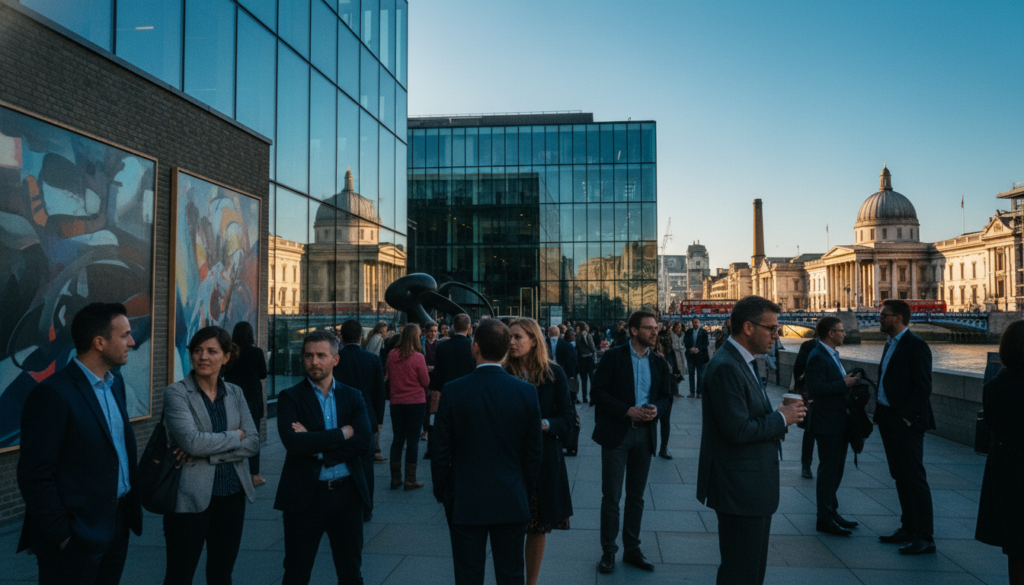
The capital’s celebrated art galleries showcase humanity’s creative achievements across multiple centuries. London is a key destination for art lovers worldwide. These cultural institutions house extraordinary collections, from medieval religious paintings to contemporary installations.
You’ll find that London’s two Tates, along with other prestigious galleries, are among the top London sightseeing spots for experiencing artistic excellence.
What makes these galleries truly remarkable is their commitment to accessibility. Most permanent collections offer free admission. This allows you to explore world-class art without financial barriers.
This democratic approach to culture means you can visit repeatedly. Each visit deepens your understanding of the art.
A Treasury of European Masterworks
The National Gallery commands an impressive position in Trafalon Square. It houses over 2,300 paintings that chronicle Western European art history. You’ll encounter masterworks by Leonardo da Vinci, Van Gogh, Monet, Rembrandt, and Turner.
The collection spans from the 13th century through the 19th century. This offers a visual journey through artistic evolution.
Walking through the National Gallery’s rooms, you’ll witness how artistic movements developed. The Renaissance galleries showcase technical innovations in perspective and anatomy. The Impressionist rooms demonstrate revolutionary approaches to light and color.
Your visit becomes more rewarding when you understand the gallery’s thoughtful layout. The Sainsbury Wing houses the earliest works, including medieval and early Renaissance paintings. The main building progresses through subsequent periods, allowing you to follow art’s natural progression through time.
Contemporary Art in a Converted Power Station
Tate Modern transformed a former Bankside power station into one of the world’s most visited contemporary art museums. This architectural conversion creates a dramatic backdrop for international modern and contemporary art from 1900 to the present. The building itself makes a powerful statement about repurposing industrial heritage for cultural purposes.
The vast Turbine Hall serves as the museum’s beating heart. It hosts monumental installations that respond to the space’s industrial scale. These commissioned works by leading contemporary artists create unforgettable experiences that engage visitors in new ways.
Unlike traditional museums, the Tate Modern art gallery organizes its permanent collection thematically. This approach encourages you to make connections across different time periods and artistic movements. The galleries explore themes like poetry and dream, structure and clarity, transformed visions, and energy and process.
Special exhibitions showcase cutting-edge contemporary artists and major retrospectives of 20th-century masters. These ticketed exhibitions complement the free permanent collection, providing deeper dives into specific artists or movements. You’ll want to check the exhibition schedule before visiting to plan your experience effectively.
British Artistic Heritage on Display
Tate Britain focuses exclusively on British art from 1500 to the present day. It provides unmatched insight into the nation’s creative output. The museum houses the world’s largest collection of works by J.M.W. Turner, the revolutionary landscape painter who influenced generations of artists.
The gallery’s chronological walk through British art history reveals how national identity and artistic expression evolved together. You’ll encounter everything from Tudor portraits to Victorian narrative paintings to contemporary installations. This overview demonstrates Britain’s significant contributions to global art movements.
Each year, Tate Britain hosts the prestigious Turner Prize exhibition, celebrating innovation in contemporary British art. This annual event generates considerable debate and discussion about art’s direction and purpose. Visiting during the Turner Prize period offers unique insight into current artistic conversations.
Portraits That Tell Britain’s Story
The National Portrait Gallery presents a unique approach to art appreciation. It organizes its collection around sitters, not artists. You’ll encounter portraits of famous figures from Tudor monarchs to contemporary celebrities, creating a visual chronicle of British history.
Walking through the galleries chronologically takes you on a journey through British history. Early floors feature Tudor and Stuart monarchs, whose formal portraits conveyed power and legitimacy. Upper floors progress through Georgian elegance, Victorian confidence, and modern celebrity, showing how portrait conventions evolved.
The gallery’s contemporary collection includes photographs, paintings, and digital works that capture today’s influential figures. These modern portraits raise questions about fame, representation, and identity in our image-saturated age. You’ll recognize many faces, making the experience personally relevant and engaging.
Understanding who gets portrayed and how tells you much about each historical period’s values and priorities. The collection includes scientists, writers, politicians, artists, and cultural figures whose contributions shaped British society. Each portrait becomes a gateway to exploring broader historical narratives.
| Gallery | Collection Focus | Notable Features | Best Visiting Time |
|---|---|---|---|
| National Gallery | European paintings 13th-19th centuries | Leonardo, Van Gogh, Monet, Rembrandt works | Weekday mornings |
| Tate Modern | International modern art 1900-present | Turbine Hall installations, thematic displays | Friday evenings (open late) |
| Tate Britain | British art 1500-present | World’s largest Turner collection, Turner Prize | Weekday afternoons |
| National Portrait Gallery | British historical portraits all periods | Tudor monarchs to modern celebrities | Early weekday mornings |
Planning your gallery visits requires some strategic thinking to maximize your experience. All four galleries offer free admission to permanent collections, though special exhibitions typically require advance booking. Weekday mornings generally provide the calmest viewing environment, at the National Gallery and National Portrait Gallery.
Each gallery features excellent dining options that extend your cultural experience. The National Gallery’s restaurant offers views over Trafalon Square, while Tate Modern’s restaurant provides panoramic Thames vistas. These spaces allow you to reflect on what you’ve seen while enjoying quality refreshments.
Your gallery experience improves significantly when you avoid peak tourist hours. Late-opening days at Tate Modern on Fridays create a more relaxed atmosphere with fewer crowds. Visiting during term time instead of school holidays ensures better viewing conditions throughout these best sightseeing spots in London.
These celebrated art galleries collectively make London one of the world’s premier destinations for art lovers. The combination of free access, world-class collections, and thoughtful curation ensures meaningful experiences for visitors at all knowledge levels. Whether you’re drawn to Old Masters or contemporary installations, London’s galleries deliver unforgettable encounters with artistic achievement.
Historic Churches and Cathedrals
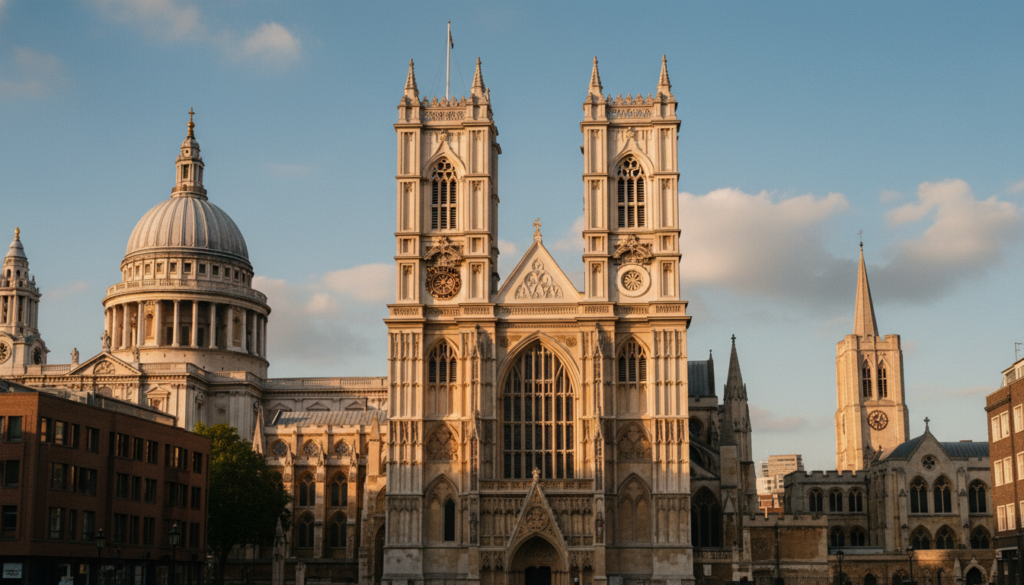
Beyond the bustling streets, London’s churches and cathedrals offer peaceful sanctuaries filled with extraordinary history. These magnificent buildings combine stunning architecture with deep spiritual significance. You’ll discover centuries of British heritage preserved within their walls, from coronations to royal weddings and literary commemorations.
The historic churches and cathedrals across London serve as both active places of worship and remarkable visitor destinations. Each structure tells unique stories of faith, artistry, and national identity that have shaped Britain for over a millennium.
Westminster Abbey
Westminster Abbey stands as Britain’s most significant church, hosting every coronation. This Gothic masterpiece welcomes you with soaring arches, intricately carved stone, and stunning stained glass windows. The abbey’s role in royal ceremonies continues today, making it a living symbol of British monarchy and tradition.
Inside, you’ll find Poets’ Corner, where literary giants like Geoffrey Chaucer, Charles Dickens, and William Shakespeare are honored. The memorial stones and tombs create a profound tribute to Britain’s cultural heritage. Walking through these hallowed halls connects you directly to centuries of artistic achievement.
The abbey houses the Coronation Chair and the ancient Stone of Scone beneath it. You can explore the tombs of monarchs, statesmen, and scientists who shaped world history. Recent royal weddings, including those of Prince William and Prince Harry, have drawn global attention to this sacred space.
A Westminster Abbey visit requires advance booking during peak seasons. The abbey charges admission fees for tourists but remains free for those attending worship services. Audio guides provide detailed historical context as you explore this architectural wonder.
St Paul’s Cathedral
St Paul’s Cathedral dominates London’s skyline with its magnificent Baroque dome designed by Sir Christopher Wren. Built after the Great Fire of London in 1666, this architectural triumph represents rebirth and resilience. The cathedral has witnessed countless national celebrations and solemn commemorations throughout British history.
Churchill’s funeral and several royal weddings have taken place within St Paul’s Cathedral, cementing its role in the nation’s most important moments. You’ll discover breathtaking mosaics, monuments, and memorials honoring heroes and leaders. The cathedral’s interior creates an atmosphere of grandeur that inspires awe in every visitor.
Climbing the 528 steps to the Golden Gallery rewards you with panoramic views across London. Along the way, you’ll experience the famous Whispering Gallery, where whispers travel along the curved walls with remarkable clarity. This acoustic phenomenon demonstrates the cathedral’s brilliant architectural design.
The cathedral remains a working church, so visitors should respect services and maintain appropriate decorum during their visit.
Regular concerts and special events fill the cathedral with music and celebration. Admission fees apply for tourists, though tickets include access to all galleries and the crypt. Plan at least two hours to fully appreciate this historic attractions in london landmark.
Southwark Cathedral
Southwark Cathedral holds the distinction of being London’s oldest Gothic church building. Located on the South Bank, this intimate cathedral offers a refreshing contrast to larger, more imposing religious structures. Its beautiful stained glass windows illuminate the interior with colorful light that changes throughout the day.
The cathedral’s connection to William Shakespeare and the theatrical community makes it special for literature enthusiasts. Shakespeare’s brother Edmund is buried here, and a memorial window celebrates the playwright’s legacy. The nearby Globe Theatre reinforces the area’s rich performance heritage.
You’ll appreciate the cathedral’s welcoming atmosphere and peaceful gardens that provide an urban oasis. Regular lunchtime concerts showcase talented musicians in this acoustically superb space. The historic churches and cathedrals in this area offer diverse architectural styles and spiritual experiences.
- Free admission with suggested donations
- Guided tours available on weekdays
- Café serving refreshments in the cathedral grounds
- Easy access from London Bridge station
Temple Church
Temple Church remains one of London’s best-kept secrets despite its fame from “The Da Vinci Code.” Built by the Knights Templar in the 12th century, this remarkable church features an unusual round nave inspired by Jerusalem’s Church of the Holy Sepulchre. The circular design creates a unique spatial experience unlike traditional church layouts.
Medieval effigies of Templar knights lie on the floor, their carved stone figures preserving warrior imagery from centuries past. These monuments offer a tangible connection to the Crusades and medieval chivalry. The church’s historical significance extends beyond its Templar origins to its long association with English law and barristers.
Temple Church operates limited visiting hours, so you should check the schedule before planning your trip. The intimate size allows for detailed examination of the Norman architecture and Romanesque details. Occasional concerts take advantage of the church’s excellent acoustics and atmospheric setting.
Each of these sacred spaces continues serving active congregations while welcoming visitors from around the world. When you visit, remember these are functioning churches that deserve respectful behavior. Photography policies vary, so ask permission before taking pictures during services or events.
Service times, concert schedules, and special events are regularly posted on each cathedral’s official website. Many offer evensong services that provide beautiful choral music in an authentic worship context. These experiences allow you to appreciate the buildings as living centers of faith, not just historical monuments.
Royal Parks and Gardens
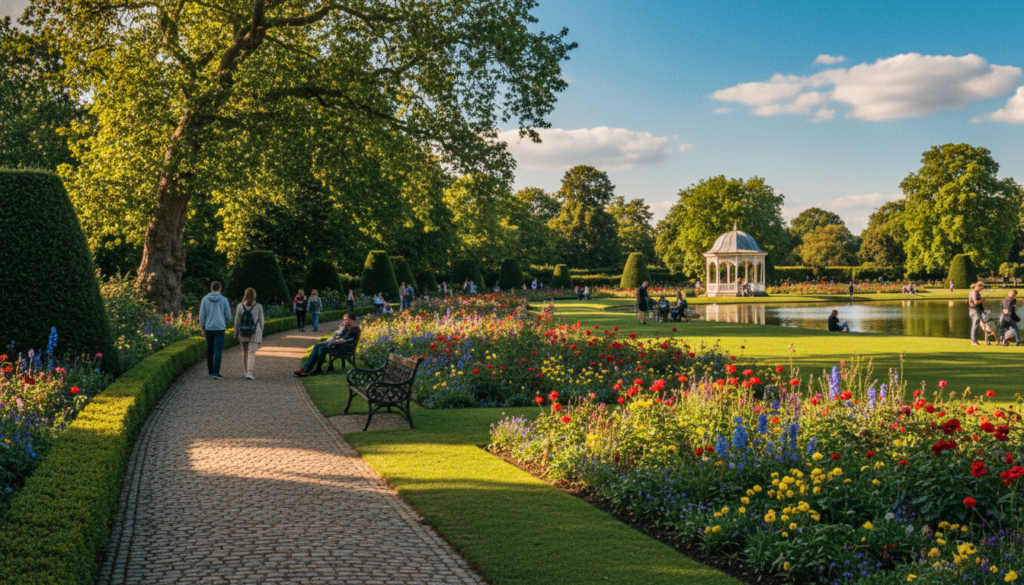
London is known as the world’s first National Park City. It has many royal parks and gardens. These places offer beautiful landscapes, historical sites, and outdoor fun, all for free.
From old royal hunting grounds to beautiful gardens, London’s parks are a big help in the city. They make life better for people who live here and give visitors great experiences. You can find peace, fun, or learning in these spaces.
A 350-Acre Oasis in Central London
Hyde Park is a favorite spot in London, covering 350 acres. It was once a royal hunting ground. Now, it’s a place where people enjoy boating, debating, or just relaxing.
The park is lively all year. In summer, there are concerts and swimming. Autumn turns the park into a colorful sight perfect for photos.
In winter, there’s ice skating. Hyde Park has many picnic spots, places to see wildlife, and is easy for everyone to visit.
Nash’s Masterpiece of Urban Planning
Regent’s Park was designed by John Nash for the Prince Regent in the 1800s. It has beautiful gardens and open fields. Queen Mary’s Gardens has over 12,000 roses that bloom in summer.
At the north, ZSL London Zoo adds to the park’s appeal. In summer, there are outdoor theater shows. You can also boat, explore the Japanese Garden Island, or watch sports.
The park is a mix of design and nature. Its paths offer shade and wide spaces for games and relaxation all year.
A UNESCO World Heritage Botanical Wonder
Kew Gardens is a UNESCO World Heritage Site. It’s home to the world’s largest collection of living plants. It’s a place for research and learning about plants.
The glasshouses are amazing. The Palm House is like a rainforest. The Temperate House is the largest Victorian glasshouse left.
The Treetop Walkway lets you see the gardens from above. Spring has bluebells, and autumn has colorful trees. Kew Gardens is worth visiting for nature lovers and families.
London’s Oldest Royal Park
St James’s Park is London’s oldest Royal Park. It’s been here for over 500 years. It’s near Buckingham Palace and Horse Guards Parade.
The park is famous for its pelicans. They’ve been here for over 350 years. You can see them fed every day at 2:30 PM.
The park has beautiful flowerbeds and quiet spots. It’s great for a quick break during your day in London.
| Park Name | Size | Key Features | Special Attractions | Best Season |
|---|---|---|---|---|
| Hyde Park | 350 acres | Serpentine Lake, Speakers’ Corner, Diana Memorial | Boating, outdoor concerts, Winter Wonderland | Summer for events, Winter for ice skating |
| Regent’s Park | 410 acres | Queen Mary’s Gardens, Nash terraces, boating lake | 12,000 roses, open-air theatre, ZSL London Zoo | Summer for roses and theatre |
| Kew Gardens | 300 acres | Palm House, Temperate House, Treetop Walkway | 50,000 plant species, UNESCO World Heritage Site | Spring for bluebells, Autumn for colors |
| St James’s Park | 57 acres | Blue Bridge, pelican colony, lake views | Buckingham Palace views, pelican feeding at 2:30 PM | Spring for flowerbeds, Year-round for views |
London is the world’s first National Park City. Its parks and gardens show how important nature is in the city. These places offer fun, learning, or just a place to relax, all for free.
Popular Markets and Shopping Areas
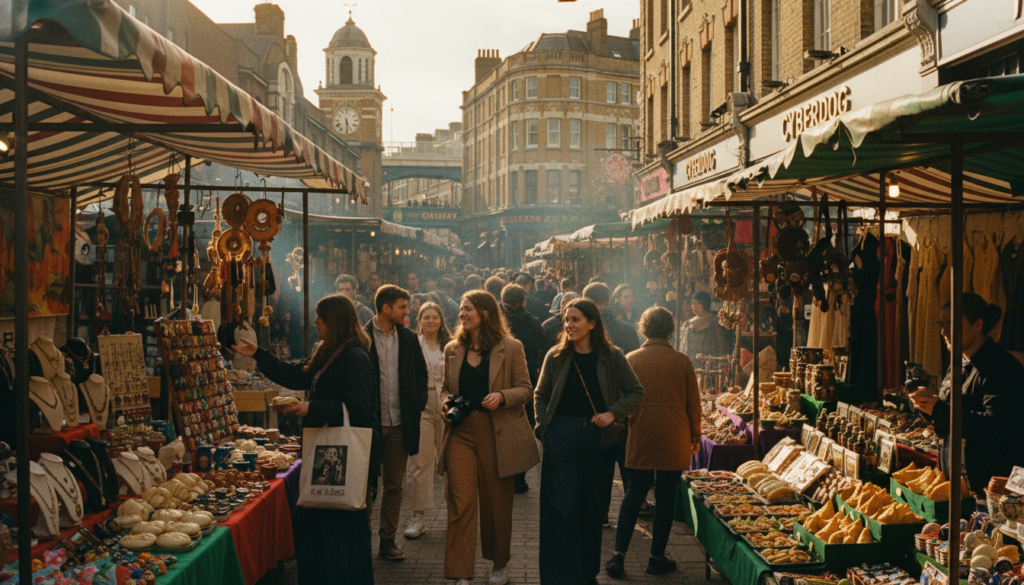
London’s markets and shopping areas show the city’s true spirit. You can find vintage treasures and artisan foods in unique places. These spots offer more than just shopping, connecting you with local culture and creativity.
Looking for unique souvenirs or international foods? London’s markets are the place to be. They offer a glimpse into authentic London life, with a mix of old and new.
London’s Oldest Food Paradise
Borough Market is London’s top food spot, open for over 1,000 years. It’s a place where artisan producers and international food stalls come together. It’s a paradise for those who love great ingredients and food.
At Borough Market, you’ll find amazing food. Fresh bread and cheeses fill the air with delicious smells. Street food vendors offer everything from Spanish paella to Ethiopian injera. You can also find organic vegetables from Britain.
The best time to visit is Thursday to Saturday when all vendors are open. Arrive early on Saturdays to avoid the crowds. You can enjoy great lunches for under £10 from the street food stalls.
Essential visiting information:
- Opening hours: Monday-Thursday 10am-5pm, Friday 10am-6pm, Saturday 8am-5pm
- Nearest stations: London Bridge (Northern and Jubilee lines)
- Must-try vendors: Bread Ahead for doughnuts, Kappacasein for grilled cheese
- Budget tip: Share dishes with companions to sample more varieties
Alternative Culture and Vintage Treasures
Camden Market is London’s counterculture heart. It attracts over 250,000 visitors weekly with its alternative fashion and vintage clothing. The market includes Camden Lock, Stables Market, and Buck Street Market, each with its own unique vibe.
The market is full of creative energy. Live music fills the air, and independent designers sell unique pieces. You can find vintage band t-shirts, custom leather jackets, and handmade accessories.
International street food is a big draw here. You can try authentic cuisine from around the world. The market is open daily, making it easy to visit during your london sightseeing tours.
Camden Market highlights:
- Open daily from 10am to 6pm (some vendors vary)
- Nearest stations: Camden Town (Northern line), Chalk Farm (Northern line)
- Best for: Vintage fashion, alternative accessories, international street food
- Weekend tip: Arrive before noon to navigate crowds more easily
Historic Market Turned Entertainment Hub
Covent Garden has changed from a fruit and vegetable market to a top shopping and entertainment spot. The Market Building now houses boutique shops and talented street performers entertain in the famous Piazza.
The surrounding streets are filled with fashion, beauty, and restaurants for all tastes and budgets. The Apple Market operates daily inside the Market Building, featuring antiques on Mondays and handmade crafts Tuesday through Sunday.
Covent Garden’s entertainment is world-class. Street performers audition for their spots, ensuring high-quality acts. Many London sightseeing tours include stops here, showing the city’s history and culture.
Covent Garden essentials:
- Market Building hours: Daily 10am-8pm
- Nearest station: Covent Garden (Piccadilly line)
- Free attractions: Street performances throughout the day
- Shopping range: From affordable high street to luxury boutiques
World-Famous Antiques and Collectibles
Portobello Road Market becomes the world’s largest antiques market every Saturday. Over 1,000 dealers turn this colorful Notting Hill street into a treasure hunter’s paradise. You can find vintage jewelry, rare books, retro clothing, and unique collectibles along nearly a mile of vibrant shopfronts.
The market operates in sections throughout the week. Saturdays are for antiques, while fashion and food vendors trade on other days. The pastel-colored houses in the neighborhood add to the charm of your shopping adventure.
Serious collectors arrive early on Saturday mornings for the best deals. Even if you’re not buying, the market offers great people-watching and photo opportunities in one of London’s most charming neighborhoods.
Portobello Road Market details:
- Antiques market: Saturdays 9am-7pm
- Fashion and food: Fridays and Saturdays
- Nearest stations: Notting Hill Gate (Central, Circle, District lines), Ladbroke Grove (Circle, Hammersmith & City lines)
- Bargaining tip: Dealers expect some negotiation, even for cash purchases
Beyond the Famous Four
London has many other shopping spots worth exploring. Shoreditch has independent boutiques and art galleries. Brick Lane combines vintage shops with famous curry houses and bagel bakeries. Chinatown in the West End offers authentic Asian groceries and restaurants.
Oxford Street and Regent Street are great for high street shopping. Westfield shopping centers in Shepherd’s Bush and Stratford offer modern mall experiences with hundreds of retailers.
These markets and shopping areas show London’s incredible diversity. They offer authentic experiences that reveal the city’s multicultural character and entrepreneurial spirit. Whether you’re a foodie, fashionista, or antiques enthusiast, you’ll find your perfect shopping destination in London.
Theatre and Entertainment Venues
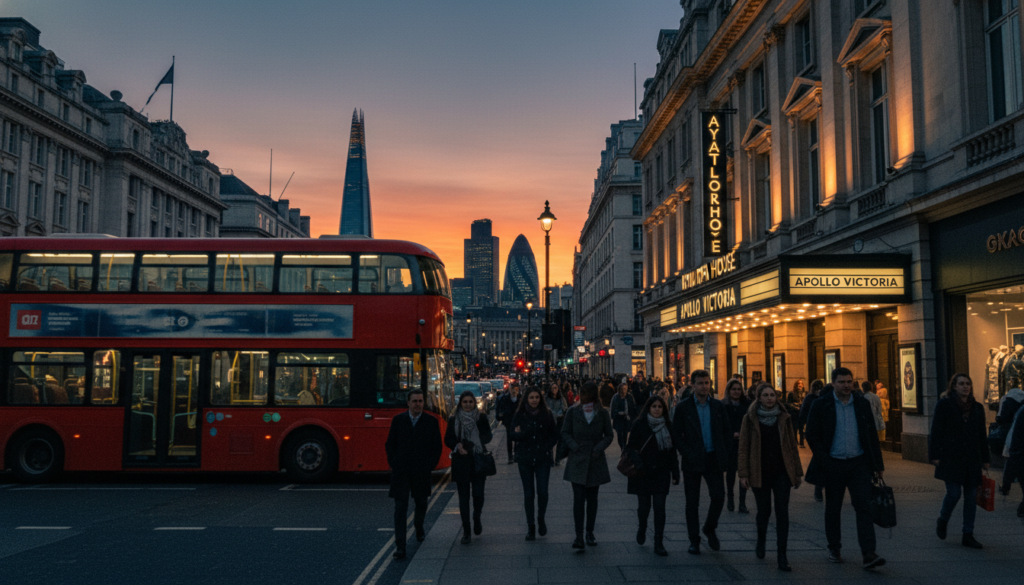
London’s cultural scene is vibrant, with everything from musicals to symphonies. You’ll find a wide range of entertainment all year. The city has four international orchestras and many venues, making it a global leader in arts.
From big arenas to historic theaters, London offers live entertainment for all. You can see world-class shows every night. Whether you like new works or classics, there’s something for everyone.
Discover the Magic of West End Shows
The West End Theatre District is at the heart of London’s theater scene. Over 40 theaters are around Covent Garden, Leicester Square, and Soho. You can see hits like “The Lion King,” “Les Misérables,” and “The Phantom of the Opera.”
Getting tickets for popular shows can be tricky, but there are ways to get discounts. The TKTS booth in Leicester Square offers same-day tickets. Buying from official sources helps avoid scams.
Dining before a show adds to the experience. Soho and Covent Garden have many restaurants with special menus. Exploring these areas before the show is fun and adds to the excitement.
Experience Elizabethan Drama at Its Source
Shakespeare’s Globe is a unique place to see Elizabethan plays. It’s a faithful copy of the original theater on Bankside. Seeing plays here feels like stepping back in time.
The theater’s design makes the performances special. You feel close to the actors. Shakespeare’s words come alive in a way you’ve never seen before.
In winter, shows move to the Sam Wanamaker Playhouse. It’s a Jacobean theater lit by candles. Tours are available all year, showing the Globe’s history and how it preserves Shakespeare’s work.
Enjoy World-Class Performances in Victorian Splendor
The Royal Albert Hall is a symbol of London’s culture. It opened in 1871 and has hosted many famous artists. Its Victorian design and dome make every show special.
The BBC Proms classical music festival is a highlight. It runs from July to September. You can get standing tickets for affordable prices, making great music accessible.
Tours show the hall’s history and architecture. It’s known for its sound and beauty. Booking early is key, but it’s worth it for the Proms.
Explore Europe’s Largest Arts Complex
The Southbank Centre is Europe’s largest arts center. It has the Royal Festival Hall, Queen Elizabeth Hall, and Hayward Gallery. You’ll find music, dance, literature, and visual arts here.
Free events make culture accessible. There are outdoor concerts, talks, and art installations all year. The location by the Thames offers great views and connects to the South Bank.
The center is welcoming to all. It offers special performances and facilities for everyone. Festivals throughout the year celebrate different arts, making it inclusive.
London has many entertainment venues. You can see performances by four international orchestras. Arena shows at the O2 or Wembley Stadium are also available. London’s arts scene is unmatched, with something for everyone every night.
Family-Friendly Visitor Attractions in London
London’s museums and parks are great, but there’s more. Special family-friendly spots offer fun and learning for all. They mix education with excitement, making your London trip unforgettable.
ZSL London Zoo
London Zoo is the oldest scientific zoo, opening in 1828. It’s in Regent’s Park and has over 12,000 animals from 650 species. Places like the Land of the Lions and Gorilla Kingdom let kids learn about wildlife.
SEA LIFE London Aquarium
The SEA LIFE London Aquarium is near County Hall. It’s perfect for kids with interactive exhibits. See sharks and rays, touch starfish, and see over 500 marine species in 1-1.5 hours.
Madame Tussauds
Madame Tussauds is famous for its wax figures of stars and historical figures. You can take photos with your favorite characters. Get fast-track tickets to skip the long lines at this popular spot.
Warner Bros Studio Tour
The Making of Harry Potter tour is outside London. It shows you the Great Hall and Diagon Alley. It’s a behind-the-scenes look at the magic of the movies.
Here are some tips for visiting London with your family: buy combo tickets for savings. Use Thames River cruises for a scenic ride. Visit early to avoid the crowds at these top spots.
FAQ
Which London attractions offer free admission?
Many London museums and galleries have free entry to their permanent collections. This includes the British Museum, Natural History Museum, and Victoria and Albert Museum. The Science Museum, National Gallery, Tate Modern, Tate Britain, and National Portrait Gallery also offer free entry.
London’s Royal Parks like Hyde Park and Regent’s Park are free to enter. Kew Gardens is free to enter, but some attractions require tickets. The Imperial War Museum also has free entry, making London great for budget-conscious travelers.
How far in advance should I book tickets for popular visitor attractions in London?
Book tickets for attractions like the Tower of London and London Eye 2-4 weeks in advance. This is important during peak seasons from June to September and school holidays. For West End shows, book seats several weeks ahead for the best spots.
Buckingham Palace State Rooms tours in summer need advance booking as tickets sell out fast. Warner Bros Studio Tour requires at least a month’s booking due to its timed entry system.
What is the best way to travel between London’s tourist attractions?
London’s public transport system is excellent for getting around. The Underground (Tube) is the fastest way to travel across the city. Most landmarks are near Tube stations.
An Oyster card or contactless payment card offers the best value. London’s red buses are great for shorter trips and scenic views along the Thames. Thames River cruises are a great way to see attractions and travel along the river.
Many attractions are within walking distance of each other. This makes London easy to explore on foot, around Westminster, the South Bank, and Covent Garden.
Are London’s historic palaces and castles used by the Royal Family?
Yes, many historic palaces in London are used by the Royal Family. Buckingham Palace is the official London residence of the monarch. Kensington Palace is home to the Prince and Princess of Wales and their family.
Windsor Castle is the oldest and largest occupied castle in the world. It is a working royal residence where Queen Elizabeth II spent weekends and King Charles III resides. The Tower of London is a working fortress with ceremonial guards.
Hampton Court Palace is now a historic visitor attraction, not a royal residence. It is managed by Historic Royal Palaces.
How long does it take to visit the British Museum?
Visiting the British Museum takes 3-4 hours to see major highlights. The museum’s vast collection spans two million years of human history. It has 94 galleries.
For first-time visitors, focusing on specific collections or taking a guided tour can be a good option. The museum offers free daily gallery talks and eye-opener tours.
What can I see at the Changing of the Guard ceremony at Buckingham Palace?
The Changing of the Guard ceremony at Buckingham Palace is a spectacular display of British pageantry. You’ll see the Queen’s Guard in their distinctive red tunics and bearskin hats. They perform a formal handover of duties accompanied by a Guards band playing traditional and popular music.
The ceremony typically occurs at 11:00 AM and lasts about 45 minutes. It takes place on alternate days during winter months and is subject to cancellation in poor weather. You’ll see guards marching from Wellington Barracks to the palace, the formal inspection, and the exchange of symbolic keys.
Is the London Eye worth the ticket price?
The London Eye offers one of London’s most spectacular experiences. You’ll get 360-degree views across 40 kilometers of the city’s landscape from a height of 135 meters. Each rotation takes approximately 30 minutes.
While tickets are relatively expensive, over 3.5 million visitors annually choose this iconic experience. Booking online in advance saves money compared to on-the-day prices. Combination tickets with other attractions can provide better value.
Which London museums are best for families with children?
The Natural History Museum is one of London’s most family-friendly attractions. It features animatronic dinosaurs, a blue whale skeleton, and interactive exhibits. The Science Museum offers hands-on galleries exploring space, computing, and inventions.
The British Museum provides family trails and activity backpacks to help children explore ancient civilizations. ZSL London Zoo offers animal encounters and conservation education. SEA LIFE London Aquarium features touch pools and underwater tunnels.
Warner Bros Studio Tour transports Harry Potter fans into the magical world of filmmaking. It has authentic sets and props.
How long should I allocate for visiting the Tower of London?
A thorough visit to the Tower of London requires 3-4 hours. You’ll explore the medieval fortress, view the Crown Jewels, and tour the medieval palace. The Crown Jewels exhibition alone can require 30-45 minutes during peak times.
Yeoman Warder tours, included with admission, provide fascinating historical insights into the Tower’s 900-year history. Arriving at opening time helps avoid the largest crowds.
Can I take photographs inside London’s museums and galleries?
Photography policies vary across London’s museums and galleries. The British Museum, Natural History Museum, Victoria and Albert Museum, and Science Museum generally permit photography without flash in most galleries for personal use.
The National Gallery, Tate Modern, and Tate Britain typically allow photography of permanent collection works without flash. Special exhibitions often restrict photography to protect light-sensitive artworks and copyright. Westminster Abbey and St Paul’s Cathedral generally prohibit photography inside to maintain the sacred atmosphere and protect conservation efforts.
What is included in a visit to Windsor Castle?
Windsor Castle admission includes access to the State Apartments, St George’s Chapel, and Queen Mary’s Dolls’ House. You can explore the castle’s grounds and witness the Changing of the Guard ceremony (select days).
Visitors can use multimedia guides that bring the castle’s 900-year history to life. The Drawings Gallery presents rotating exhibitions from the Royal Collection. Windsor Castle is located approximately 40 minutes from central London by train.
Are there combination tickets available for multiple London attractions?
The London Pass offers admission to over 80 attractions, including the Tower of London, Westminster Abbey, and Tower Bridge Exhibition. It is available in durations from 1 to 10 days. The London Explorer Pass allows you to choose a set number of attractions (3, 4, 5, or 7) to visit within 60 days.
Some attractions offer their own combination tickets, such as the Royal Palaces pass covering the Tower of London, Hampton Court Palace, Kensington Palace, and Banqueting House. Thames River cruise operators frequently bundle boat trips with attraction tickets.
What makes Westminster Abbey historically significant?
Westminster Abbey has served as the coronation church for English and British monarchs for nearly a thousand years. It houses the tombs of 17 monarchs and serves as the final resting place for over 3,300 notable figures in British history.
Poets’ Corner honors literary giants, while Scientists’ Corner commemorates Isaac Newton, Charles Darwin, and Stephen Hawking. The Coronation Chair, built in 1296, has been used in every coronation. The abbey’s Gothic architecture represents one of the finest examples of medieval building in Britain.
How does Kew Gardens compare to London’s Royal Parks?
Kew Gardens is a UNESCO World Heritage Site and world-leading botanical research institution. It houses over 50,000 living plant species across 300 acres. Kew features iconic Victorian glasshouses and specialized gardens representing different climates and regions.
The gardens conduct vital scientific research on plant conservation, seed banking, and biodiversity protection. While Hyde Park, Regent’s Park, and St James’s Park offer beautiful landscaping, Kew Gardens requires admission tickets but provides an unparalleled botanical experience.
What should I expect when visiting Shakespeare’s Globe?
Shakespeare’s Globe offers an authentic Elizabethan theater experience. Performances take place in the open-air “wooden O” just meters from the original site on Bankside. You can experience Shakespeare’s plays, contemporary works, and new writing performed in natural light.
Interactive exhibits explain special effects, creature creation, and movie magic. The tour operates on timed entry tickets that must be booked in advance. The tour appeals to Harry Potter fans and film enthusiasts interested in movie production techniques.
Which London attractions are accessible for visitors with mobility challenges?
Most major London attractions provide excellent accessibility for visitors with mobility challenges. The British Museum, Natural History Museum, Victoria and Albert Museum, Science Museum, National Gallery, and Tate Modern all offer step-free access to most galleries via lifts.
The London Eye provides wheelchair-accessible capsules with advance notice. Tower Bridge Exhibition and Westminster Abbey feature lifts or ramps to most areas. St Paul’s Cathedral’s main floor and crypt are wheelchair accessible, though the dome galleries require climbing hundreds of steps.
The Tower of London provides accessible routes to most areas including the Crown Jewels. Many West End theatres offer wheelchair spaces, transfer seats, and hearing enhancement systems. London’s public transport includes step-free Tube stations and accessible buses.
What is the best time of year to visit London’s visitor attractions?
Spring (April-May) and early autumn (September-October) offer the best balance of pleasant weather and manageable crowds. Summer (June-August) brings warm weather and long daylight hours, perfect for outdoor activities. But it also attracts the largest crowds and highest prices, with school holidays adding to the influx.
Winter (November-March) sees fewer tourists, shorter queues, and festive decorations. The weather can be cold and wet, with limited daylight hours. Certain attractions like the Warner Bros Studio Tour and indoor museums maintain year-round appeal.
How do Thames River cruises enhance sightseeing in London?
Thames River cruises provide unique perspectives on London’s iconic landmarks. They serve as efficient transportation between attractions along the river’s path through the city. Regular commuter services and tourist cruises connect Westminster Pier, Embankment, Tower Pier, Greenwich, and Kew Gardens.
Cruising past the Houses of Parliament, London Eye, St Paul’s Cathedral, Shakespeare’s Globe, Tate Modern, Tower Bridge, and the Tower of London offers photographic opportunities and architectural views. Recorded commentary or live guides explain the historical significance of landmarks, bridges, and riverside buildings.
What can I see at the Natural History Museum’s most popular exhibitions?
The Natural History Museum’s most iconic exhibition is Hintze Hall, featuring Hope the blue whale skeleton suspended from the ceiling. The Dinosaur Gallery showcases animatronic dinosaurs and fossilized skeletons. The Earth Hall features a spectacular escalator journey through a hollow globe.
The Darwin Centre’s Cocoon houses millions of preserved specimens and allows visitors to watch scientists conducting research. The Wildlife Photographer of the Year exhibition displays stunning nature photography annually. The Treasures Gallery showcases some of the museum’s most significant and beautiful specimens.
Are there guided tours available at London’s major attractions?
Most major London attractions offer guided tours that enhance understanding and provide expert insights. The Tower of London includes complimentary Yeoman Warder tours with admission. These tours depart every 30 minutes and share dramatic stories from the fortress’s 900-year history.
Westminster Abbey offers verger-led tours providing access to areas not included in general admission. St Paul’s Cathedral provides guided tours, triforium tours reaching hidden galleries, and multimedia guides. The British Museum, National Gallery, and Tate Modern offer free daily guided tours of collection highlights.
Buckingham Palace State Rooms and Windsor Castle include multimedia guides with admission. The Houses of Parliament offer guided tours when not in session. Third-party companies like The Original Tour and City Cruises offer hop-on-hop-off bus tours and river cruises with commentary.
What is the significance of Nelson’s Column in Trafalgar Square?
Nelson’s Column honors Admiral Horatio Nelson, Britain’s greatest naval hero who died at the Battle of Trafalgar in 1805. The monument, completed in 1843, features a 5.5-meter statue of Nelson atop a 50-meter granite column. The base has bronze reliefs depicting Nelson’s four greatest victories.
Four bronze lions sculpted by Sir Edwin Landseer guard the column’s base. Trafalgar Square itself commemorates Nelson’s final battle. It serves as London’s central gathering place for celebrations, protests, and national events.
Can I visit the Houses of Parliament and Big Ben?
You can tour the Houses of Parliament (Palace of Westminster) when Parliament is not sitting. Tours last approximately 90 minutes and require advance booking. They explore the ornate chambers, historic Westminster Hall, and elaborate Gothic Revival architecture.
UK residents can watch parliamentary debates from the public galleries when Parliament is in session. Big Ben technically refers to the Great Bell inside the Elizabeth Tower, not the tower itself. Interior tower tours are extremely limited, offered only to UK residents through their MP with very restricted availability.
What is unique about the Tate Modern’s building and location?
Tate Modern occupies the former Bankside Power Station, a massive industrial building designed by Sir Giles Gilbert Scott. It operated from 1952 to 1981 and was transformed into one of the world’s most visited contemporary art museums in 2000. The conversion preserved the building’s industrial character.
The 10-story Blavatnik Building extension, opened in 2016, added 60% more display space. The distinctive twisted pyramid form clad in perforated brick references the original power station’s materials. The museum’s riverside location on the South Bank directly opposite St Paul’s Cathedral connects via the Millennium Bridge.